

Join Our Newsletter To Be Informed When New Videos Are Posted
Hebrew Text
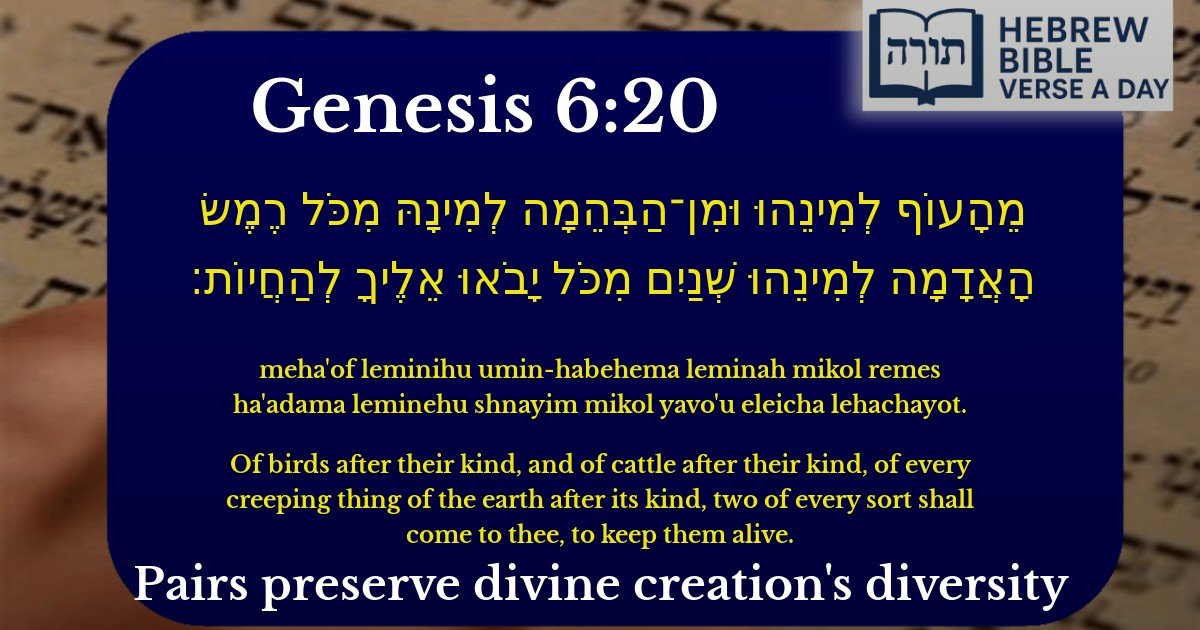
מֵהָעוֹף לְמִינֵהוּ וּמִן־הַבְּהֵמָה לְמִינָהּ מִכֹּל רֶמֶשׂ הָאֲדָמָה לְמִינֵהוּ שְׁנַיִם מִכֹּל יָבֹאוּ אֵלֶיךָ לְהַחֲיוֹת׃
English Translation
Of birds after their kind, and of cattle after their kind, of every creeping thing of the earth after its kind, two of every sort shall come to thee, to keep them alive.
Transliteration
Meha'of leminihu umin-habehema leminah mikol remes ha'adama leminehu shnayim mikol yavo'u eleicha lehachayot.
Hebrew Leining Text
מֵהָע֣וֹף לְמִינֵ֗הוּ וּמִן־הַבְּהֵמָה֙ לְמִינָ֔הּ מִכֹּ֛ל רֶ֥מֶשׂ הָֽאֲדָמָ֖ה לְמִינֵ֑הוּ שְׁנַ֧יִם מִכֹּ֛ל יָבֹ֥אוּ אֵלֶ֖יךָ לְהַֽחֲיֽוֹת׃
🎵 Listen to leining
Parasha Commentary
📚 Talmud Citations
This verse is quoted in the Talmud.
📖 Sanhedrin 108b
The verse is referenced in the context of discussing the animals that entered Noah's Ark, emphasizing the preservation of species.
📖 Chullin 139b
The verse is cited in a discussion about the classification of animals and the laws pertaining to their consumption.
Context in the Torah
This verse (Bereishit 6:20) appears in the narrative of Noach and the flood, where Hashem instructs Noach to gather pairs of animals to preserve life during the impending deluge. The language emphasizes the preservation of each species "after its kind" (לְמִינֵהוּ / לְמִינָהּ), highlighting the divine intention to maintain the natural order.
Rashi's Commentary
Rashi explains that the phrase "shall come to thee" (יָבֹאוּ אֵלֶיךָ) indicates a miraculous element—the animals would come to Noach on their own accord, without him needing to chase or gather them. This demonstrates divine intervention to ensure the fulfillment of Hashem's command. Rashi also notes that the term "לְהַחֲיוֹת" (to keep them alive) implies Noach's responsibility to provide proper care for the animals during their time in the ark.
Rambam's Perspective
In Moreh Nevuchim (3:49), Rambam discusses the flood narrative as a demonstration of divine justice and mercy. The preservation of species reflects Hashem's wisdom in maintaining the balance of creation, even amid destruction. The pairing of animals "after their kind" underscores the importance of biodiversity and the intrinsic value of each species in the natural world.
Midrashic Insights
Halachic Implications
The Chizkuni notes that the distinction between birds, cattle, and creeping things (הָעוֹף, הַבְּהֵמָה, רֶמֶשׂ הָאֲדָמָה) reflects later halachic categories in kashrut and sacrificial laws. This verse subtly alludes to the classifications that would become significant in Torah law.