

Join Our Newsletter To Be Informed When New Videos Are Posted
Hebrew Text
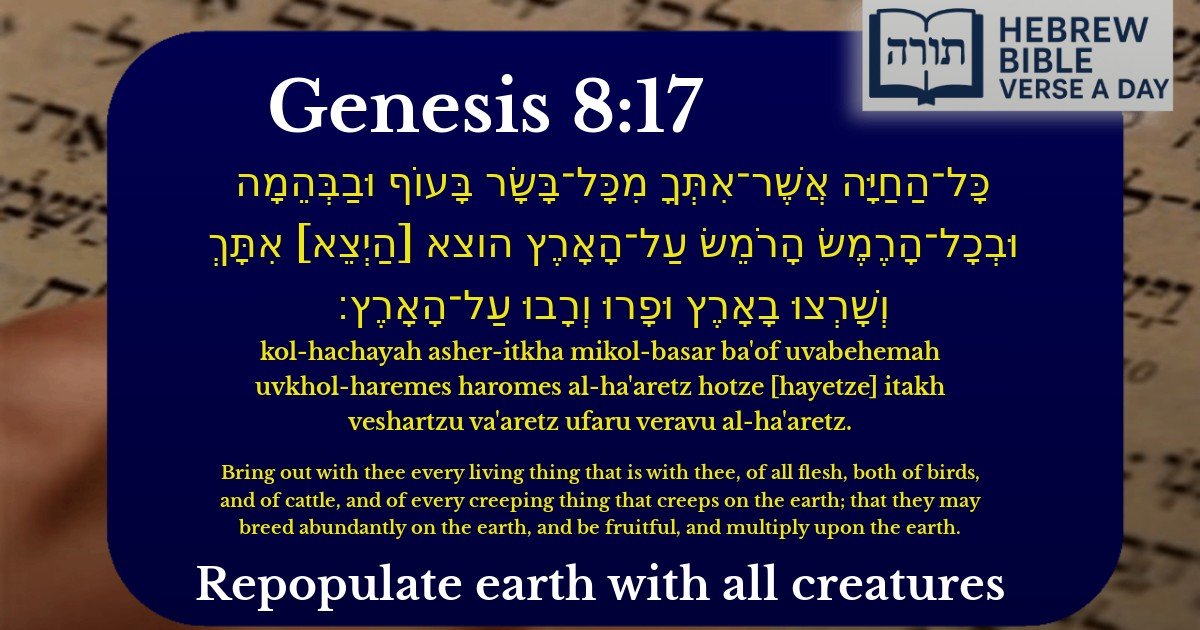
כָּל־הַחַיָּה אֲשֶׁר־אִתְּךָ מִכָּל־בָּשָׂר בָּעוֹף וּבַבְּהֵמָה וּבְכָל־הָרֶמֶשׂ הָרֹמֵשׂ עַל־הָאָרֶץ הוצא [הַיְצֵא] אִתָּךְ וְשָׁרְצוּ בָאָרֶץ וּפָרוּ וְרָבוּ עַל־הָאָרֶץ׃
English Translation
Bring out with thee every living thing that is with thee, of all flesh, both of birds, and of cattle, and of every creeping thing that creeps on the earth; that they may breed abundantly on the earth, and be fruitful, and multiply upon the earth.
Transliteration
Kol-hachayah asher-itkha mikol-basar ba'of uvabehemah uvkhol-haremes haromes al-ha'aretz hotze [hayetze] itakh veshartzu va'aretz ufaru veravu al-ha'aretz.
Hebrew Leining Text
כׇּל־הַחַיָּ֨ה אֲשֶֽׁר־אִתְּךָ֜ מִכׇּל־בָּשָׂ֗ר בָּע֧וֹף וּבַבְּהֵמָ֛ה וּבְכׇל־הָרֶ֛מֶשׂ הָרֹמֵ֥שׂ עַל־הָאָ֖רֶץ (הוצא) [הַיְצֵ֣א] אִתָּ֑ךְ וְשָֽׁרְצ֣וּ בָאָ֔רֶץ וּפָר֥וּ וְרָב֖וּ עַל־הָאָֽרֶץ׃
🎵 Listen to leining
Parasha Commentary
📚 Talmud Citations
This verse is not quoted in the Talmud.
Context in Noach's Narrative
This verse (Bereishit 8:17) appears as Hashem commands Noach to release the animals from the Ark after the floodwaters have receded. The instruction emphasizes repopulating the earth, echoing the original command to living creatures in Bereishit 1:22. Rashi notes that this parallels the blessing given at creation, reinforcing that Hashem's covenant with creation endures despite the flood's destruction.
Language and Terminology
The phrase "הוצא איתך" ("bring out with thee") is interpreted by the Midrash (Bereishit Rabbah 34:7) as implying Noach's active partnership in rebuilding the world. The Sforno explains that Noach was responsible not only for saving the animals but also ensuring their successful reintegration into the natural world.
Categories of Animals
Repopulation Command
The verbs "ושרו... ופרו ורבו" ("breed abundantly... be fruitful and multiply") echo the original blessing in Bereishit 1:22. The Talmud (Sanhedrin 108a) derives from this that Noach's Ark preserved not just individual animals but the fundamental reproductive capacities of all species. The Malbim emphasizes that this was a divine assurance that nature's order would be restored.
Noach's Role in Restoration
Chizkuni notes that the phrase "איתך" ("with thee") underscores Noach's ongoing responsibility—having saved the animals, he must now facilitate their flourishing. This reflects the broader Torah principle that human beings are stewards of creation (see Rambam, Hilchot Melachim 6:10 on environmental responsibility).