
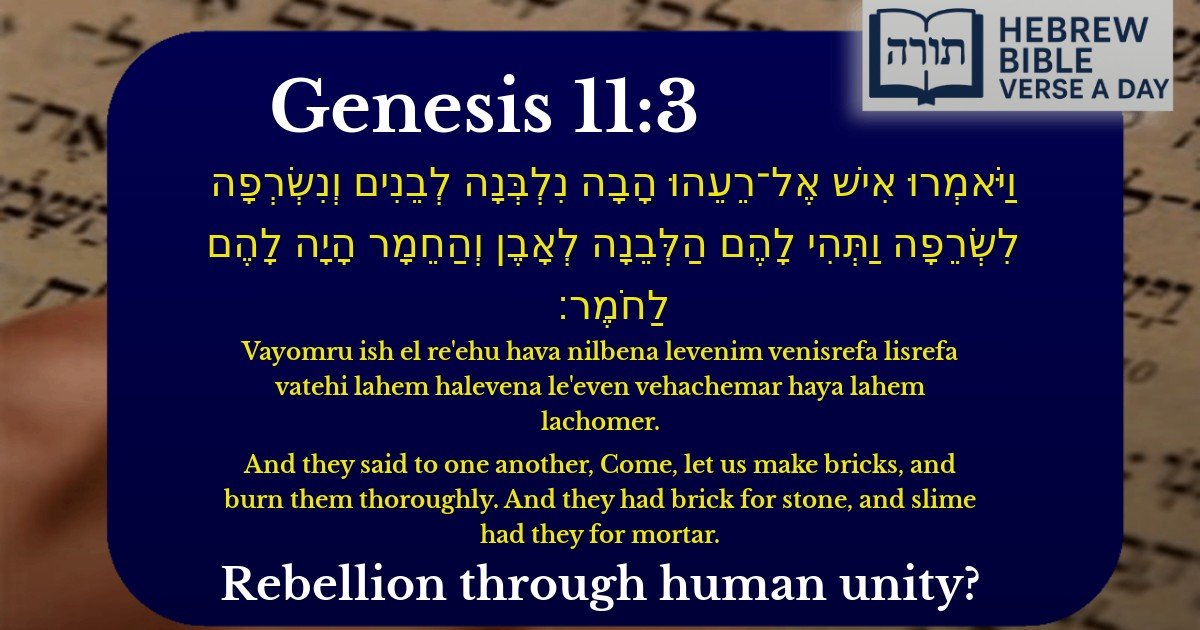

Genesis 11:3 - Rebellion through human unity?

Genesis 11:3 - בראשית 11:3

Hebrew Text

וַיֹּאמְרוּ אִישׁ אֶל־רֵעֵהוּ הָבָה נִלְבְּנָה לְבֵנִים וְנִשְׂרְפָה לִשְׂרֵפָה וַתְּהִי לָהֶם הַלְּבֵנָה לְאָבֶן וְהַחֵמָר הָיָה לָהֶם לַחֹמֶר׃

English Translation

And they said to one another, Come, let us make bricks, and burn them thoroughly. And they had brick for stone, and slime had they for mortar.

Transliteration

Vayomru ish el re'ehu hava nilbena levenim venisrefa lisrefa vatehi lahem halevena le'even vehachemar haya lahem lachomer.

Hebrew Leining Text

וַיֹּאמְר֞וּ אִ֣ישׁ אֶל־רֵעֵ֗הוּ הָ֚בָה נִלְבְּנָ֣ה לְבֵנִ֔ים וְנִשְׂרְפָ֖ה לִשְׂרֵפָ֑ה וַתְּהִ֨י לָהֶ֤ם הַלְּבֵנָה֙ לְאָ֔בֶן וְהַ֣חֵמָ֔ר הָיָ֥ה לָהֶ֖ם לַחֹֽמֶר׃

🎵 Listen to leining

Parasha Commentary

Context in Bereishit (Genesis 11:3)

This verse describes the actions of the generation of the Tower of Bavel (Babel), who sought to build a tower reaching the heavens in defiance of Hashem's will. Their unity in this sinful endeavor is highlighted by their collaborative efforts in brick-making.

Rashi's Commentary

Rashi (Rabbi Shlomo Yitzchaki) explains that the phrase "הָבָה נִלְבְּנָה לְבֵנִים" ("Come, let us make bricks") reflects their misguided unity. Unlike previous generations who used stone (a natural material), they manufactured bricks—symbolizing human artifice and rebellion against the natural order established by Hashem. Rashi also notes that in their land, there were no stones, only clay, forcing them to create bricks, which they then burned to strengthen them.

Symbolism of Bricks and Slime

  • Bricks for Stone: The Midrash (Bereishit Rabbah 38:8) contrasts their artificial bricks with the stones used in the Beit HaMikdash (Holy Temple), which were shaped without iron tools (Exodus 20:22). Their bricks represent human arrogance, whereas stones symbolize divine harmony.
  • Slime for Mortar: The "חֵמָר" (slime/tar) was a sticky, inferior substitute for proper mortar. The Talmud (Sanhedrin 109a) suggests this reflects their flawed unity—bound together not for a holy purpose but for rebellion.

Rambam's Perspective

Rambam (Maimonides, Moreh Nevuchim 1:23) interprets their actions as a rejection of divine authority. By building a tower to "make a name for themselves" (Genesis 11:4), they sought to centralize power and resist dispersal, contrary to Hashem's command to "fill the earth" (Genesis 9:1). Their technological innovation (brick-making) was misused for defiance rather than constructive purposes.

Moral Lessons

The generation of Bavel teaches:

  • The danger of unity for sinful aims—their collaboration was strong but misdirected (Talmud, Pesachim 118a).
  • Human ingenuity, when divorced from divine will, leads to destruction (Midrash Tanchuma, Noach 18).
  • Hashem values diversity and humility, as seen in their dispersal and the confusion of languages (Genesis 11:7-9).

📚 Talmud Citations

This verse is not quoted in the Talmud.

Frequently Asked Questions

Q: What does Genesis 11:3 mean when it says 'they had brick for stone, and slime had they for mortar'?
A: This verse describes the building materials used for the Tower of Bavel (Babel). Rashi explains that in the land of Shinar (where this took place), there were no natural stones, so they made bricks from clay and used tar ('slime') as mortar instead of regular mortar. This shows their determination to build despite the lack of natural resources.
Q: Why is the method of making bricks mentioned in Genesis 11:3 important?
A: The Torah highlights their brick-making process to emphasize their unity and misguided ambition. The Midrash (Pirkei D'Rabbi Eliezer 24) notes that they worked together intensely, even caring more for bricks than for human life—if a brick fell, they mourned, but if a person fell, they ignored it. This shows how their unity was misdirected.
Q: What can we learn from the people's actions in Genesis 11:3?
A: We learn that human effort and unity are powerful but must be directed toward righteous purposes. The Rambam (Hilchos Avodah Zarah 1:1-2) teaches that their mistake was rebelling against Hashem by building the tower to 'make a name for themselves' rather than serving Him. Their technical skill was impressive, but their intentions were flawed.
Q: How does the story of the bricks in Genesis 11:3 apply today?
A: This teaches us that cooperation and innovation are positive when used for good, but dangerous when driven by arrogance. The Talmud (Sanhedrin 109a) discusses how their unity was strong but misused. Today, we must ensure our collective efforts align with Torah values—building society, not opposing Hashem's will.