

Join Our Newsletter To Be Informed When New Videos Are Posted
Hebrew Text
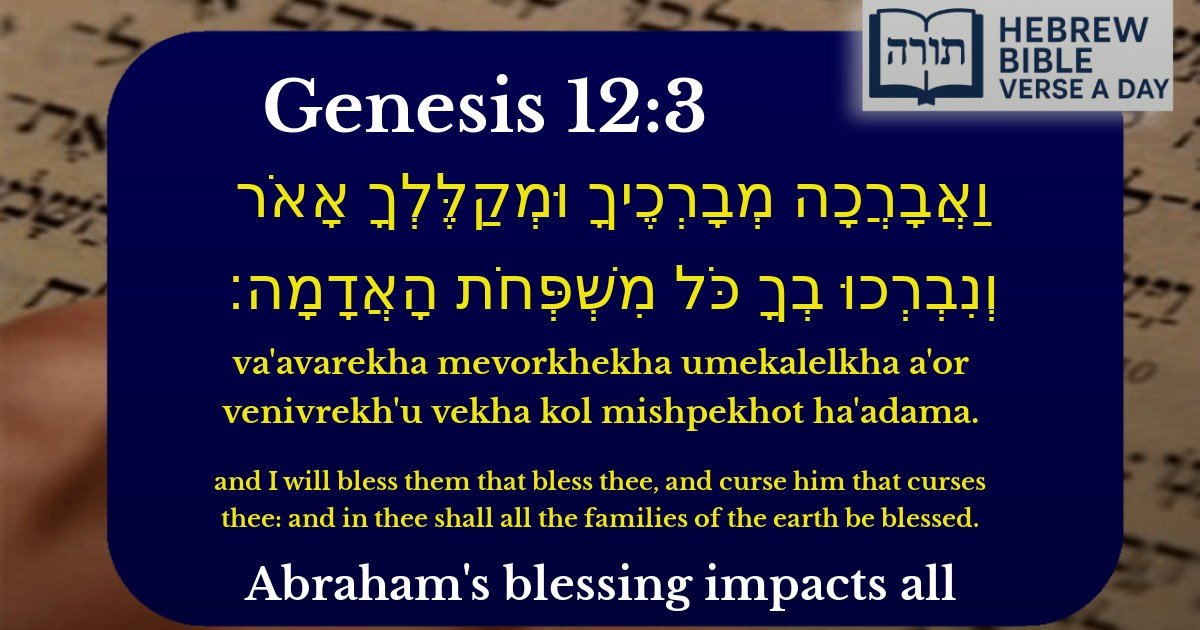
וַאֲבָרֲכָה מְבָרְכֶיךָ וּמְקַלֶּלְךָ אָאֹר וְנִבְרְכוּ בְךָ כֹּל מִשְׁפְּחֹת הָאֲדָמָה׃
English Translation
and I will bless them that bless thee, and curse him that curses thee: and in thee shall all the families of the earth be blessed.
Transliteration
Va'avarekha mevorkhekha umekalelkha a'or venivrekh'u vekha kol mishpekhot ha'adama.
Hebrew Leining Text
וַאֲבָֽרְכָה֙ מְבָ֣רְכֶ֔יךָ וּמְקַלֶּלְךָ֖ אָאֹ֑ר וְנִבְרְכ֣וּ בְךָ֔ כֹּ֖ל מִשְׁפְּחֹ֥ת הָאֲדָמָֽה׃
🎵 Listen to leining
Parasha Commentary
📚 Talmud Citations
This verse is quoted in the Talmud.
📖 Berakhot 7a
The verse is discussed in the context of God's blessings and the merit of the patriarchs, particularly Abraham.
📖 Megillah 28a
The verse is referenced in a discussion about the importance of blessing others and the consequences of cursing.
📖 Sanhedrin 90a
The verse is cited in a discussion about the rewards for those who bless the Jewish people and the punishments for those who curse them.
Blessing and Curse in the Covenant
The verse (Bereishit 12:3) forms part of Hashem's promise to Avraham Avinu, establishing a divine covenant that extends to his descendants. Rashi explains that the phrase "וַאֲבָרֲכָה מְבָרְכֶיךָ" ("I will bless those who bless you") signifies that those who support the Jewish people will themselves be blessed. Conversely, "וּמְקַלֶּלְךָ אָאֹר" ("and him who curses you, I will curse") indicates that divine retribution awaits those who harm or speak ill of Am Yisrael.
Universal Impact of Avraham's Legacy
The Ramban (Nachmanides) elaborates that "וְנִבְרְכוּ בְךָ כֹּל מִשְׁפְּחֹת הָאֲדָמָה" ("in you shall all the families of the earth be blessed") refers to the spiritual influence Avraham's descendants will have on humanity. Through the Torah and mitzvot, the Jewish people become a conduit for divine blessing to the world. The Sforno adds that this blessing manifests when nations recognize the truth of Hashem's unity by observing the Jewish people's faithfulness.
Midrashic Interpretation
The Midrash (Bereishit Rabbah 39:11) teaches that this verse underscores Avraham's unique role as the spiritual father of monotheism. The phrase "מִשְׁפְּחֹת הָאֲדָמָה" ("families of the earth") implies that future generations—both Jewish and righteous converts—will draw blessing from Avraham's merit. The Talmud (Yevamot 63a) further connects this to the concept that kindness shown to talmidei chachamim (Torah scholars) brings blessing to the world.
Halachic and Ethical Implications