
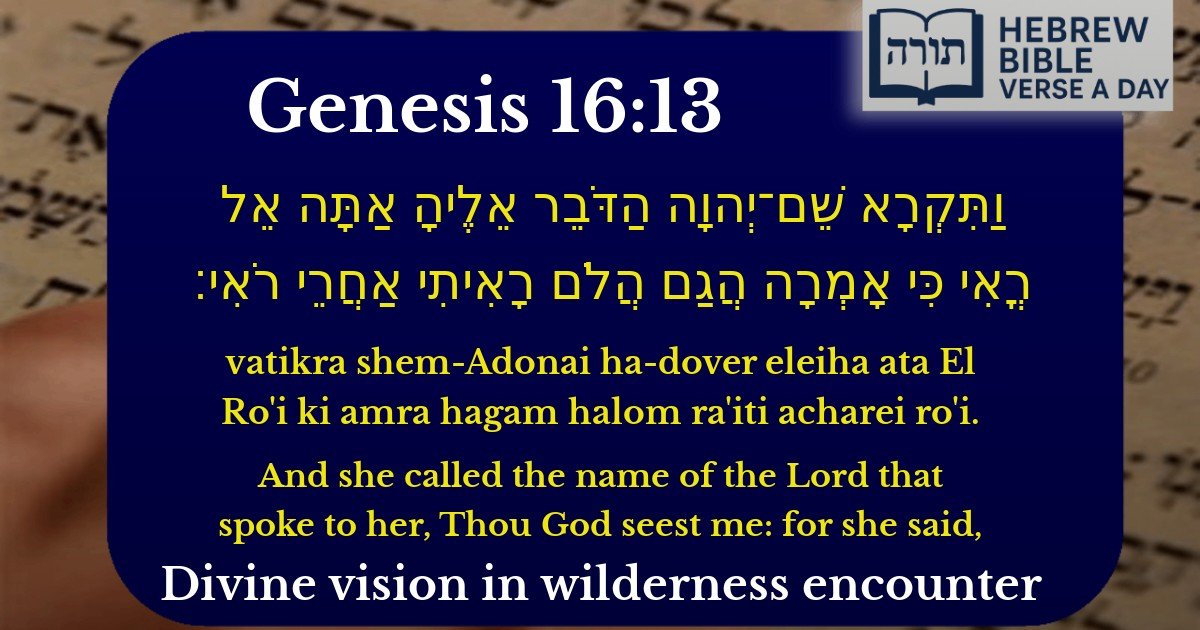

Genesis 16:13 - Divine vision in wilderness encounter

Genesis 16:13 - בראשית 16:13

Hebrew Text

וַתִּקְרָא שֵׁם־יְהוָה הַדֹּבֵר אֵלֶיהָ אַתָּה אֵל רֳאִי כִּי אָמְרָה הֲגַם הֲלֹם רָאִיתִי אַחֲרֵי רֹאִי׃

English Translation

And she called the name of the Lord that spoke to her, Thou God seest me: for she said,

Transliteration

Vatikra shem-Adonai ha-dover eleiha ata El Ro'i ki amra hagam halom ra'iti acharei ro'i.

Hebrew Leining Text

וַתִּקְרָ֤א שֵׁם־יְהֹוָה֙ הַדֹּבֵ֣ר אֵלֶ֔יהָ אַתָּ֖ה אֵ֣ל רֳאִ֑י כִּ֣י אָֽמְרָ֗ה הֲגַ֥ם הֲלֹ֛ם רָאִ֖יתִי אַחֲרֵ֥י רֹאִֽי׃

🎵 Listen to leining

Parasha Commentary

Context of the Verse

This verse (Bereshit 16:13) recounts Hagar's experience after fleeing from Sarai and encountering an angel of Hashem in the wilderness. Hagar, the maidservant of Sarai, had been mistreated and fled, but Hashem intervened, instructing her to return and promising her descendants through her son Yishmael.

Meaning of "El Ro'i"

Hagar names Hashem "El Ro'i" (אֵל רֳאִי), meaning "God of Seeing" or "God Who Sees Me." Rashi explains that Hagar recognized that Hashem sees the suffering of the oppressed, as He had seen her distress. The Midrash (Bereshit Rabbah 45:7) elaborates that Hagar was astonished that she merited a divine revelation, saying, "Have I even here seen after my seeing?"—expressing amazement that she, a lowly maidservant, was worthy of such an encounter.

Theological Implications

  • Divine Providence: The name "El Ro'i" emphasizes that Hashem is aware of human suffering and intervenes in individual lives, even those who are marginalized (Ramban).
  • Personal Revelation: Hagar's experience demonstrates that divine communication is not limited to the patriarchs and matriarchs but can extend to others who are in distress (Sforno).
  • Gratitude and Recognition: By naming Hashem, Hagar acknowledges His presence and kindness, setting a precedent for recognizing divine mercy in difficult circumstances (Malbim).

Phrase "Hagam Halom Ra'iti Acharei Ro'i"

The phrase "הֲגַם הֲלֹם רָאִיתִי אַחֲרֵי רֹאִי" ("Have I even here seen after my seeing?") reflects Hagar's astonishment. The Kli Yakar interprets this as her realization that she had previously encountered divine beings (when she was in Avraham and Sarai's household) but now understood that this was a unique, personal revelation. The Ibn Ezra suggests that she marveled at surviving the experience of seeing an angel, as it was commonly believed that one could not see a divine being and live (cf. Shemot 33:20).

Connection to the Well

The Midrash (Pirkei DeRabbi Eliezer 30) notes that the well where this encounter took place was the same one later used by Yaakov and Moshe, symbolizing that divine providence is continuous and that places of revelation retain holiness. This reinforces the idea that Hashem's presence is not confined to a single moment but is enduring.

📚 Talmud Citations

This verse is not quoted in the Talmud.

Frequently Asked Questions

Q: What does Hagar mean when she says 'You are the God who sees me' in Genesis 16:13?
A: Hagar, after fleeing from Sarai, encounters an angel of Hashem in the wilderness. When she realizes that Hashem has seen her suffering and responded to her distress, she calls Him 'El Ro'i' (the God who sees me). This teaches that Hashem is aware of human suffering and intervenes in ways we may not immediately recognize, as explained by Rashi and other commentaries.
Q: Why is Hagar's naming of Hashem significant in this verse?
A: Hagar's act of naming Hashem 'El Ro'i' is significant because it shows her personal recognition of Divine providence. Unlike other instances where names of Hashem are revealed through prophets, here a maidservant attributes a name based on her own experience. The Midrash highlights this as a moment of spiritual awakening, demonstrating that Hashem cares for all people, regardless of status.
Q: What lesson can we learn from Genesis 16:13 about facing difficulties?
A: This verse teaches that even in moments of despair (like Hagar fleeing into the wilderness), Hashem sees and responds to our struggles. The Rambam explains that recognizing Divine providence strengthens emunah (faith), reminding us that we are never alone in our challenges. This idea is foundational in Jewish thought—Hashem's awareness brings comfort and guidance.
Q: How does the name 'El Ro'i' (God who sees me) apply to our lives today?
A: The name 'El Ro'i' reminds us that Hashem is intimately aware of our individual circumstances, as the Talmud (Berachot 10a) discusses regarding Divine attention to personal prayers. In daily life, this encourages us to turn to Hashem in times of need and to trust that our struggles are seen, as echoed in the teachings of the Baal Shem Tov on hashgacha pratit (individual providence).