

Join Our Newsletter To Be Informed When New Videos Are Posted
Hebrew Text
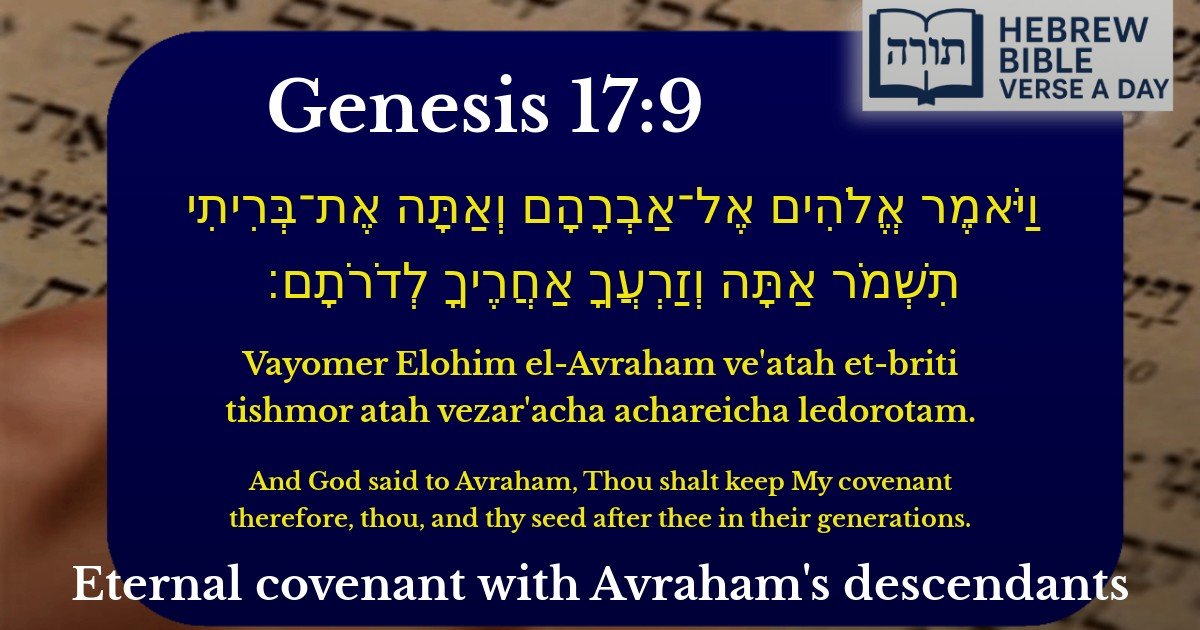
וַיֹּאמֶר אֱלֹהִים אֶל־אַבְרָהָם וְאַתָּה אֶת־בְּרִיתִי תִשְׁמֹר אַתָּה וְזַרְעֲךָ אַחֲרֶיךָ לְדֹרֹתָם׃
English Translation
And God said to Avraham, Thou shalt keep My covenant therefore, thou, and thy seed after thee in their generations.
Transliteration
Vayomer Elohim el-Avraham ve'atah et-briti tishmor atah vezar'acha achareicha ledorotam.
Hebrew Leining Text
וַיֹּ֤אמֶר אֱלֹהִים֙ אֶל־אַבְרָהָ֔ם וְאַתָּ֖ה אֶת־בְּרִיתִ֣י תִשְׁמֹ֑ר אַתָּ֛ה וְזַרְעֲךָ֥ אַֽחֲרֶ֖יךָ לְדֹרֹתָֽם׃
🎵 Listen to leining
Parasha Commentary
📚 Talmud Citations
This verse is quoted in the Talmud.
📖 Berakhot 48b
The verse is referenced in the context of discussing the covenant with Abraham and its implications for future generations.
📖 Yevamot 64a
The verse is cited in a discussion about the continuity of the covenant through Abraham's descendants.
📖 Nedarim 32a
The verse is mentioned in relation to the binding nature of the covenant and its transmission to future generations.
The Covenant with Avraham
The verse (Bereishit 17:9) states: "וַיֹּאמֶר אֱלֹהִים אֶל־אַבְרָהָם וְאַתָּה אֶת־בְּרִיתִי תִשְׁמֹר אַתָּה וְזַרְעֲךָ אַחֲרֶיךָ לְדֹרֹתָם" ("And God said to Avraham, Thou shalt keep My covenant therefore, thou, and thy seed after thee in their generations"). This marks a pivotal moment in the establishment of the eternal covenant (ברית) between Hashem and Avraham Avinu and his descendants.
Rashi's Explanation
Rashi explains that this covenant refers specifically to the mitzvah of מילה (brit milah), as the preceding verses discuss circumcision. He emphasizes that the obligation applies not only to Avraham but to all future generations. The phrase "אַתָּה וְזַרְעֲךָ" ("you and your seed") underscores the enduring nature of this covenant, binding all of Avraham's descendants.
Rambam's Perspective
In Hilchot Milah (1:1-2), the Rambam elaborates that this covenant is one of the foundational mitzvot of the Torah, given even before Matan Torah. He notes that its observance is so essential that one who neglects it is considered to have severed his connection to the Jewish people (ח"ו), as it is the sign of our unique relationship with Hashem.
Midrashic Insights
The Eternal Nature of the Covenant
The phrase "לְדֹרֹתָם" ("in their generations") is interpreted by the Kli Yakar as emphasizing that this covenant is everlasting and cannot be nullified. Even during periods of spiritual decline, the Jewish people have upheld this mitzvah as a testament to their unbreakable bond with Hashem.
Practical Implications
This verse establishes the perpetual obligation of brit milah, which remains a defining mitzvah for all Jewish males. The Shulchan Aruch (Yoreh De'ah 260) rules that a father must circumcise his son on the eighth day, and if he neglects this duty, the beit din is obligated to ensure its fulfillment.