

Join Our Newsletter To Be Informed When New Videos Are Posted
Hebrew Text
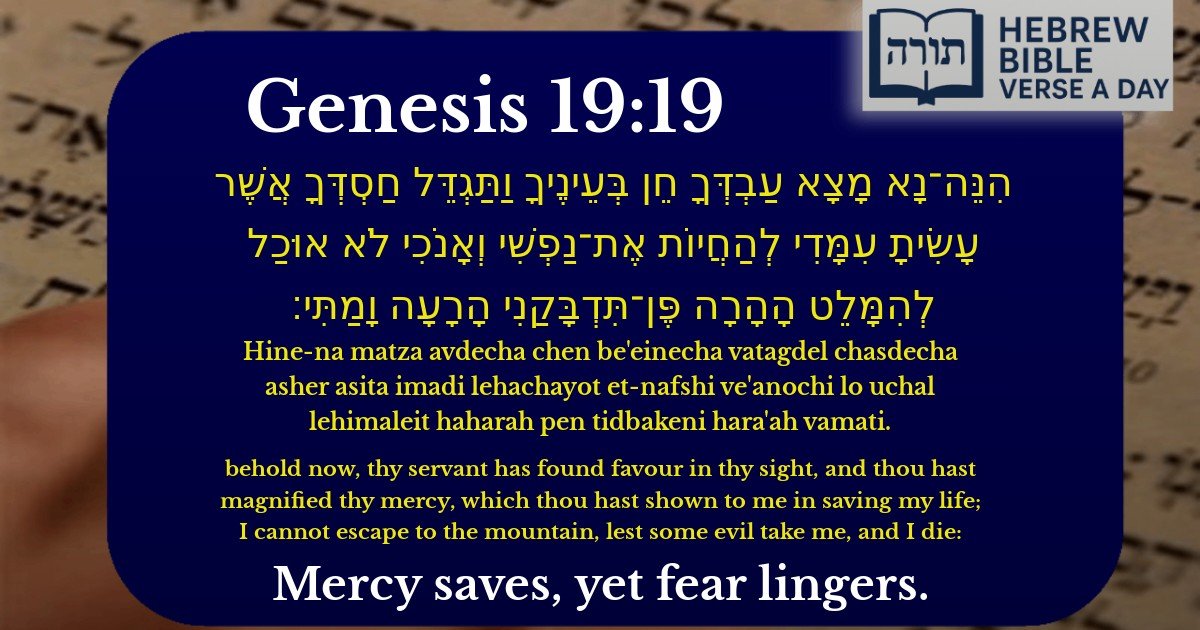
הִנֵּה־נָא מָצָא עַבְדְּךָ חֵן בְּעֵינֶיךָ וַתַּגְדֵּל חַסְדְּךָ אֲשֶׁר עָשִׂיתָ עִמָּדִי לְהַחֲיוֹת אֶת־נַפְשִׁי וְאָנֹכִי לֹא אוּכַל לְהִמָּלֵט הָהָרָה פֶּן־תִּדְבָּקַנִי הָרָעָה וָמַתִּי׃
English Translation
behold now, thy servant has found favour in thy sight, and thou hast magnified thy mercy, which thou hast shown to me in saving my life; I cannot escape to the mountain, lest some evil take me, and I die:
Transliteration
Hine-na matza avdecha chen be'einecha vatagdel chasdecha asher asita imadi lehachayot et-nafshi ve'anochi lo uchal lehimaleit haharah pen tidbakeni hara'ah vamati.
Hebrew Leining Text
הִנֵּה־נָ֠א מָצָ֨א עַבְדְּךָ֣ חֵן֮ בְּעֵינֶ֒יךָ֒ וַתַּגְדֵּ֣ל חַסְדְּךָ֗ אֲשֶׁ֤ר עָשִׂ֙יתָ֙ עִמָּדִ֔י לְהַחֲי֖וֹת אֶת־נַפְשִׁ֑י וְאָנֹכִ֗י לֹ֤א אוּכַל֙ לְהִמָּלֵ֣ט הָהָ֔רָה פֶּן־תִּדְבָּקַ֥נִי הָרָעָ֖ה וָמַֽתִּי׃
🎵 Listen to leining
Parasha Commentary
📚 Talmud Citations
This verse is not quoted in the Talmud.
Context of the Verse
This verse (Genesis 19:19) is spoken by Lot to the angel who rescued him from the destruction of Sodom. Lot expresses gratitude for being saved but expresses fear about fleeing to the mountains, as instructed, due to his perceived vulnerability.
Rashi's Commentary
Rashi explains that Lot acknowledges the kindness (chesed) shown to him by the angels, saving his life. However, he argues that he lacks the strength to flee to the mountains, as the journey would be too difficult for him. Rashi notes that Lot's hesitation reflects his attachment to material comforts, as he later chooses to settle in Zoar instead (Genesis 19:20-22).
Rambam's Perspective on Divine Mercy
Rambam (Maimonides) discusses divine mercy (rachamim) in Moreh Nevuchim (Guide for the Perplexed), emphasizing that divine kindness is not arbitrary but aligned with divine wisdom. Lot's recognition of mercy (chesed) highlights that his survival was not due to his own merit but rather Hashem's compassion.
Midrashic Insights
Halachic Implications
The Talmud (Sanhedrin 108a) discusses Lot’s rescue in the context of divine justice, noting that he was spared only in the merit of Avraham (Genesis 19:29). This reinforces the principle of zechut avot (merit of the fathers) and the importance of righteous ancestors.
Spiritual Lessons