Frequently Asked Questions
Q: What is the meaning of the covenant between Avraham and Avimelekh in Genesis 21:27?
A: The covenant between Avraham and Avimelekh was a peace agreement to resolve their earlier dispute over the well of Be'er Sheva (Rashi on Genesis 21:27). By exchanging gifts and making a covenant, they established mutual respect and peaceful relations between them.
Q: Why did Avraham give sheep and oxen to Avimelekh?
A: Avraham gave sheep and oxen as a sign of goodwill and to formalize their covenant (Ramban on Genesis 21:27). In ancient times, exchanging gifts was a common way to seal agreements and demonstrate sincerity in forming peaceful relationships.
Q: What can we learn from Avraham's actions in making a covenant with Avimelekh?
A: We learn the importance of pursuing peace (דְּרִישַׁת שָׁלוֹם) and resolving conflicts diplomatically. Avraham, despite being a righteous man, chose to make peace with Avimelekh rather than hold onto past grievances (Midrash Bereishit Rabbah 54:4). This teaches us the value of compromise and peaceful coexistence.
Q: How does the concept of making a covenant apply in Jewish life today?
A: Just as Avraham and Avimelekh formalized their agreement with a covenant, Jewish tradition emphasizes the importance of keeping one's word and honoring agreements (Talmud, Makkot 24a). Whether in business or personal relationships, trust and mutual commitment remain essential values.
Q: Why is this event with Avimelekh significant in Avraham's story?
A: This event shows Avraham's role as a peacemaker and his ability to interact wisely with neighboring rulers (Sforno on Genesis 21:27). It also demonstrates G-d's blessing upon Avraham, as he had enough livestock to give as gifts, fulfilling the promise that he would become a great nation (Genesis 12:2).

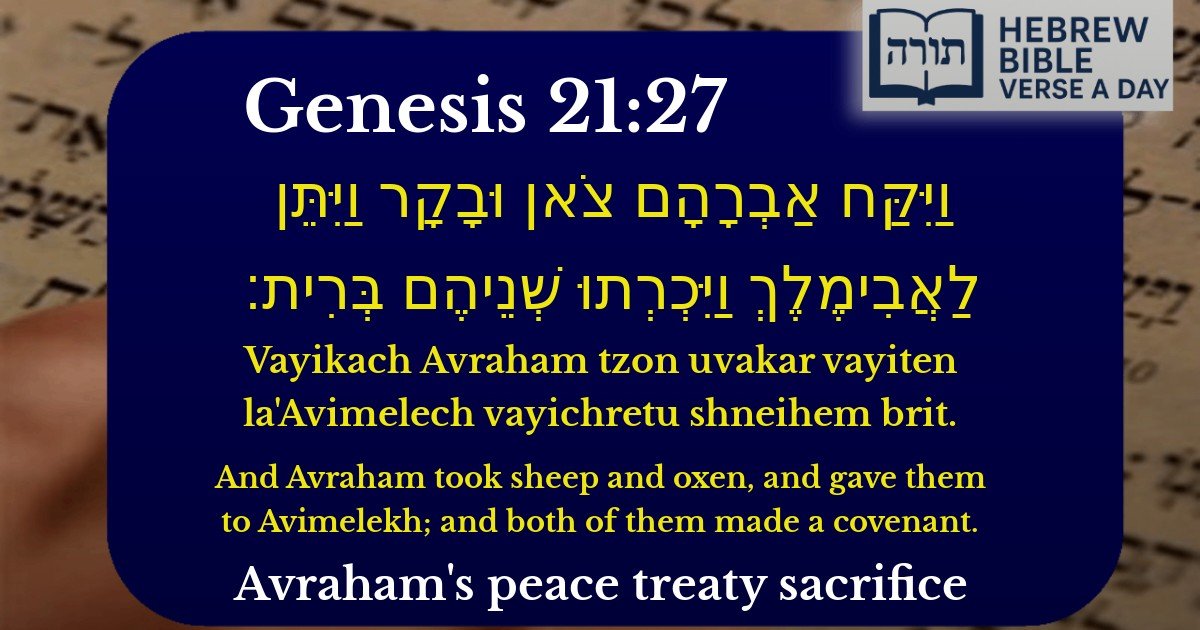

Context of the Covenant
The verse (Bereishit 21:27) describes Avraham Avinu entering into a covenant (brit) with Avimelekh, king of Gerar, after resolving a dispute over a well. This event follows Avimelekh's earlier encounter with Avraham (in Bereishit 20), where Avimelekh took Sarah and was subsequently warned by Hashem in a dream.
Rashi's Explanation
Rashi (Bereishit 21:27) explains that Avraham gave Avimelekh sheep and oxen as part of the covenant ceremony. This follows the ancient custom of cutting animals in half when forming a covenant (as seen later with the Brit Bein HaBetarim in Bereishit 15). The act symbolizes that whoever violates the covenant will be like these severed animals.
Rambam's Perspective on Covenants
In Hilchot Melachim (10:2), the Rambam discusses the halachic validity of treaties with non-Jewish nations. While Avraham's covenant with Avimelekh was a political agreement, it set a precedent for peaceful coexistence with neighboring kingdoms, provided they do not pose a threat to Jewish life or values.
Midrashic Insights
Symbolism of the Animals
The Kli Yakar (Bereishit 21:27) explains that the sheep and oxen represent different aspects of Avraham's wealth and influence:
Halachic Implications
The Sforno notes that this covenant established boundaries and mutual respect between Avraham's descendants and the Philistines (Avimelekh's people). This becomes significant later in Jewish history when dealing with neighboring nations while maintaining Jewish sovereignty and values.