

Join Our Newsletter To Be Informed When New Videos Are Posted
Hebrew Text
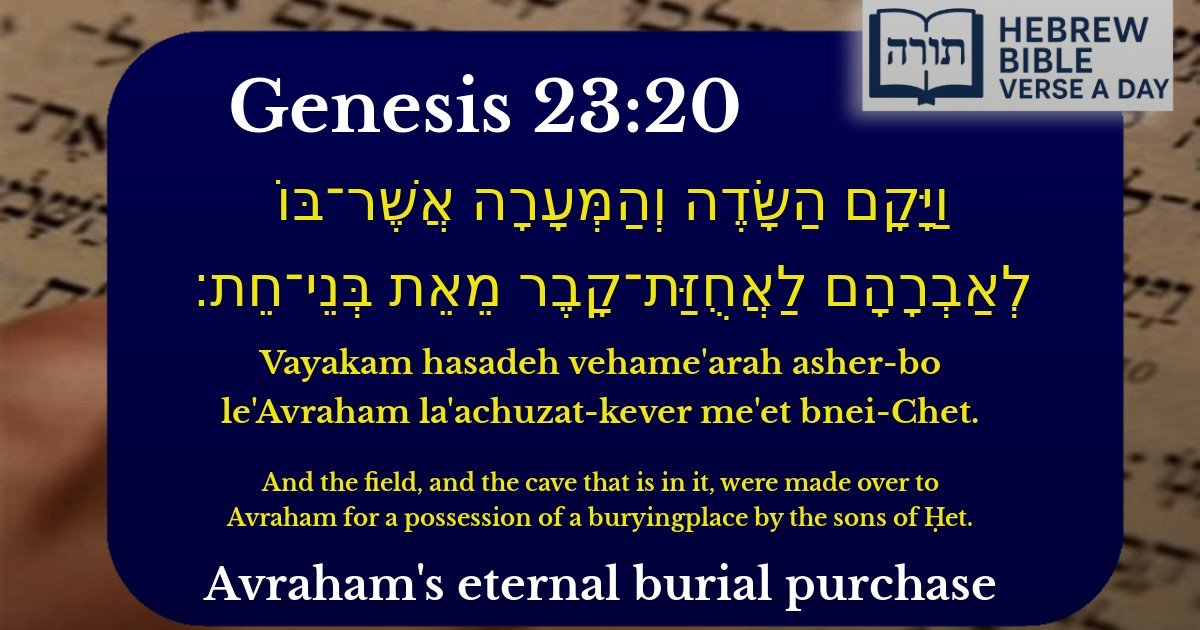
וַיָּקָם הַשָּׂדֶה וְהַמְּעָרָה אֲשֶׁר־בּוֹ לְאַבְרָהָם לַאֲחֻזַּת־קָבֶר מֵאֵת בְּנֵי־חֵת׃
English Translation
And the field, and the cave that is in it, were made over to Avraham for a possession of a buryingplace by the sons of Ḥet.
Transliteration
Vayakam hasadeh vehame'arah asher-bo le'Avraham la'achuzat-kever me'et bnei-Chet.
Hebrew Leining Text
וַיָּ֨קׇם הַשָּׂדֶ֜ה וְהַמְּעָרָ֧ה אֲשֶׁר־בּ֛וֹ לְאַבְרָהָ֖ם לַאֲחֻזַּת־קָ֑בֶר מֵאֵ֖ת בְּנֵי־חֵֽת׃ {ס}
🎵 Listen to leining
Parasha Commentary
📚 Talmud Citations
This verse is quoted in the Talmud.
📖 Bava Batra 100a
The verse is referenced in a discussion about the legal acquisition of property, specifically regarding Abraham's purchase of the cave of Machpelah as a burial site.
📖 Sanhedrin 111a
The verse is mentioned in the context of discussing the significance of the land of Israel and the patriarchs' connection to it, particularly focusing on Abraham's acquisition of the burial site.
Acquisition of the Cave of Machpelah
The verse describes the formal transfer of the field and cave of Machpelah to Avraham as a burial possession from the sons of Ḥet (Hittites). This transaction is significant as it represents the first legally acquired parcel of land in Eretz Yisrael by our forefather Avraham, fulfilling Hashem's promise of the land to his descendants (Bereishit 15:7).
Legal and Spiritual Significance
Rashi (Bereishit 23:17) emphasizes that the Torah details this transaction meticulously to demonstrate that Avraham properly acquired the land through legal purchase, not seizure. The Midrash (Bereishit Rabbah 79:7) notes that this acquisition established a foothold in Eretz Yisrael for future generations.
Halachic Implications
The Rambam (Hilchot Mechira 1:15) derives from this episode that land acquisitions require both payment and a formal contract (shtar). The Talmud (Bava Metzia 87a) notes how Avraham's insistence on proper legal formalities sets a precedent for Jewish business ethics.
Eternal Connection to Eretz Yisrael
The Sforno explains that this purchase established an eternal Jewish claim to the land, with the cave remaining a sacred site throughout Jewish history. The Netziv (Ha'amek Davar) adds that this transaction demonstrated Avraham's emunah (faith) in Hashem's promise, as he invested in land he wouldn't fully possess for generations.