

Join Our Newsletter To Be Informed When New Videos Are Posted
Hebrew Text
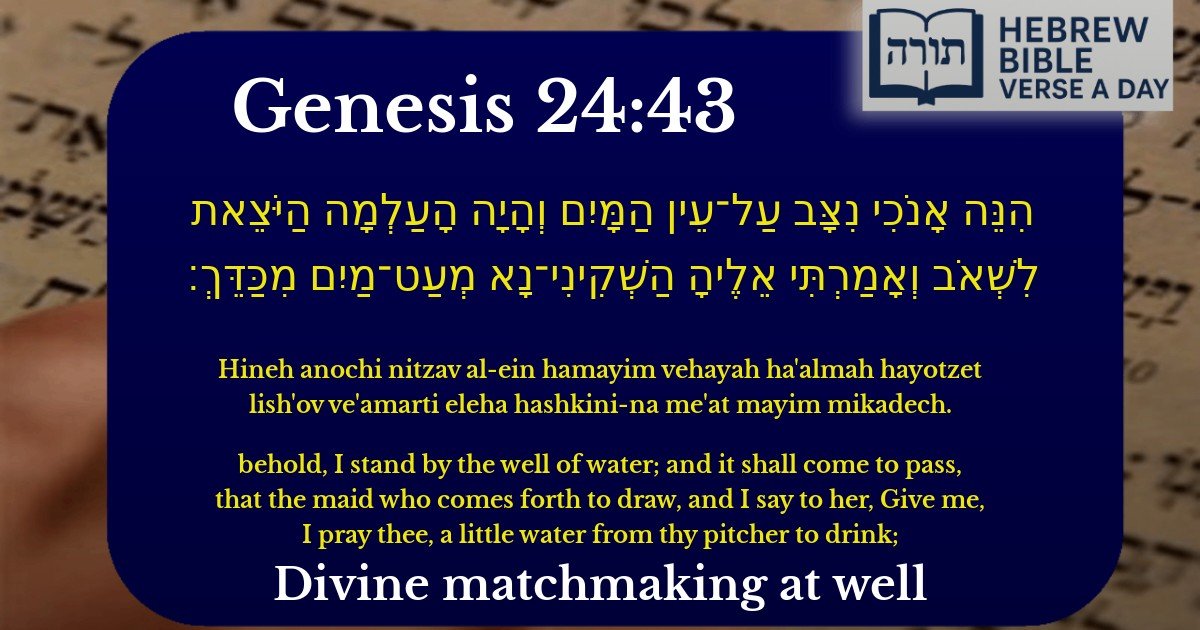
הִנֵּה אָנֹכִי נִצָּב עַל־עֵין הַמָּיִם וְהָיָה הָעַלְמָה הַיֹּצֵאת לִשְׁאֹב וְאָמַרְתִּי אֵלֶיהָ הַשְׁקִינִי־נָא מְעַט־מַיִם מִכַּדֵּךְ׃
English Translation
behold, I stand by the well of water; and it shall come to pass, that the maid who comes forth to draw, and I say to her, Give me, I pray thee, a little water from thy pitcher to drink;
Transliteration
Hineh anochi nitzav al-ein hamayim vehayah ha'almah hayotzet lish'ov ve'amarti eleha hashkini-na me'at mayim mikadech.
Hebrew Leining Text
הִנֵּ֛ה אָנֹכִ֥י נִצָּ֖ב עַל־עֵ֣ין הַמָּ֑יִם וְהָיָ֤ה הָֽעַלְמָה֙ הַיֹּצֵ֣את לִשְׁאֹ֔ב וְאָמַרְתִּ֣י אֵלֶ֔יהָ הַשְׁקִֽינִי־נָ֥א מְעַט־מַ֖יִם מִכַּדֵּֽךְ׃
🎵 Listen to leining
Parasha Commentary
📚 Talmud Citations
This verse is quoted in the Talmud.
📖 Chullin 95b
The verse is referenced in a discussion about the proper conduct of a servant of God, drawing a parallel to Eliezer's actions at the well when seeking a wife for Isaac.
📖 Taanit 4a
The verse is mentioned in the context of discussing divine providence and how God orchestrates events, using Eliezer's encounter at the well as an example.
Context in Parashat Chayei Sarah
This verse (Bereshit 24:43) appears in the narrative of Eliezer, Avraham's servant, seeking a wife for Yitzchak. Eliezer recounts his prayer at the well, where he asks for a sign to identify the suitable bride for Yitzchak. The verse reflects his anticipation of the test he devised—that the right woman would offer water not only to him but also to his camels.
Rashi's Commentary on the Verse
Rashi (Bereshit 24:43) notes that Eliezer refers to the potential bride as "הָעַלְמָה" (the maiden) rather than "בְּתוּלָה" (a virgin), which might seem unusual. Rashi explains that this term implies she was young ("עַלְמָה" from the root meaning "hidden," suggesting youthful modesty) and emphasizes her suitability for Yitzchak. Additionally, Rashi highlights that Eliezer's phrasing—"הַיֹּצֵאת לִשְׁאֹב" (who comes forth to draw)—indicates her diligence in performing the mitzvah of drawing water for others.
Rambam on Divine Providence in Matchmaking
Rambam (Hilchot Ishut 15:2) discusses how Divine Providence guides proper matches in marriage. Eliezer's prayer and the subsequent events demonstrate this principle—Rivka's kindness (chesed) in offering water to Eliezer and his camels was a clear sign of her righteousness, aligning with Yitzchak's spiritual stature. The well, a symbol of Torah (as water represents wisdom), further underscores the divine orchestration of their union.
Midrashic Insights
The Significance of the Well
The well ("עֵין הַמָּיִם") is a recurring motif in Torah, often associated with pivotal meetings (e.g., Yaakov and Rachel, Moshe and Tzipporah). Here, it symbolizes the "wellspring" of Yitzchak's future—Rivka's righteousness would nourish the continuity of Avraham's legacy. The Chizkuni (Bereshit 24:43) notes that Eliezer stood specifically by the well to observe Rivka's actions, as character is revealed through deeds, not words alone.