

Join Our Newsletter To Be Informed When New Videos Are Posted
Hebrew Text
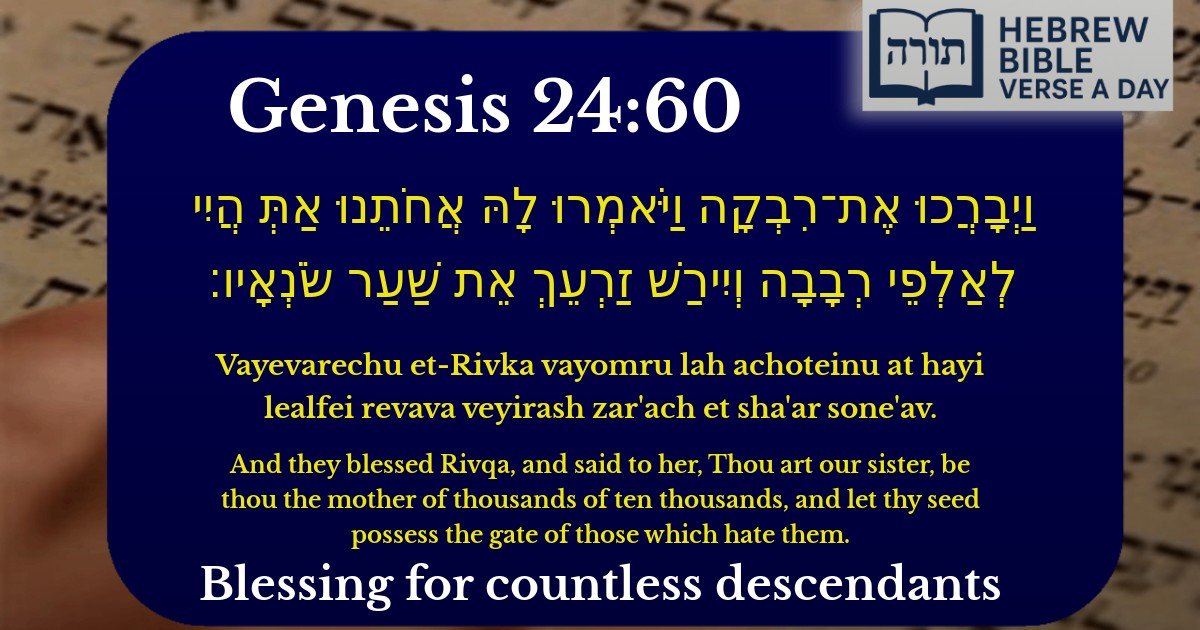
וַיְבָרֲכוּ אֶת־רִבְקָה וַיֹּאמְרוּ לָהּ אֲחֹתֵנוּ אַתְּ הֲיִי לְאַלְפֵי רְבָבָה וְיִירַשׁ זַרְעֵךְ אֵת שַׁעַר שֹׂנְאָיו׃
English Translation
And they blessed Rivqa, and said to her, Thou art our sister, be thou the mother of thousands of ten thousands, and let thy seed possess the gate of those which hate them.
Transliteration
Vayevarechu et-Rivka vayomru lah achoteinu at hayi lealfei revava veyirash zar'ach et sha'ar sone'av.
Hebrew Leining Text
וַיְבָרְכ֤וּ אֶת־רִבְקָה֙ וַיֹּ֣אמְרוּ לָ֔הּ אֲחֹתֵ֕נוּ אַ֥תְּ הֲיִ֖י לְאַלְפֵ֣י רְבָבָ֑ה וְיִירַ֣שׁ זַרְעֵ֔ךְ אֵ֖ת שַׁ֥עַר שֹׂנְאָֽיו׃
🎵 Listen to leining
Parasha Commentary
📚 Talmud Citations
This verse is quoted in the Talmud.
📖 Yevamot 64a
The verse is referenced in a discussion about the blessings given to Rivka (Rebecca) and their fulfillment in her descendants.
📖 Bava Batra 123a
The verse is cited in the context of discussing the blessings and inheritance of the patriarchs and matriarchs.
Blessing of Rivka
The verse (Bereshit 24:60) describes the blessing given to Rivka by her family before she departs with Eliezer to marry Yitzchak. The blessing contains profound significance in Jewish tradition.
"Be thou the mother of thousands of ten thousands"
Rashi explains that this blessing foretells Rivka's descendants - that she would become the matriarch of vast multitudes. The phrase "אַלְפֵי רְבָבָה" (thousands of ten thousands) alludes to the future tribes of Israel who would descend from her. The Midrash (Bereshit Rabbah 60:15) connects this to the 600,000 Israelites who stood at Mount Sinai, showing how Rivka's progeny would become the foundation of the Jewish nation.
"Let thy seed possess the gate of those which hate them"
The Ramban interprets this as a prophecy that Rivka's descendants would achieve victory over their enemies. In ancient times, the city gate was where legal and military matters were decided (as seen in Devarim 21:19 and elsewhere). The blessing therefore suggests Rivka's offspring would prevail in both judicial and military conflicts with their adversaries.
The Kli Yakar offers a deeper interpretation: "שער שונאיו" (the gate of those which hate them) refers specifically to the gates of the Heavenly Court. He explains that Rivka's descendants would merit to have their prayers enter through these gates and be accepted before Hashem, even when facing enemies.
The Significance of "Our Sister"
The family's address to Rivka as "אֲחֹתֵנוּ" (our sister) before giving the blessing is noteworthy. The Malbim explains this demonstrates their complete identification with her - though she was leaving to join Avraham's family, they emphasized their eternal bond with her. This familial connection remained despite geographical separation.
Fulfillment in Jewish History