

Join Our Newsletter To Be Informed When New Videos Are Posted
Hebrew Text
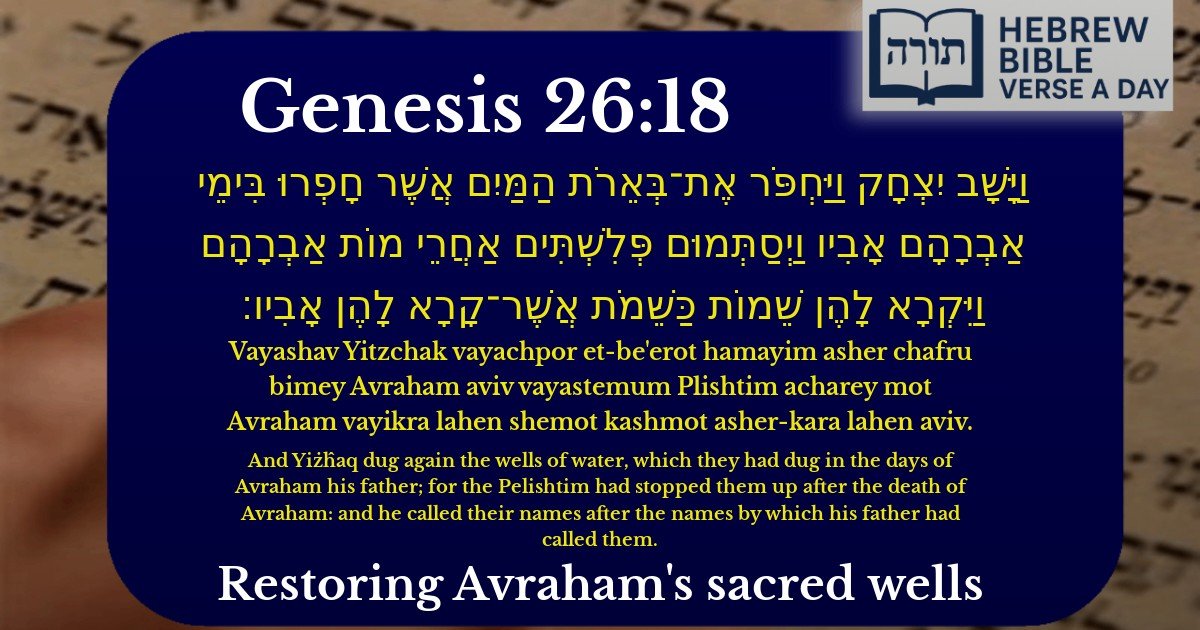
וַיָּשָׁב יִצְחָק וַיַּחְפֹּר אֶת־בְּאֵרֹת הַמַּיִם אֲשֶׁר חָפְרוּ בִּימֵי אַבְרָהָם אָבִיו וַיְסַתְּמוּם פְּלִשְׁתִּים אַחֲרֵי מוֹת אַבְרָהָם וַיִּקְרָא לָהֶן שֵׁמוֹת כַּשֵּׁמֹת אֲשֶׁר־קָרָא לָהֶן אָבִיו׃
English Translation
And Yiżĥaq dug again the wells of water, which they had dug in the days of Avraham his father; for the Pelishtim had stopped them up after the death of Avraham: and he called their names after the names by which his father had called them.
Transliteration
Vayashav Yitzchak vayachpor et-be'erot hamayim asher chafru bimey Avraham aviv vayastemum Plishtim acharey mot Avraham vayikra lahen shemot kashmot asher-kara lahen aviv.
Hebrew Leining Text
וַיָּ֨שׇׁב יִצְחָ֜ק וַיַּחְפֹּ֣ר ׀ אֶת־בְּאֵרֹ֣ת הַמַּ֗יִם אֲשֶׁ֤ר חָֽפְרוּ֙ בִּימֵי֙ אַבְרָהָ֣ם אָבִ֔יו וַיְסַתְּמ֣וּם פְּלִשְׁתִּ֔ים אַחֲרֵ֖י מ֣וֹת אַבְרָהָ֑ם וַיִּקְרָ֤א לָהֶן֙ שֵׁמ֔וֹת כַּשֵּׁמֹ֕ת אֲשֶׁר־קָרָ֥א לָהֶ֖ן אָבִֽיו׃
🎵 Listen to leining
Parasha Commentary
📚 Talmud Citations
This verse is quoted in the Talmud.
📖 Sanhedrin 111a
The verse is referenced in a discussion about the actions of Isaac and the significance of re-digging the wells, symbolizing the continuity of Abraham's legacy.
Reclaiming the Wells of Avraham
The verse describes Yitzchak's act of re-digging the wells that his father Avraham had originally dug, which the Philistines had stopped up after Avraham's death. Rashi explains that the Philistines filled the wells with earth to deny Yitzchak their use, demonstrating hostility despite Avraham's earlier peaceful relations with them (Rashi on Bereishit 26:15). This reflects a recurring theme in Jewish history where the righteous must rebuild what was destroyed by others.
Continuity with Avraham's Legacy
Yitzchak not only re-dug the wells but also restored their original names, as stated: "he called their names after the names by which his father had called them." The Ramban (Bereishit 26:18) emphasizes that this act symbolizes Yitzchak's commitment to preserving his father's spiritual legacy. The wells represent Torah and mitzvot—eternal sources of life that must be constantly maintained and reclaimed by each generation.
Symbolism of the Wells
Yitzchak's Role in Jewish History
The Talmud (Sanhedrin 89b) compares Yitzchak's redigging of the wells to the Jewish people's enduring commitment to Torah despite exile and persecution. Just as Yitzchak restored his father's wells, future generations must reclaim and uphold the teachings of their ancestors. The Kli Yakar adds that Yitzchak's actions foreshadow the Jewish people's resilience—ensuring that the "wells of faith" are never permanently sealed.