

Join Our Newsletter To Be Informed When New Videos Are Posted
Hebrew Text
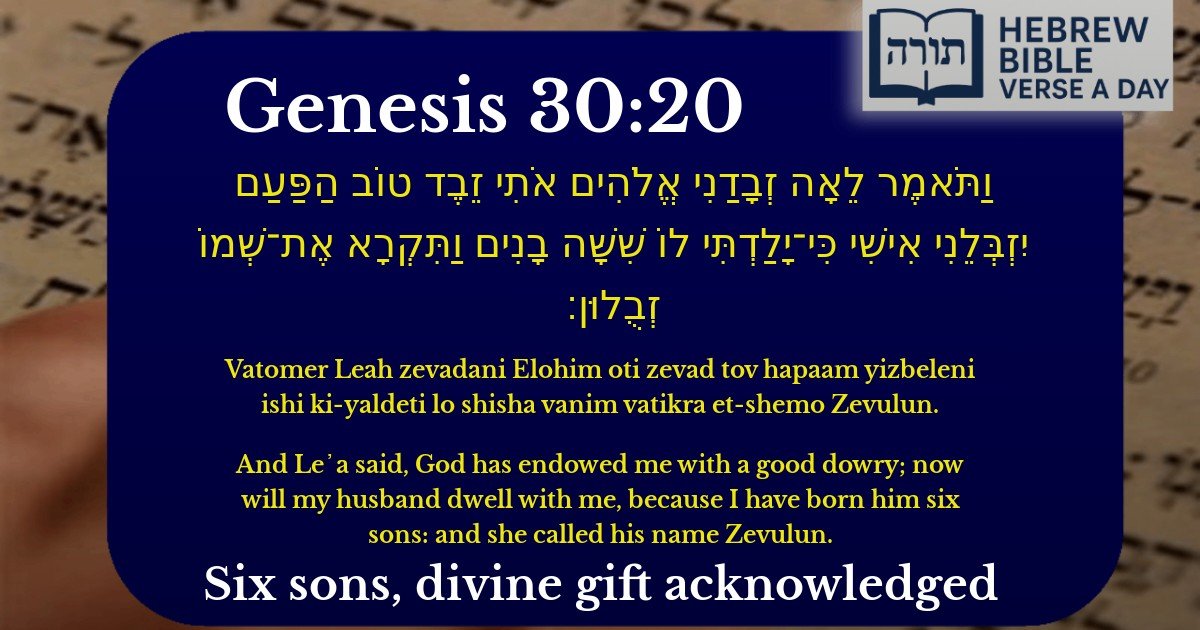
וַתֹּאמֶר לֵאָה זְבָדַנִי אֱלֹהִים אֹתִי זֵבֶד טוֹב הַפַּעַם יִזְבְּלֵנִי אִישִׁי כִּי־יָלַדְתִּי לוֹ שִׁשָּׁה בָנִים וַתִּקְרָא אֶת־שְׁמוֹ זְבֻלוּן׃
English Translation
And Le᾽a said, God has endowed me with a good dowry; now will my husband dwell with me, because I have born him six sons: and she called his name Zevulun.
Transliteration
Vatomer Leah zevadani Elohim oti zevad tov hapaam yizbeleni ishi ki-yaldeti lo shisha vanim vatikra et-shemo Zevulun.
Hebrew Leining Text
וַתֹּ֣אמֶר לֵאָ֗ה זְבָדַ֨נִי אֱלֹהִ֥ים ׀ אֹתִי֮ זֵ֣בֶד טוֹב֒ הַפַּ֙עַם֙ יִזְבְּלֵ֣נִי אִישִׁ֔י כִּֽי־יָלַ֥דְתִּי ל֖וֹ שִׁשָּׁ֣ה בָנִ֑ים וַתִּקְרָ֥א אֶת־שְׁמ֖וֹ זְבֻלֽוּן׃
🎵 Listen to leining
Parasha Commentary
📚 Talmud Citations
This verse is quoted in the Talmud.
📖 Berakhot 7b
The verse is referenced in a discussion about the names Leah gave to her sons and their meanings, particularly focusing on the name Zevulun and its significance.
📖 Megillah 14a
The verse is cited in a discussion about the righteous women of the Bible and their contributions, highlighting Leah's gratitude and the naming of her son Zevulun.
Leah's Expression of Gratitude
Leah declares, "זְבָדַנִי אֱלֹהִים אֹתִי זֵבֶד טוֹב" ("God has endowed me with a good dowry"). Rashi explains that Leah recognized that the birth of her sixth son, Zevulun, was a special gift from Hashem. The term "זֵבֶד" (zeved) refers to a generous gift, indicating Leah's deep appreciation for Divine kindness in granting her children.
The Meaning of "Zevulun"
Leah names her son זְבֻלוּן (Zevulun), which is connected to the root זבל, meaning "to dwell" or "to honor." The Midrash (Bereshit Rabbah 71:4) explains that Leah anticipated that her husband, Yaakov, would now dwell (יִזְבְּלֵנִי) with her more permanently, as she had borne him six sons—half of the future tribes of Israel. This reflects her hope for greater marital harmony.
Leah's Perspective on Her Role
Leah emphasizes that she has borne Yaakov "שִׁשָּׁה בָנִים" (six sons), underscoring her fulfillment of the mitzvah of procreation. The Ramban notes that Leah saw each child as a Divine blessing, reinforcing her righteousness. Unlike earlier births, where she expressed longing for Yaakov's affection (e.g., Reuven, "See, a son!"), here she focuses on gratitude to Hashem.
Symbolism of the Sixth Son