

Join Our Newsletter To Be Informed When New Videos Are Posted
Hebrew Text
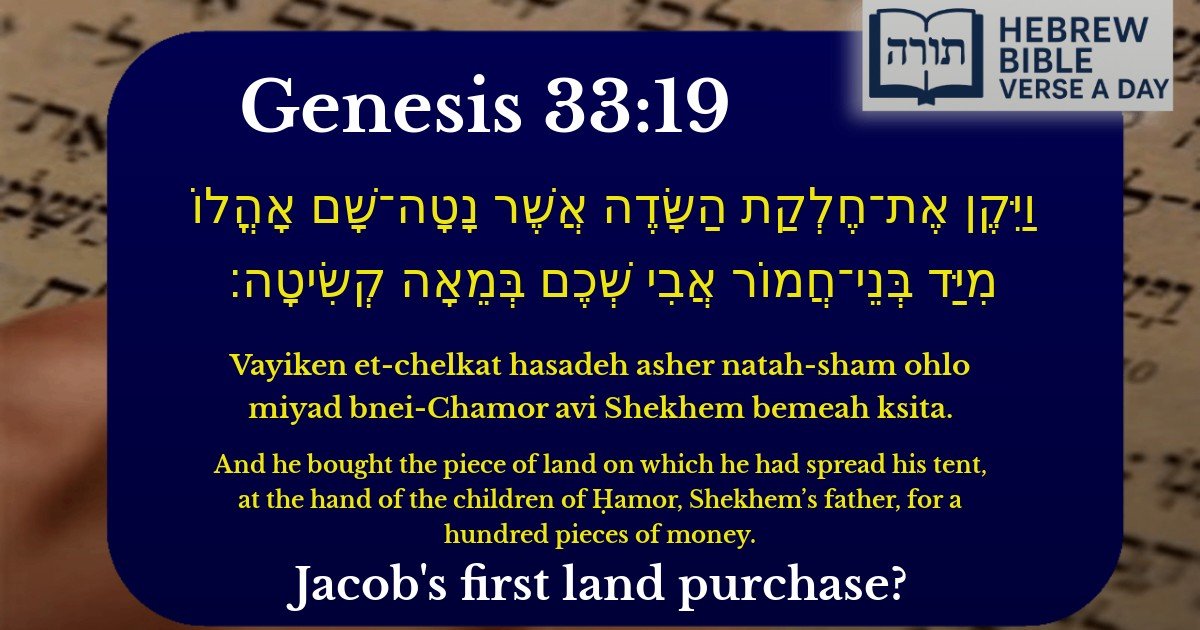
וַיִּקֶן אֶת־חֶלְקַת הַשָּׂדֶה אֲשֶׁר נָטָה־שָׁם אָהֳלוֹ מִיַּד בְּנֵי־חֲמוֹר אֲבִי שְׁכֶם בְּמֵאָה קְשִׂיטָה׃
English Translation
And he bought the piece of land on which he had spread his tent, at the hand of the children of Ḥamor, Shekhem’s father, for a hundred pieces of money.
Transliteration
Vayiken et-chelkat hasadeh asher natah-sham ohlo miyad bnei-Chamor avi Shekhem bemeah ksita.
Hebrew Leining Text
וַיִּ֜קֶן אֶת־חֶלְקַ֣ת הַשָּׂדֶ֗ה אֲשֶׁ֤ר נָֽטָה־שָׁם֙ אׇהֳל֔וֹ מִיַּ֥ד בְּנֵֽי־חֲמ֖וֹר אֲבִ֣י שְׁכֶ֑ם בְּמֵאָ֖ה קְשִׂיטָֽה׃
🎵 Listen to leining
Parasha Commentary
📚 Talmud Citations
This verse is quoted in the Talmud.
📖 Sotah 13b
The verse is referenced in a discussion about the purchase of land by Jacob and its significance in Jewish tradition.
📖 Megillah 16b
The verse is cited in a discussion about the proper way to recount historical events and transactions in Jewish texts.
Purchase of the Field in Shekhem
The verse describes Yaakov Avinu's purchase of a field in Shekhem from the children of Chamor. This transaction holds deep significance in Jewish tradition, as it represents the first acquisition of land in Eretz Yisrael by one of our forefathers. Rashi (Bereshit 33:19) explains that Yaakov specifically sought to establish a permanent foothold in the land through this purchase, rather than merely dwelling there temporarily.
The Price of 100 Kesitah
The Midrash (Bereshit Rabbah 79:7) discusses the meaning of "100 kesitah," noting that this was a substantial sum. Ramban (Bereshit 33:19) suggests this amount may have been intentionally large to demonstrate Yaakov's commitment to the land and to prevent future disputes about ownership. Some commentators connect this to the later purchase of the Machpelah cave, seeing both as establishing Jewish claims to the land.
Halachic Implications
The Talmud (Kiddushin 26a) cites this transaction as a precedent for the halachic principle that land can be acquired through payment (kinyan kesef). Rambam (Hilchot Mechira 1:1) later codifies this as one of the valid methods of acquiring property according to Torah law.
Historical Significance
Moral Lessons
The Kli Yakar (Bereshit 33:19) emphasizes that Yaakov chose to purchase the land rather than take it by force, teaching the importance of ethical conduct even when dealing with non-Jews. This sets a precedent for how Bnei Yisrael should conduct themselves in business and land acquisition matters.