

Join Our Newsletter To Be Informed When New Videos Are Posted
Hebrew Text
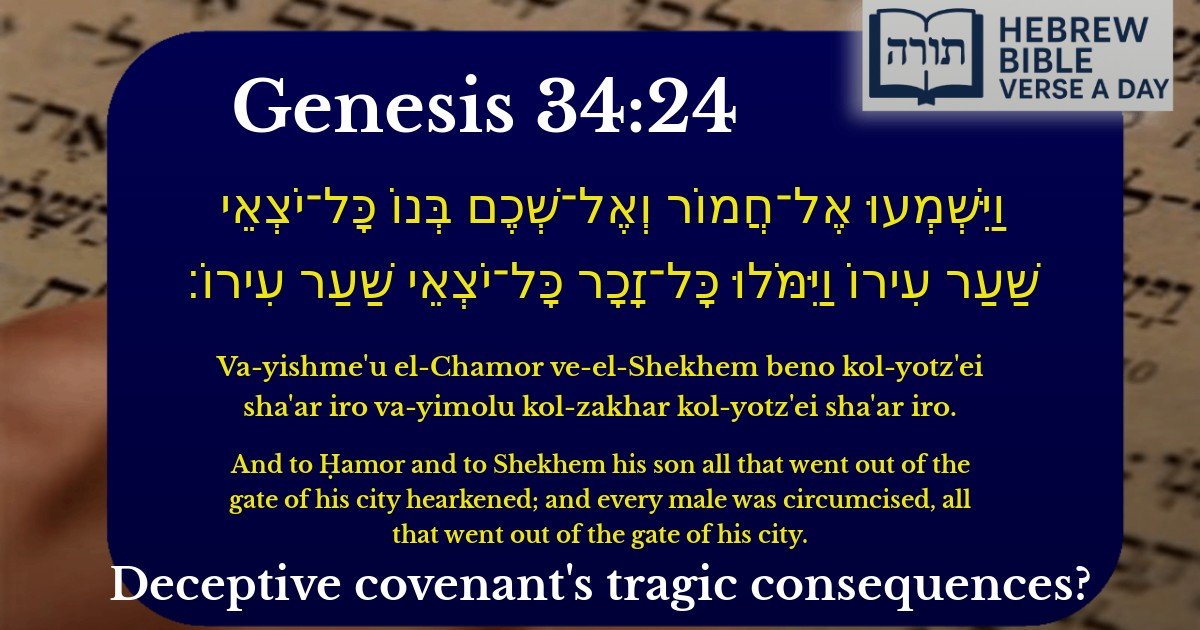
וַיִּשְׁמְעוּ אֶל־חֲמוֹר וְאֶל־שְׁכֶם בְּנוֹ כָּל־יֹצְאֵי שַׁעַר עִירוֹ וַיִּמֹּלוּ כָּל־זָכָר כָּל־יֹצְאֵי שַׁעַר עִירוֹ׃
English Translation
And to Ḥamor and to Shekhem his son all that went out of the gate of his city hearkened; and every male was circumcised, all that went out of the gate of his city.
Transliteration
Va-yishme'u el-Chamor ve-el-Shekhem beno kol-yotz'ei sha'ar iro va-yimolu kol-zakhar kol-yotz'ei sha'ar iro.
Hebrew Leining Text
וַיִּשְׁמְע֤וּ אֶל־חֲמוֹר֙ וְאֶל־שְׁכֶ֣ם בְּנ֔וֹ כׇּל־יֹצְאֵ֖י שַׁ֣עַר עִיר֑וֹ וַיִּמֹּ֙לוּ֙ כׇּל־זָכָ֔ר כׇּל־יֹצְאֵ֖י שַׁ֥עַר עִירֽוֹ׃
🎵 Listen to leining
Parasha Commentary
📚 Talmud Citations
This verse is quoted in the Talmud.
📖 Avodah Zarah 25b
The verse is referenced in a discussion about the actions of Shekhem and the inhabitants of the city, particularly in the context of their circumcision and the implications of their conversion.
Context of the Verse
The verse (Bereshit 34:24) describes the aftermath of Shekhem's violation of Dinah, daughter of Yaakov, and the subsequent negotiations between Yaakov's family and the people of Shekhem. The inhabitants of the city agreed to circumcise themselves as part of the proposed covenant with Yaakov's household.
Rashi's Commentary
Rashi explains that "all that went out of the gate of his city" refers to the city's leadership and influential members, as legal and communal matters were traditionally decided at the city gate (see Rashi on Bereshit 34:24). Their agreement to circumcision demonstrated their submission to the terms set by Yaakov's sons.
Rambam's Perspective
Rambam (Hilchot Melachim 10:3) discusses the halachic implications of this event, noting that the circumcision performed by the people of Shekhem was not a genuine conversion but rather a tactical move. This underscores the principle that true conversion requires sincere acceptance of Torah and mitzvot, not merely external compliance.
Midrashic Insights
Halachic Implications
The Shulchan Aruch (Yoreh De'ah 268:2) cites this episode as a cautionary example regarding conversions. It emphasizes that circumcision alone, without kabbalat mitzvot (acceptance of commandments), does not constitute a valid conversion according to halacha.
Moral Lessons
The Or HaChaim (Bereshit 34:24) notes that this event demonstrates the danger of superficial religious observance. The people of Shekhem performed a physical mitzvah but lacked the proper spiritual intent, leading to tragic consequences (as seen in the subsequent actions of Shimon and Levi).