

Join Our Newsletter To Be Informed When New Videos Are Posted
Hebrew Text
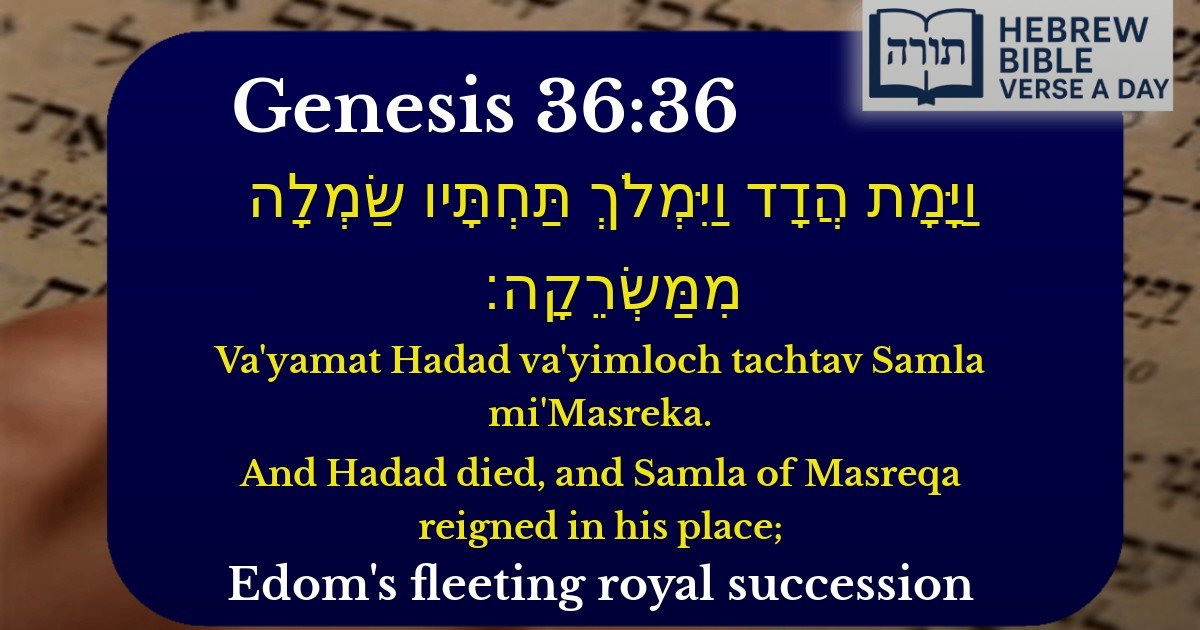
וַיָּמָת הֲדָד וַיִּמְלֹךְ תַּחְתָּיו שַׂמְלָה מִמַּשְׂרֵקָה׃
English Translation
And Hadad died, and Samla of Masreqa reigned in his place;
Transliteration
Va'yamat Hadad va'yimloch tachtav Samla mi'Masreka.
Hebrew Leining Text
וַיָּ֖מׇת הֲדָ֑ד וַיִּמְלֹ֣ךְ תַּחְתָּ֔יו שַׂמְלָ֖ה מִמַּשְׂרֵקָֽה׃
🎵 Listen to leining
Parasha Commentary
📚 Talmud Citations
This verse is not quoted in the Talmud.
Context in Sefer Bereishit
The verse (Bereishit 36:36) appears in the genealogy of Esav's descendants, listing the kings who ruled in the land of Edom before any king reigned over Bnei Yisrael. This section emphasizes the fulfillment of Hashem's promise to Avraham that kings would descend from him (Bereishit 17:6), even through Esav's line.
Rashi's Commentary
Rashi notes that the phrase "Samla of Masreqa" indicates that Samla originated from the city of Masreqa. He explains that these Edomite kings were not hereditary rulers, as each king came from a different city (based on Bereishit 36:31). This contrasts with the later monarchy of Yisrael, which followed dynastic succession.
Ibn Ezra's Observations
Ibn Ezra points out that the Torah meticulously records these Edomite kings to demonstrate that Esav's descendants indeed became a powerful nation with an established monarchy, fulfilling the blessing Yitzchak gave Esav (Bereishit 27:40).
Midrashic Insights
Halachic Perspective
The Rambam (Hilchot Melachim 1:2) references these verses when discussing the Torah's requirements for Jewish monarchy, noting how the Edomite kingship model differed from the Torah's prescribed system for Jewish kings.