

Join Our Newsletter To Be Informed When New Videos Are Posted
Hebrew Text
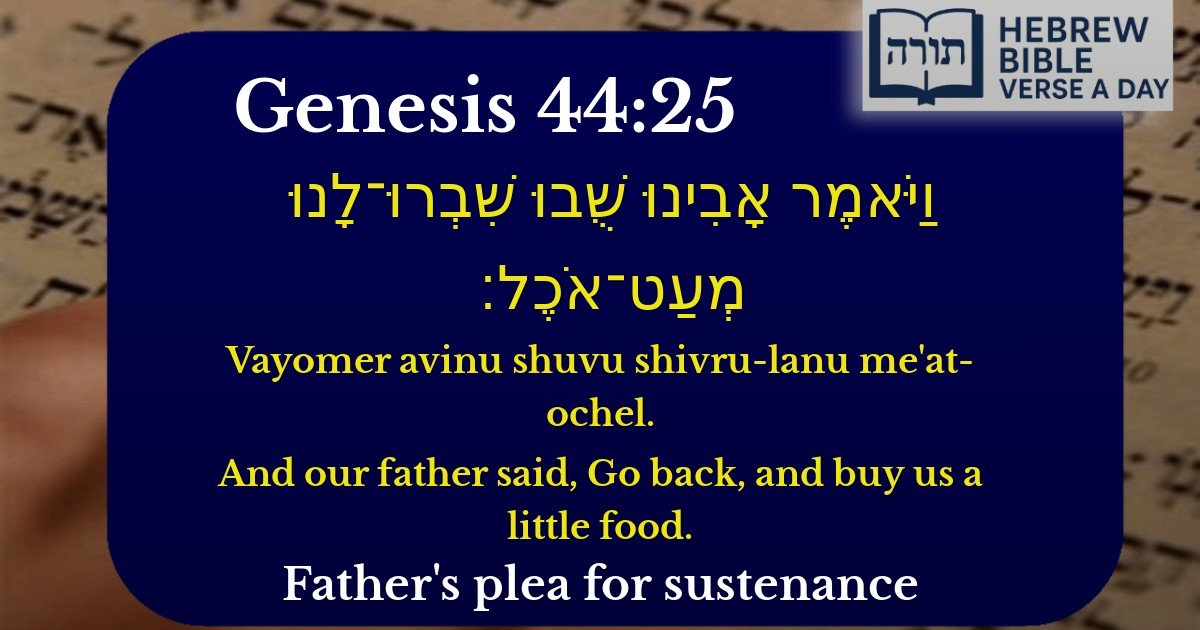
וַיֹּאמֶר אָבִינוּ שֻׁבוּ שִׁבְרוּ־לָנוּ מְעַט־אֹכֶל׃
English Translation
And our father said, Go back, and buy us a little food.
Transliteration
Vayomer avinu shuvu shivru-lanu me'at-ochel.
Hebrew Leining Text
וַיֹּ֖אמֶר אָבִ֑ינוּ שֻׁ֖בוּ שִׁבְרוּ־לָ֥נוּ מְעַט־אֹֽכֶל׃
🎵 Listen to leining
Parasha Commentary
📚 Talmud Citations
This verse is not quoted in the Talmud.
Context in the Torah Narrative
The verse (Bereshit 43:2) appears during the story of Yosef and his brothers, when Yaakov instructs his sons to return to Egypt to purchase food during the famine. This occurs after their first trip, during which Shimon was detained by Yosef (though they did not yet recognize him).
Rashi's Commentary
Rashi notes that Yaakov's instruction to "buy us a little food" (מְעַט־אֹכֶל) reflects his hesitation to send Binyamin with them, as he was only willing to risk a small purchase rather than a large quantity that would require all his sons to travel. This demonstrates Yaakov's protective nature toward Binyamin, the remaining son of Rachel.
Ibn Ezra's Insight
Ibn Ezra explains that the phrase "שֻׁבוּ שִׁבְרוּ" ("Go back, and buy") implies urgency due to the ongoing famine. The doubling of the verbs emphasizes the necessity of returning quickly to secure sustenance for the family.
Midrashic Interpretation (Bereshit Rabbah)
The Midrash highlights that Yaakov's wording "a little food" alludes to his spiritual sensitivity. Even in physical need, he sought only what was necessary, avoiding excess. This aligns with the principle of "צדיקים אוכלים לשובע נפשם" ("the righteous eat to satisfy their souls" - Mishlei 13:25), demonstrating moderation.
Rambam's Ethical Perspective
In light of Hilchot De'ot (Laws of Character Traits), Rambam would view this as an example of balanced conduct - recognizing the need for physical sustenance while maintaining trust in Hashem. Yaakov didn't hoard excessively despite the famine, showing proper bitachon (trust in Divine providence).
Chassidic Interpretation (Sefat Emet)
The Sefat Emet notes that "שִׁבְרוּ" (buy) shares a root with "שבר" (brokenness), hinting that this journey was meant to lead to the brothers' teshuvah (repentance) for selling Yosef. The "little food" represents the small opening needed for reconciliation and spiritual repair.