
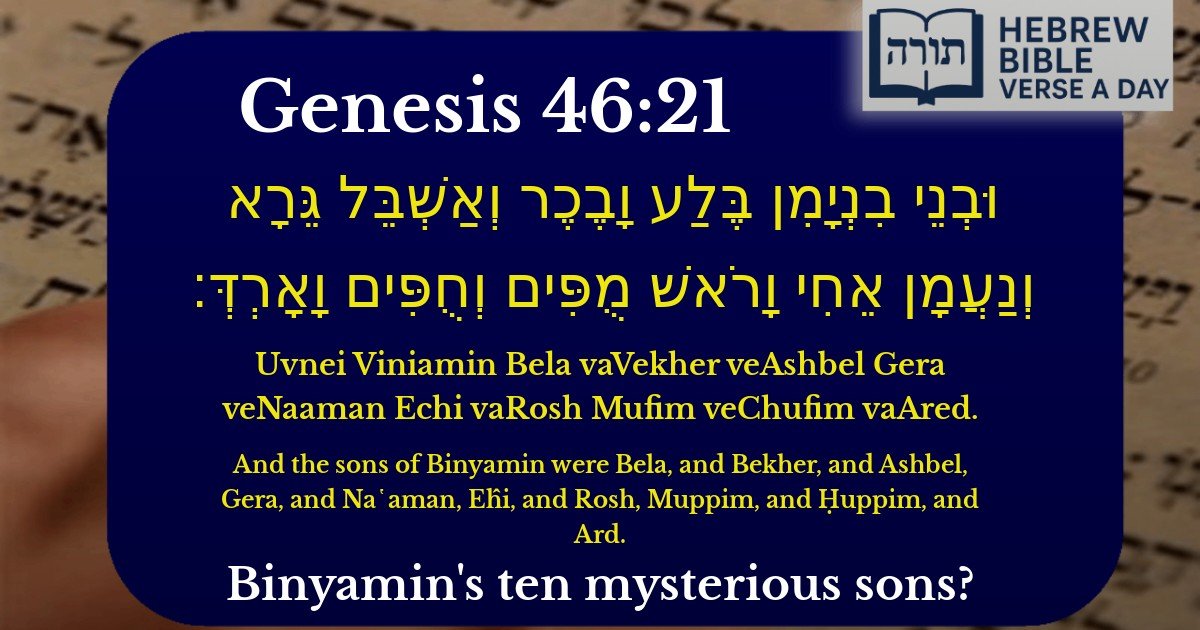

Genesis 46:21 - Binyamin's ten mysterious sons?

Genesis 46:21 - בראשית 46:21

Hebrew Text

וּבְנֵי בִנְיָמִן בֶּלַע וָבֶכֶר וְאַשְׁבֵּל גֵּרָא וְנַעֲמָן אֵחִי וָרֹאשׁ מֻפִּים וְחֻפִּים וָאָרְדְּ׃

English Translation

And the sons of Binyamin were Bela, and Bekher, and Ashbel, Gera, and Na῾aman, Eĥi, and Rosh, Muppim, and Ḥuppim, and Ard.

Transliteration

Uvnei Viniamin Bela vaVekher veAshbel Gera veNaaman Echi vaRosh Mufim veChufim vaAred.

Hebrew Leining Text

וּבְנֵ֣י בִנְיָמִ֗ן בֶּ֤לַע וָבֶ֙כֶר֙ וְאַשְׁבֵּ֔ל גֵּרָ֥א וְנַעֲמָ֖ן אֵחִ֣י וָרֹ֑אשׁ מֻפִּ֥ים וְחֻפִּ֖ים וָאָֽרְדְּ׃

🎵 Listen to leining

Parasha Commentary

Introduction to Binyamin's Sons

The verse lists the ten sons of Binyamin, the youngest son of Yaakov Avinu. According to Rashi (on Bereishit 46:21), these names reflect the challenges and future destiny of the tribe of Binyamin. The names are not merely genealogical records but carry deeper meanings related to the tribe's character and role in Jewish history.

Meaning of the Names

  • Bela (בֶּלַע): Rashi explains that this name alludes to Binyamin's sorrow over the sale of Yosef, as "Bela" can mean "swallowed" or "consumed" by grief.
  • Bekher (בֶּכֶר): This name means "firstborn," symbolizing that Binyamin was the only son born in Eretz Yisrael, making him spiritually distinct among Yaakov's children.
  • Ashbel (אַשְׁבֵּל): Rashi connects this to "captivity" (שְׁבִי), hinting at future exiles the tribe would endure.
  • Gera (גֵּרָא): Means "sojourner," reflecting the transient nature of Binyamin's descendants, such as Shaul HaMelech, who reigned briefly.
  • Na’aman (נַעֲמָן): Signifies "pleasantness," as Binyamin was the only son not involved in the sale of Yosef.
  • Echi (אֵחִי): Means "my brother," emphasizing Binyamin's bond with Yosef.
  • Rosh (רֹאשׁ): Alludes to leadership, as the tribe would produce Israel's first king, Shaul.
  • Muppim (מֻפִּים) & Chuppim (חֻפִּים): These names relate to marriage (chuppah) and the future union of the tribes under Shaul's kingship.
  • Ard (אָרְדְּ): Possibly derived from "to descend," hinting at the tribe's eventual decline after Shaul's reign.

Historical and Midrashic Insights

The Midrash Tanchuma (Vayechi 13) teaches that these names were prophetic, foreshadowing the tribe's role in Jewish leadership and tragedy. Binyamin's descendants would include both Shaul HaMelech and Mordechai HaTzaddik, illustrating their dual legacy of royalty and redemption.

Rambam's Perspective on Genealogies

In Moreh Nevuchim (3:50), the Rambam explains that biblical genealogies are not merely historical records but serve to highlight Divine Providence in shaping the Jewish people. The names of Binyamin’s sons reflect Hashem’s plan for the tribe’s unique contributions and challenges.

📚 Talmud Citations

This verse is not quoted in the Talmud.

Frequently Asked Questions

Q: Why does the Torah list the sons of Binyamin in Genesis 46:21?
A: The Torah lists the sons of Binyamin to document the lineage of the tribes of Israel, showing how each tribe descended from Yaakov (Jacob). This is important because the tribes later inherit portions of the Land of Israel. Rashi explains that these names reflect the history and characteristics of Binyamin's descendants.
Q: What is the significance of Binyamin having ten sons?
A: Binyamin having ten sons is significant because it shows the fulfillment of Hashem's blessing to Yaakov that his descendants would multiply (Genesis 28:14). The Midrash (Bereishit Rabbah 94) notes that Binyamin was the only son of Yaakov born in Eretz Yisrael, and his large family symbolizes the future strength of his tribe.
Q: Do the names of Binyamin's sons have special meanings?
A: Yes, many of the names carry meanings related to Binyamin's life. For example, 'Bela' means 'swallowing' or 'destruction,' possibly hinting at future events (Rashi). 'Naaman' means 'pleasant,' reflecting Binyamin's righteous nature. The Talmud (Sotah 36b) connects some names to the story of Yosef and his brothers.
Q: How does this verse connect to Jewish tradition today?
A: This verse reminds us of the importance of family lineage in Judaism, as tribal affiliation historically determined roles in Jewish society (e.g., Kohanim, Levi'im). Rambam (Hilchot Melachim) discusses how tribal identities remain significant for future redemption. Knowing our roots strengthens our connection to Jewish history.
Q: Why are some names of Binyamin's sons different in other Torah lists (like Numbers 26)?
A: Rashi explains that some names changed due to historical events or nicknames. The Talmud (Bava Batra 123a) states that some descendants were known by multiple names. Alternatively, some names may represent sub-clans that developed later. This shows how families evolved while maintaining their tribal identity.