

Join Our Newsletter To Be Informed When New Videos Are Posted
Hebrew Text
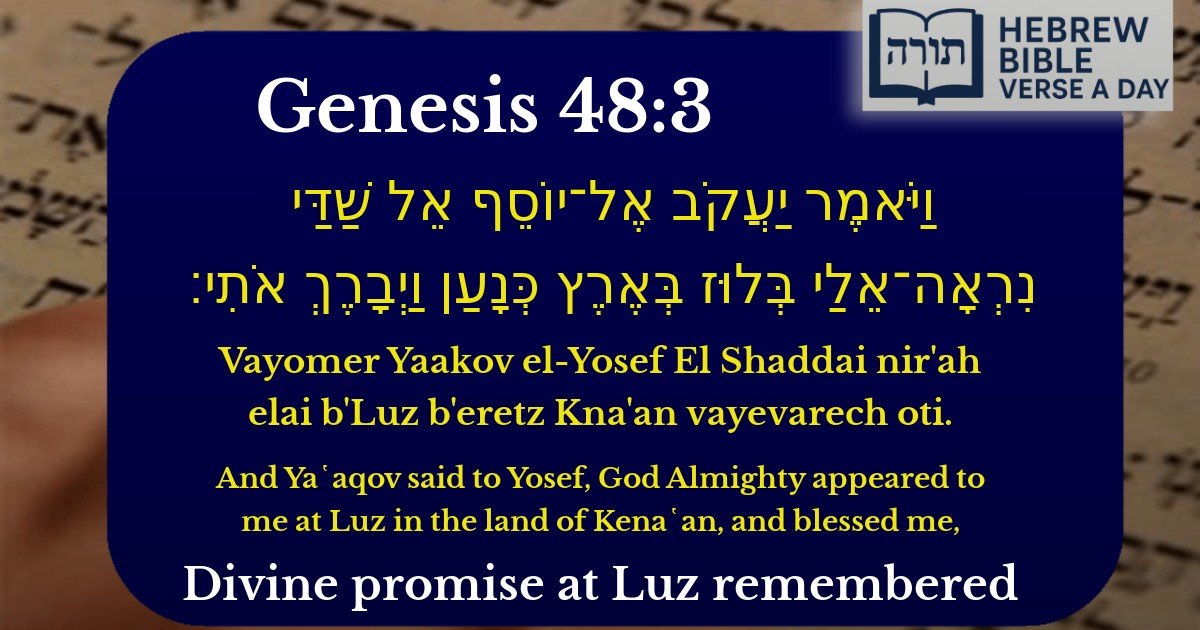
וַיֹּאמֶר יַעֲקֹב אֶל־יוֹסֵף אֵל שַׁדַּי נִרְאָה־אֵלַי בְּלוּז בְּאֶרֶץ כְּנָעַן וַיְבָרֶךְ אֹתִי׃
English Translation
And Ya῾aqov said to Yosef, God Almighty appeared to me at Luz in the land of Kena῾an, and blessed me,
Transliteration
Vayomer Yaakov el-Yosef El Shaddai nir'ah elai b'Luz b'eretz Kna'an vayevarech oti.
Hebrew Leining Text
וַיֹּ֤אמֶר יַעֲקֹב֙ אֶל־יוֹסֵ֔ף אֵ֥ל שַׁדַּ֛י נִרְאָֽה־אֵלַ֥י בְּל֖וּז בְּאֶ֣רֶץ כְּנָ֑עַן וַיְבָ֖רֶךְ אֹתִֽי׃
🎵 Listen to leining
Parasha Commentary
📚 Talmud Citations
This verse is quoted in the Talmud.
📖 Sotah 36b
The verse is referenced in the context of discussing Jacob's blessings and the significance of Luz as a place of divine revelation.
📖 Megillah 16b
Mentioned in relation to the blessings given by Jacob to Joseph and the importance of divine appearances in biblical narratives.
Yaakov's Revelation at Luz
The verse (Bereishit 48:3) recounts Yaakov's declaration to Yosef about Hashem appearing to him in Luz (Bet-El) and blessing him. Rashi explains that Yaakov mentioned this revelation to emphasize that the blessings he was about to bestow upon Yosef's sons were not merely his own, but rooted in divine promise. The location "Luz" is significant—it was the same place where Yaakov first encountered Hashem in his dream of the ladder (Bereishit 28:19).
The Divine Name "El Shaddai"
Yaakov uses the name El Shaddai, which Ramban interprets as emphasizing Hashem's power to fulfill promises, particularly the covenant of the land. The Midrash (Bereishit Rabbah 46:3) connects "Shaddai" to the phrase she'amar l'olamo dai ("Who said to His world 'Enough'"), signifying Hashem's control over creation and His ability to limit nature to fulfill His will.
The Blessing Received
Yaakov does not specify the content of the blessing here, but the context suggests it refers to the promise of progeny and land (Bereishit 35:11-12). The Sforno notes that Yaakov's mention of this blessing was to reassure Yosef that the transfer of the birthright to him (through Ephraim and Menashe) was divinely sanctioned.
Connection to Yosef's Sons