

Join Our Newsletter To Be Informed When New Videos Are Posted
Hebrew Text
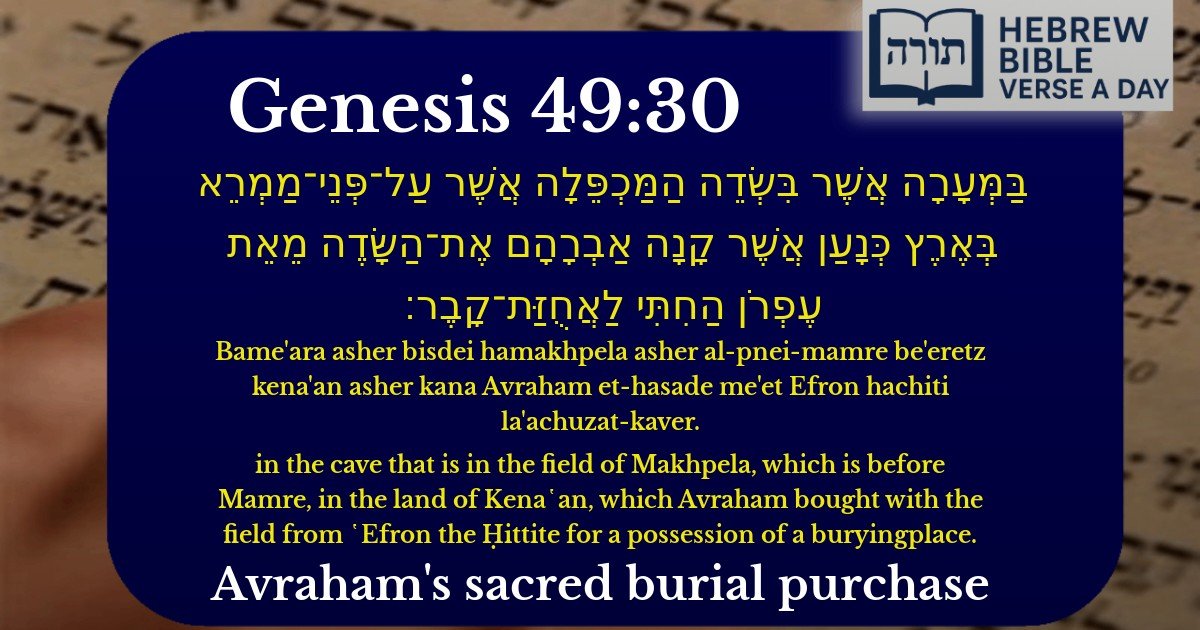
בַּמְּעָרָה אֲשֶׁר בִּשְׂדֵה הַמַּכְפֵּלָה אֲשֶׁר עַל־פְּנֵי־מַמְרֵא בְּאֶרֶץ כְּנָעַן אֲשֶׁר קָנָה אַבְרָהָם אֶת־הַשָּׂדֶה מֵאֵת עֶפְרֹן הַחִתִּי לַאֲחֻזַּת־קָבֶר׃
English Translation
in the cave that is in the field of Makhpela, which is before Mamre, in the land of Kena῾an, which Avraham bought with the field from ῾Efron the Ḥittite for a possession of a buryingplace.
Transliteration
Bame'ara asher bisdei hamakhpela asher al-pnei-mamre be'eretz kena'an asher kana Avraham et-hasade me'et Efron hachiti la'achuzat-kaver.
Hebrew Leining Text
בַּמְּעָרָ֞ה אֲשֶׁ֨ר בִּשְׂדֵ֧ה הַמַּכְפֵּלָ֛ה אֲשֶׁ֥ר עַל־פְּנֵי־מַמְרֵ֖א בְּאֶ֣רֶץ כְּנָ֑עַן אֲשֶׁר֩ קָנָ֨ה אַבְרָהָ֜ם אֶת־הַשָּׂדֶ֗ה מֵאֵ֛ת עֶפְרֹ֥ן הַחִתִּ֖י לַאֲחֻזַּת־קָֽבֶר׃
🎵 Listen to leining
Parasha Commentary
📚 Talmud Citations
This verse is quoted in the Talmud.
📖 Bava Batra 58a
The verse is referenced in a discussion about the purchase of the Cave of Makhpela by Abraham, emphasizing the legal and historical significance of the transaction.
📖 Eruvin 53a
Mentioned in the context of discussing the boundaries and locations of significant biblical sites, including Mamre and the Cave of Makhpela.
📖 Sotah 13a
The verse is cited in a discussion about the burial places of the patriarchs and the importance of the Cave of Makhpela as a burial site.
The Significance of Me'arat HaMachpela
The verse describes the Cave of Machpela, which Avraham Avinu purchased as a burial site. According to Rashi (Bereshit 23:9), this cave was chosen because it was the burial place of Adam and Chava, making it a site of immense kedusha (holiness). The Midrash (Pirkei DeRabbi Eliezer 36) further explains that Avraham specifically sought this location because he recognized its spiritual significance as the gateway to Gan Eden.
The Purchase from Efron the Hittite
The Torah emphasizes that Avraham bought the field from Efron the Hittite, despite being promised the entire land by Hashem. Ramban (Bereshit 23:19) notes that Avraham insisted on paying full price to avoid any future disputes and to establish clear ownership according to civil law. This teaches the importance of maintaining ethical business practices even when divine promises are involved.
The Location: Facing Mamre
The cave is described as being "before Mamre." Rashi explains that Mamre was Avraham's ally who advised him regarding the bris milah (Bereshit 14:13). The Talmud (Sotah 10a) suggests that this location was chosen because Mamre had shown support for Avraham's covenant with Hashem, and thus merited having this holy site associated with his name.
The Name "Machpela"
Legal Aspects of the Purchase
The Kli Yakar (Bereshit 23:20) highlights how the Torah uses the term "achuzat kever" (burial possession) rather than simply "kever." This teaches that a burial site must be an eternal, unchanging possession that cannot be repurposed - a principle that forms the basis for Jewish laws regarding the permanence of cemeteries.