

Join Our Newsletter To Be Informed When New Videos Are Posted
Hebrew Text
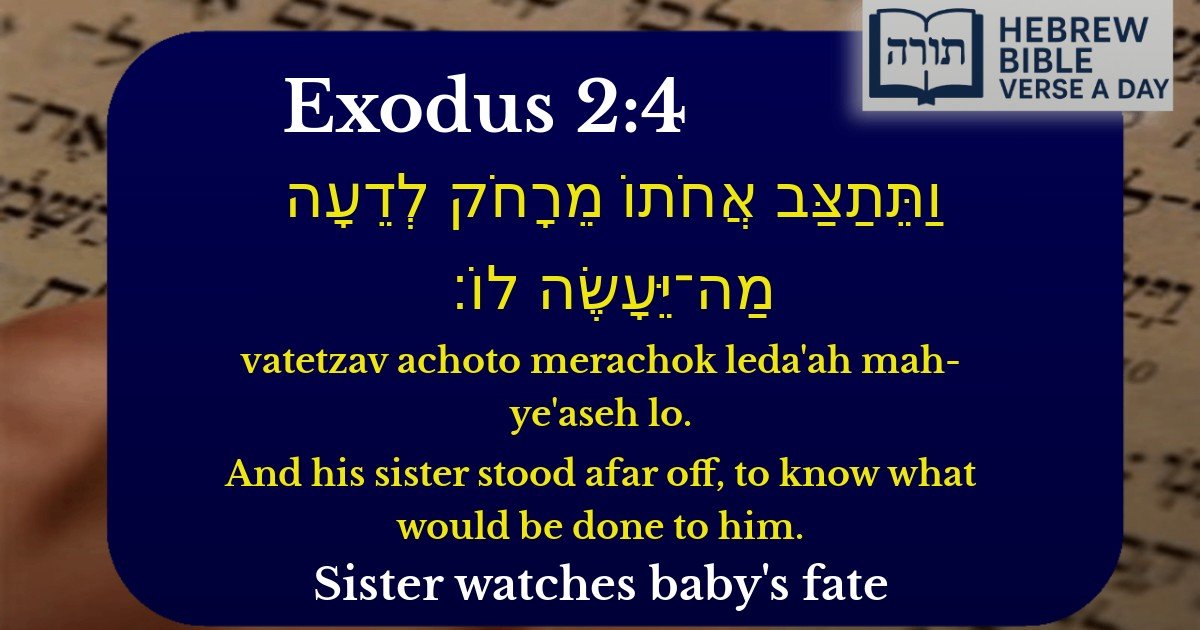
וַתֵּתַצַּב אֲחֹתוֹ מֵרָחֹק לְדֵעָה מַה־יֵּעָשֶׂה לוֹ׃
English Translation
And his sister stood afar off, to know what would be done to him.
Transliteration
Vatetzav achoto merachok leda'ah mah-ye'aseh lo.
Hebrew Leining Text
וַתֵּתַצַּ֥ב אֲחֹת֖וֹ מֵרָחֹ֑ק לְדֵעָ֕ה מַה־יֵּעָשֶׂ֖ה לֽוֹ׃
🎵 Listen to leining
Parasha Commentary
📚 Talmud Citations
This verse is quoted in the Talmud.
📖 Sotah 11b
The verse is cited in the context of discussing the bravery and wisdom of Miriam, the sister of Moses, who watched over him when he was placed in the Nile.
Context of the Verse
The verse (Shemot 2:4) describes Miriam, the sister of Moshe, standing at a distance to observe what would happen to her baby brother after he was placed in a basket on the Nile River. This occurs during Pharaoh's decree to drown all newborn Israelite boys.
Rashi's Commentary
Rashi explains that Miriam positioned herself "מֵרָחֹק" (afar off) to avoid drawing attention, yet close enough to see what would transpire. He notes that her intention was "לְדֵעָה" (to know)—meaning she was guided by divine inspiration (רוח הקודש) to understand the outcome, as she prophesied that her parents would bear the savior of Israel (Sotah 12b-13a).
Midrashic Insights
Rambam's Perspective
Rambam (Hilchos Yesodei HaTorah 7:1) discusses prophecy as a divine gift granted to those spiritually prepared. Miriam's presence at this critical moment aligns with this principle, as her prophetic insight allowed her to witness the unfolding of Hashem's redemption.
Symbolism of "Standing Afar Off"
The phrase "וַתֵּתַצַּב" (and she stood) implies a deliberate, resolute stance. The Netziv (Ha'amek Davar) highlights that Miriam did not passively watch but actively positioned herself to intervene if necessary, embodying the Jewish value of השתדלות (human effort within divine trust).