

Join Our Newsletter To Be Informed When New Videos Are Posted
Hebrew Text
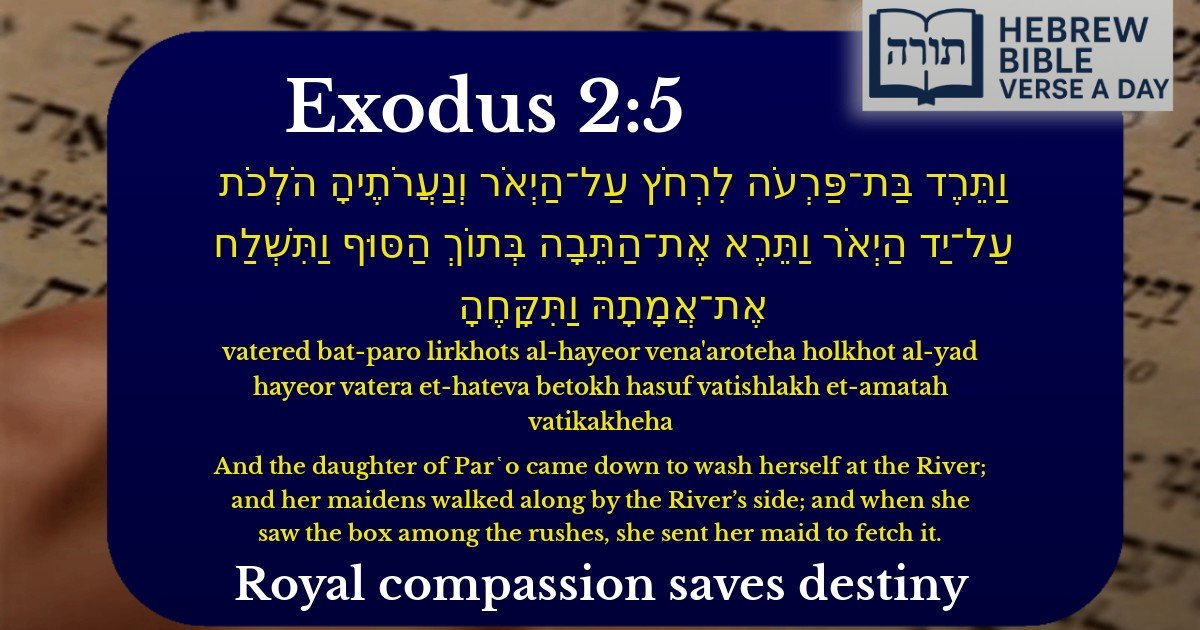
וַתֵּרֶד בַּת־פַּרְעֹה לִרְחֹץ עַל־הַיְאֹר וְנַעֲרֹתֶיהָ הֹלְכֹת עַל־יַד הַיְאֹר וַתֵּרֶא אֶת־הַתֵּבָה בְּתוֹךְ הַסּוּף וַתִּשְׁלַח אֶת־אֲמָתָהּ וַתִּקָּחֶהָ
English Translation
And the daughter of Par῾o came down to wash herself at the River; and her maidens walked along by the River’s side; and when she saw the box among the rushes, she sent her maid to fetch it.
Transliteration
Vatered bat-paro lirkhots al-hayeor vena'aroteha holkhot al-yad hayeor vatera et-hateva betokh hasuf vatishlakh et-amatah vatikakheha
Hebrew Leining Text
וַתֵּ֤רֶד בַּת־פַּרְעֹה֙ לִרְחֹ֣ץ עַל־הַיְאֹ֔ר וְנַעֲרֹתֶ֥יהָ הֹלְכֹ֖ת עַל־יַ֣ד הַיְאֹ֑ר וַתֵּ֤רֶא אֶת־הַתֵּבָה֙ בְּת֣וֹךְ הַסּ֔וּף וַתִּשְׁלַ֥ח אֶת־אֲמָתָ֖הּ וַתִּקָּחֶֽהָ׃
🎵 Listen to leining
Parasha Commentary
📚 Talmud Citations
This verse is quoted in the Talmud.
📖 Sotah 12b
The verse is discussed in the context of the story of Moshe being found by Par῾o's daughter, highlighting her compassion and the divine providence involved in the event.
📖 Megillah 14a
The verse is referenced in a discussion about the righteous women of that generation and their role in the redemption of Israel.
The Daughter of Pharaoh's Discovery
The verse describes how Batya, the daughter of Pharaoh, went down to the Nile to bathe and discovered the basket containing the infant Moshe. Rashi (Shemot 2:5) explains that she went to immerse herself in the Nile because she had converted to Judaism, distancing herself from the idolatrous practices of her father's household. The Midrash (Shemot Rabbah 1:23) further elaborates that she was afflicted with leprosy and sought healing through the waters of the Nile, but her true healing came through her righteous act of saving Moshe.
The Role of Batya's Maidens
The verse mentions that her maidens walked along the riverbank. The Talmud (Sotah 12b) notes that the term "her maidens" (נַעֲרֹתֶיהָ) is written defectively (missing a vav), suggesting that they were not merely servants but also her close companions. The Kli Yakar (Shemot 2:5) adds that their presence highlights Batya's royal status, yet she personally took action to retrieve the basket, demonstrating her compassion and leadership.
The Basket Among the Reeds
The Torah states that the basket was "among the reeds" (בְּתוֹךְ הַסּוּף). Rashi explains that this was a miraculous occurrence—the basket was placed there deliberately by Yocheved, Moshe's mother, to protect him from the Nile's currents. The Midrash (Shemot Rabbah 1:24) teaches that the reeds were chosen because they are soft and would not harm the child, symbolizing divine providence in Moshe's survival.
Batya's Righteous Deed
Batya's act of sending her maidservant to retrieve the basket is praised in Jewish tradition. The Rambam (Hilchos Melachim 10:9) cites her as an example of a righteous convert whose actions merited her a place in the World to Come. The Talmud (Megillah 13a) even identifies her as the mother of Malchut, linking her lineage to King David and the future redemption.