

Join Our Newsletter To Be Informed When New Videos Are Posted
Hebrew Text
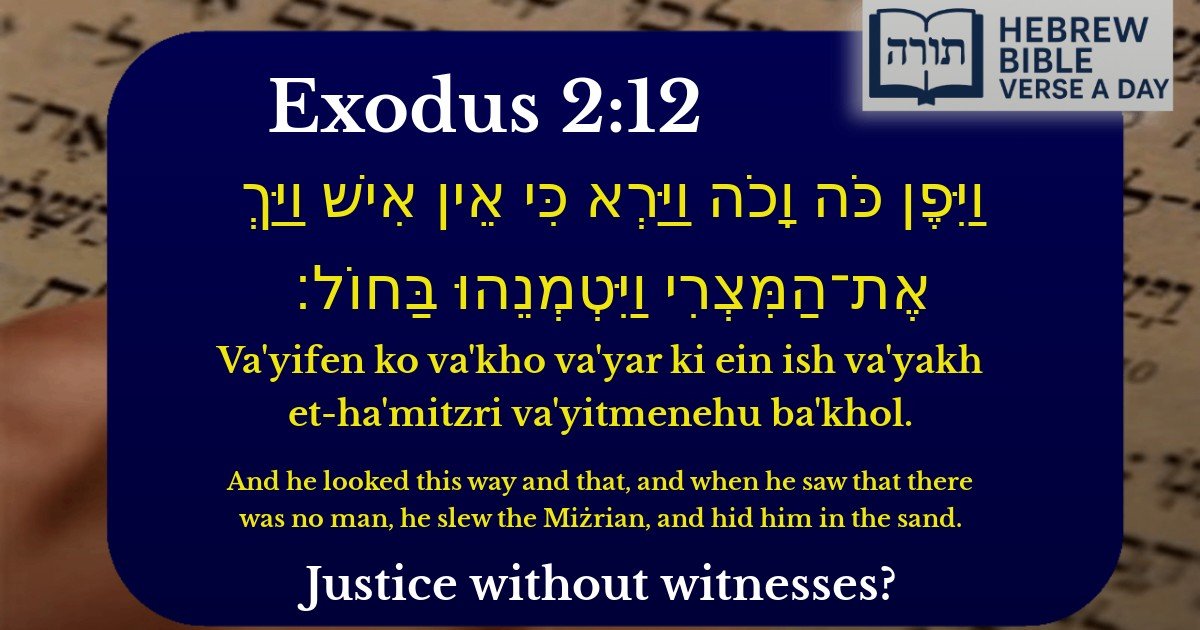
וַיִּפֶן כֹּה וָכֹה וַיַּרְא כִּי אֵין אִישׁ וַיַּךְ אֶת־הַמִּצְרִי וַיִּטְמְנֵהוּ בַּחוֹל׃
English Translation
And he looked this way and that, and when he saw that there was no man, he slew the Miżrian, and hid him in the sand.
Transliteration
Va'yifen ko va'kho va'yar ki ein ish va'yakh et-ha'mitzri va'yitmenehu ba'khol.
Hebrew Leining Text
וַיִּ֤פֶן כֹּה֙ וָכֹ֔ה וַיַּ֖רְא כִּ֣י אֵ֣ין אִ֑ישׁ וַיַּךְ֙ אֶת־הַמִּצְרִ֔י וַֽיִּטְמְנֵ֖הוּ בַּחֽוֹל׃
🎵 Listen to leining
Parasha Commentary
📚 Talmud Citations
This verse is quoted in the Talmud.
The verse is referenced in the context of discussing Moses' actions and his concern for justice, illustrating his early signs of leadership and his intervention against oppression.
Context of the Verse
The verse (Shemot 2:12) describes Moshe's actions after witnessing an Egyptian taskmaster beating a Hebrew slave. Before striking the Egyptian, Moshe "looked this way and that" to ensure no one was watching. This moment is pivotal in Moshe's early life, demonstrating his commitment to justice and his identification with the suffering of his people.
Rashi's Explanation
Rashi (Shemot 2:12) explains that Moshe looked in all directions to see if any righteous individuals would emerge to defend the oppressed Hebrew. When he saw that "there was no man" (אֵין אִישׁ)—meaning no one was stepping forward to intervene—he took action himself. Rashi emphasizes that Moshe acted with divine approval, as the Egyptian was guilty of capital crimes, including immoral behavior with the Hebrew's wife (as derived from the term מִצְרִי in the verse).
Midrashic Insights
Rambam's Perspective
In Hilchot Rotzeach (2:7), the Rambam (Maimonides) discusses the halachic principle that one may kill a rodef (a pursuer intent on murder) to save a life. While this case is not identical, Moshe's action aligns with the broader Torah ethic of intervening to prevent injustice, especially when no other recourse exists.
Moral and Ethical Lessons