

Join Our Newsletter To Be Informed When New Videos Are Posted
Hebrew Text
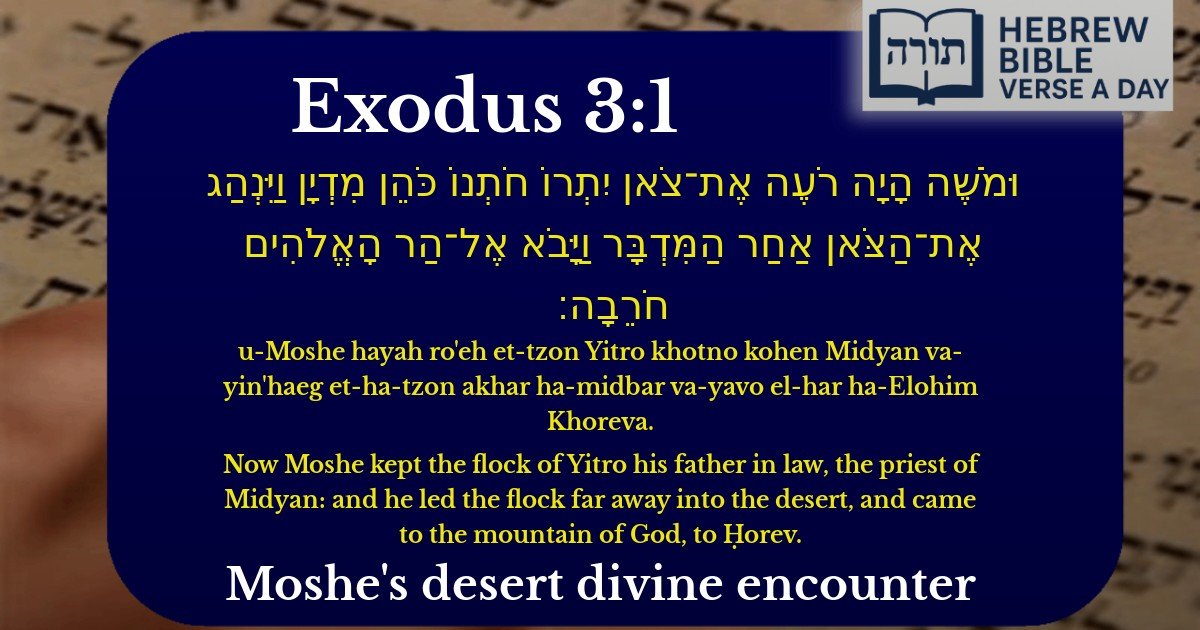
וּמֹשֶׁה הָיָה רֹעֶה אֶת־צֹאן יִתְרוֹ חֹתְנוֹ כֹּהֵן מִדְיָן וַיִּנְהַג אֶת־הַצֹּאן אַחַר הַמִּדְבָּר וַיָּבֹא אֶל־הַר הָאֱלֹהִים חֹרֵבָה׃
English Translation
Now Moshe kept the flock of Yitro his father in law, the priest of Midyan: and he led the flock far away into the desert, and came to the mountain of God, to Ḥorev.
Transliteration
U-Moshe hayah ro'eh et-tzon Yitro khotno kohen Midyan va-yin'haeg et-ha-tzon akhar ha-midbar va-yavo el-har ha-Elohim Khoreva.
Hebrew Leining Text
וּמֹשֶׁ֗ה הָיָ֥ה רֹעֶ֛ה אֶת־צֹ֛אן יִתְר֥וֹ חֹתְנ֖וֹ כֹּהֵ֣ן מִדְיָ֑ן וַיִּנְהַ֤ג אֶת־הַצֹּאן֙ אַחַ֣ר הַמִּדְבָּ֔ר וַיָּבֹ֛א אֶל־הַ֥ר הָאֱלֹהִ֖ים חֹרֵֽבָה׃
🎵 Listen to leining
Parasha Commentary
📚 Talmud Citations
This verse is quoted in the Talmud.
📖 Sotah 5a
The verse is referenced in a discussion about Moses' humility and his suitability for leadership, highlighting his role as a shepherd before becoming the leader of Israel.
📖 Yoma 4b
The verse is mentioned in the context of discussing the qualities of Moses and his preparation for receiving the Torah at Mount Horeb.
Moses as a Shepherd
The verse describes Moshe Rabbeinu tending the flock of Yitro, his father-in-law. Rashi explains that this detail is significant because it demonstrates Moshe's suitability for leadership. The Midrash (Shemot Rabbah 2:2) elaborates that Moshe showed exceptional care for the sheep, even carrying a weak lamb on his shoulders, proving his compassion—a trait essential for leading Bnei Yisrael.
Leading the Flock into the Wilderness
The phrase "וַיִּנְהַג אֶת־הַצֹּאן אַחַר הַמִּדְבָּר" ("he led the flock far away into the desert") is interpreted by Rambam (Moreh Nevuchim 3:24) as a sign of Moshe's search for solitude and divine connection. The wilderness represents a place of spiritual purity, free from distractions, where prophecy can flourish. The Sforno adds that this foreshadows Moshe’s future role in guiding the Jewish people through the desert.
The Mountain of God at Ḥorev
The mention of "הַר הָאֱלֹהִים חֹרֵבָה" ("the mountain of God, to Ḥorev") is noteworthy because this is later identified as Har Sinai. The Talmud (Ta’anit 21b) teaches that the names "Ḥorev" and "Sinai" refer to the same mountain, with "Ḥorev" symbolizing desolation (from the root "חרב," meaning destruction) and "Sinai" representing divine favor (from "סנה," the burning bush). This duality reflects the dual nature of Torah—both awe-inspiring and life-giving.
Yitro’s Role as Priest of Midyan
The description of Yitro as "כֹּהֵן מִדְיָן" ("priest of Midyan") is discussed by Ibn Ezra, who notes that Yitro was a former idolater who later recognized Hashem’s greatness. The Midrash (Mechilta Yitro 1) suggests that Yitro had explored all forms of idolatry before rejecting them, making his eventual acceptance of monotheism a powerful testament to truth.