

Join Our Newsletter To Be Informed When New Videos Are Posted
Hebrew Text
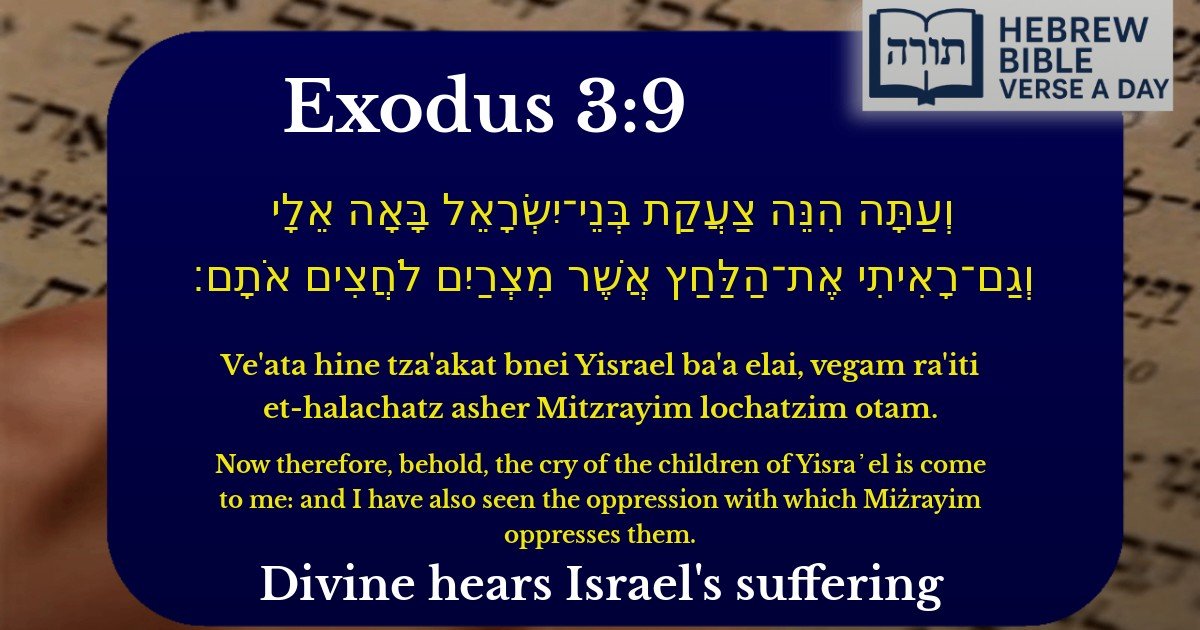
וְעַתָּה הִנֵּה צַעֲקַת בְּנֵי־יִשְׂרָאֵל בָּאָה אֵלָי וְגַם־רָאִיתִי אֶת־הַלַּחַץ אֲשֶׁר מִצְרַיִם לֹחֲצִים אֹתָם׃
English Translation
Now therefore, behold, the cry of the children of Yisra᾽el is come to me: and I have also seen the oppression with which Miżrayim oppresses them.
Transliteration
Ve'ata hine tza'akat bnei Yisrael ba'a elai, vegam ra'iti et-halachatz asher Mitzrayim lochatzim otam.
Hebrew Leining Text
וְעַתָּ֕ה הִנֵּ֛ה צַעֲקַ֥ת בְּנֵי־יִשְׂרָאֵ֖ל בָּ֣אָה אֵלָ֑י וְגַם־רָאִ֙יתִי֙ אֶת־הַלַּ֔חַץ אֲשֶׁ֥ר מִצְרַ֖יִם לֹחֲצִ֥ים אֹתָֽם׃
🎵 Listen to leining
Parasha Commentary
📚 Talmud Citations
This verse is quoted in the Talmud.
📖 Sotah 11a
The verse is cited in the context of discussing the suffering of the Israelites in Egypt and God's response to their cries.
📖 Sanhedrin 101b
The verse is referenced in a discussion about divine justice and the timing of God's intervention in response to human suffering.
Context in Shemot (Exodus) 3:9
This verse appears in the narrative of Hashem's revelation to Moshe at the burning bush, where He declares His awareness of Bnei Yisrael's suffering in Mitzrayim (Egypt) and His intention to redeem them. The verse emphasizes two key elements: the tze'akah (cry) of Bnei Yisrael and the lachatz (oppression) inflicted by the Egyptians.
Rashi's Commentary on the Cry and Oppression
Rashi (Shemot 3:9) explains that the phrase "צַעֲקַת בְּנֵי־יִשְׂרָאֵל" ("the cry of the children of Israel") refers not only to their audible cries but also to their heartfelt prayers. He notes that the term tze'akah is used specifically for prayers uttered in distress, as seen in other biblical instances (e.g., Yonah 1:5). This teaches that Hashem responds to sincere supplication, especially in times of suffering.
Regarding "הַלַּחַץ אֲשֶׁר מִצְרַיִם לֹחֲצִים אֹתָם" ("the oppression with which Egypt oppresses them"), Rashi highlights that the Egyptians intensified their cruelty when they saw Bnei Yisrael multiplying despite harsh decrees (Shemot 1:12). The doubling of the verb lochatzim otam ("oppresses them") underscores the relentless nature of their persecution.
Midrashic Insights
Rambam on Divine Providence
In Moreh Nevuchim (3:10), Rambam explains that Hashem's declaration of seeing the oppression reflects the principle of hashgachah pratit (divine providence). The verse demonstrates that Hashem is intimately aware of human suffering and intervenes in history to uphold justice, particularly for the Jewish people as bearers of the covenant.
Practical Lessons