

Join Our Newsletter To Be Informed When New Videos Are Posted
Hebrew Text
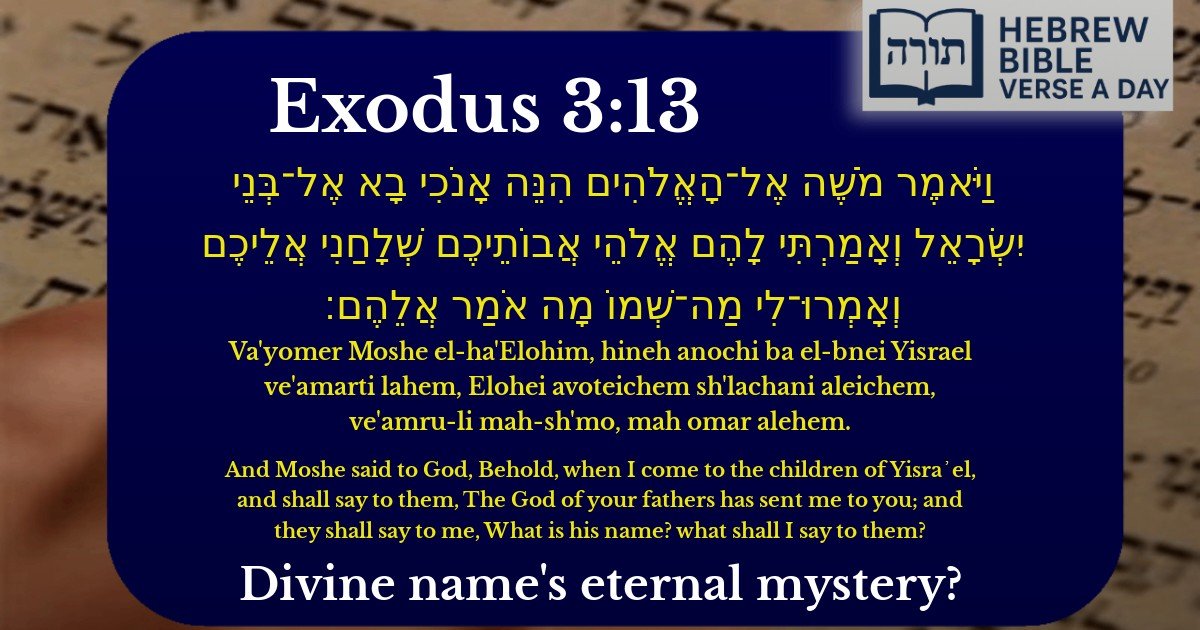
וַיֹּאמֶר מֹשֶׁה אֶל־הָאֱלֹהִים הִנֵּה אָנֹכִי בָא אֶל־בְּנֵי יִשְׂרָאֵל וְאָמַרְתִּי לָהֶם אֱלֹהֵי אֲבוֹתֵיכֶם שְׁלָחַנִי אֲלֵיכֶם וְאָמְרוּ־לִי מַה־שְּׁמוֹ מָה אֹמַר אֲלֵהֶם׃
English Translation
And Moshe said to God, Behold, when I come to the children of Yisra᾽el, and shall say to them, The God of your fathers has sent me to you; and they shall say to me, What is his name? what shall I say to them?
Transliteration
Va'yomer Moshe el-ha'Elohim, hineh anochi ba el-bnei Yisrael ve'amarti lahem, Elohei avoteichem sh'lachani aleichem, ve'amru-li mah-sh'mo, mah omar alehem.
Hebrew Leining Text
וַיֹּ֨אמֶר מֹשֶׁ֜ה אֶל־הָֽאֱלֹהִ֗ים הִנֵּ֨ה אָנֹכִ֣י בָא֮ אֶל־בְּנֵ֣י יִשְׂרָאֵל֒ וְאָמַרְתִּ֣י לָהֶ֔ם אֱלֹהֵ֥י אֲבוֹתֵיכֶ֖ם שְׁלָחַ֣נִי אֲלֵיכֶ֑ם וְאָֽמְרוּ־לִ֣י מַה־שְּׁמ֔וֹ מָ֥ה אֹמַ֖ר אֲלֵהֶֽם׃
🎵 Listen to leining
Parasha Commentary
📚 Talmud Citations
This verse is quoted in the Talmud.
📖 Berakhot 9b
The verse is referenced in a discussion about the names of God and how Moses was instructed to respond to the Israelites.
📖 Shabbat 88b
The verse is mentioned in the context of the revelation at Sinai and the communication between God and Moses.
📖 Sanhedrin 111a
Cited in a discussion about the attributes of God and the mission of Moses to the Israelites.
Moshe's Question About the Divine Name
The verse (Shemot 3:13) records Moshe's concern about how Bnei Yisrael will respond when he tells them that "the God of your fathers" has sent him. Rashi explains that Moshe anticipated their skepticism—they would demand to know God's specific name, as names reflect divine attributes and the nature of His relationship with His people. This reflects a deeper theological question about how God would manifest Himself in the upcoming redemption.
The Significance of "God of Your Fathers"
Ramban notes that Moshe initially refers to God as Elokei Avoteichem ("God of your fathers") to emphasize continuity with the covenant made with Avraham, Yitzchak, and Yaakov. However, the people—familiar with Egyptian paganism, where gods had multiple names and roles—would seek clarity on which aspect of the Divine was now intervening on their behalf.
Why the Need for a Name?
The Midrash (Shemot Rabbah 3:6) suggests that Bnei Yisrael, steeped in exile, had begun to doubt whether the God of their ancestors still remembered them. Moshe's question reflects their spiritual state: they needed reassurance that the same God who made promises to the Avot was now acting to fulfill them. The Sforno adds that knowing God's name would allow them to call upon Him in prayer with confidence.
Traditional Interpretations of the Question
Theological Implications
The exchange highlights a foundational Jewish concept: God relates to humanity in different ways at different times (as later expressed in His response, "Ehyeh Asher Ehyeh"). The Ohr HaChaim explains that Moshe sought to convey not just a name but an understanding of God's hashgacha pratit (divine providence) in their imminent redemption.