

Join Our Newsletter To Be Informed When New Videos Are Posted
Hebrew Text
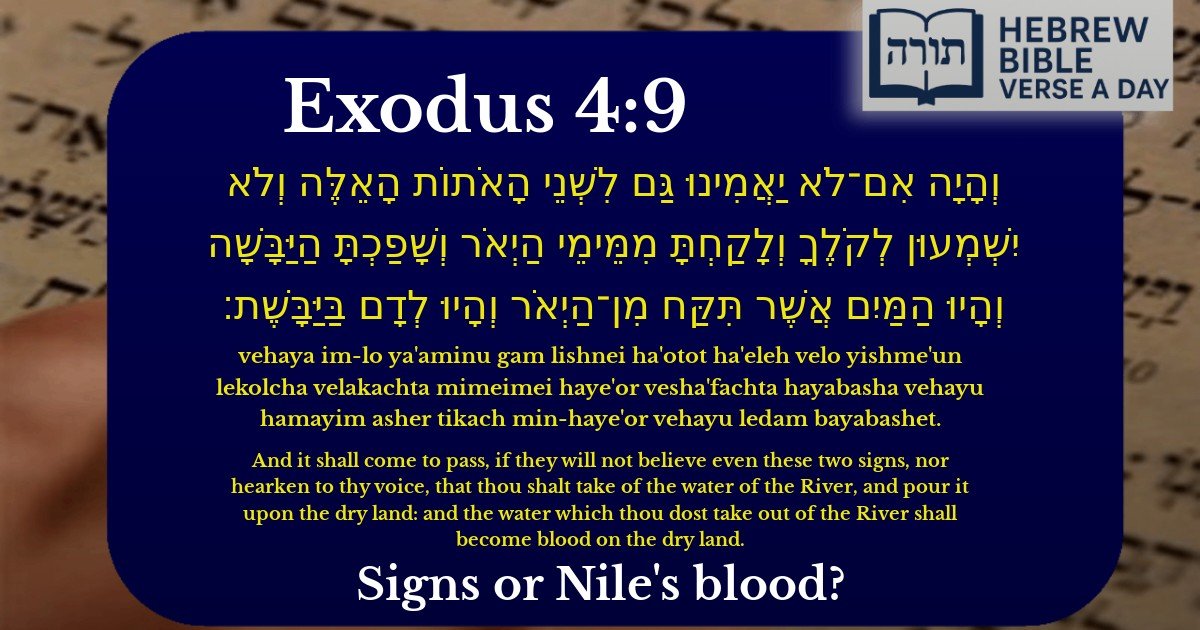
וְהָיָה אִם־לֹא יַאֲמִינוּ גַּם לִשְׁנֵי הָאֹתוֹת הָאֵלֶּה וְלֹא יִשְׁמְעוּן לְקֹלֶךָ וְלָקַחְתָּ מִמֵּימֵי הַיְאֹר וְשָׁפַכְתָּ הַיַּבָּשָׁה וְהָיוּ הַמַּיִם אֲשֶׁר תִּקַּח מִן־הַיְאֹר וְהָיוּ לְדָם בַּיַּבָּשֶׁת׃
English Translation
And it shall come to pass, if they will not believe even these two signs, nor hearken to thy voice, that thou shalt take of the water of the River, and pour it upon the dry land: and the water which thou dost take out of the River shall become blood on the dry land.
Transliteration
Vehaya im-lo ya'aminu gam lishnei ha'otot ha'eleh velo yishme'un lekolcha velakachta mimeimei haye'or vesha'fachta hayabasha vehayu hamayim asher tikach min-haye'or vehayu ledam bayabashet.
Hebrew Leining Text
וְהָיָ֡ה אִם־לֹ֣א יַאֲמִ֡ינוּ גַּם֩ לִשְׁנֵ֨י הָאֹת֜וֹת הָאֵ֗לֶּה וְלֹ֤א יִשְׁמְעוּן֙ לְקֹלֶ֔ךָ וְלָקַחְתָּ֙ מִמֵּימֵ֣י הַיְאֹ֔ר וְשָׁפַכְתָּ֖ הַיַּבָּשָׁ֑ה וְהָי֤וּ הַמַּ֙יִם֙ אֲשֶׁ֣ר תִּקַּ֣ח מִן־הַיְאֹ֔ר וְהָי֥וּ לְדָ֖ם בַּיַּבָּֽשֶׁת׃
🎵 Listen to leining
Parasha Commentary
📚 Talmud Citations
This verse is quoted in the Talmud.
📖 Sanhedrin 101a
The verse is referenced in a discussion about the signs given to Moses to prove his divine mission to the Israelites.
📖 Sotah 5a
The verse is mentioned in the context of discussing the importance of faith and the consequences of disbelief.
Context of the Verse
This verse (Shemot 4:9) is part of Hashem's instructions to Moshe at the burning bush, providing him with signs to demonstrate his divine mission to Bnei Yisrael and Pharaoh. The first two signs—the staff turning into a snake and Moshe's hand becoming leprous—were already given. This third sign involves turning Nile water into blood on dry land.
Rashi's Explanation
Rashi explains that this third miracle was reserved for extreme skepticism. If Bnei Yisrael would not believe the first two signs, Moshe was to take water from the Nile and pour it onto dry land, where it would transform into blood. Rashi emphasizes that this sign was more severe because it foreshadowed the first plague in Mitzrayim (Makkat Dam), demonstrating that Hashem controls even the Nile, which the Egyptians worshipped as a god.
Symbolism of the Nile
The Nile was central to Egyptian life and idolatry. By turning its waters into blood—a symbol of death and judgment—Hashem showed His supremacy over Egyptian deities. The Midrash (Shemot Rabbah 3:13) notes that this sign was a warning: just as water sustains life, its transformation into blood signifies the consequences of rejecting divine authority.
Rambam's Perspective
Rambam (Moreh Nevuchim 2:33) discusses how these signs were tailored to the audience's level of emunah. The escalation from a staff-snake (a localized wonder) to a hand-affliction (a personal miracle) to a public transformation of water (a natural element) was designed to progressively overcome doubt.
Why Dry Land?
Lessons for Bnei Yisrael
The Talmud (Sanhedrin 97a) teaches that miracles are granted according to the needs of the generation. Here, the signs were meant to inspire emunah in Bnei Yisrael during their subjugation. The Or HaChaim adds that the progression of signs mirrored the process of geulah (redemption), starting with subtle hints and culminating in undeniable displays of Hashem's presence.