

Join Our Newsletter To Be Informed When New Videos Are Posted
Hebrew Text
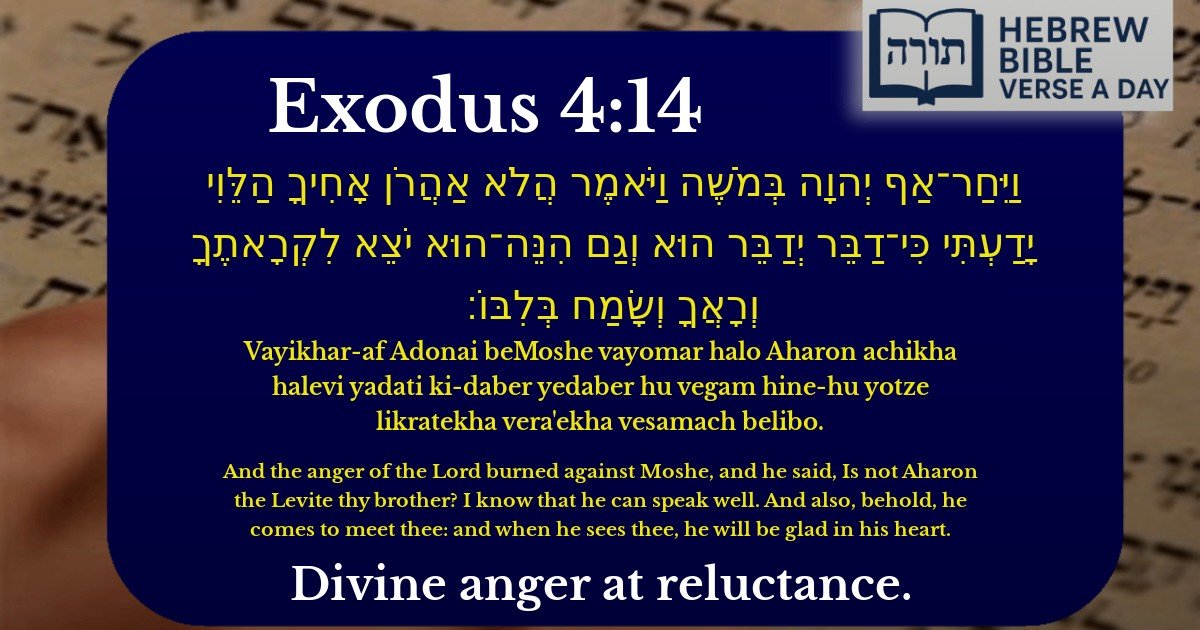
וַיִּחַר־אַף יְהוָה בְּמֹשֶׁה וַיֹּאמֶר הֲלֹא אַהֲרֹן אָחִיךָ הַלֵּוִי יָדַעְתִּי כִּי־דַבֵּר יְדַבֵּר הוּא וְגַם הִנֵּה־הוּא יֹצֵא לִקְרָאתֶךָ וְרָאֲךָ וְשָׂמַח בְּלִבּוֹ׃
English Translation
And the anger of the Lord burned against Moshe, and he said, Is not Aharon the Levite thy brother? I know that he can speak well. And also, behold, he comes to meet thee: and when he sees thee, he will be glad in his heart.
Transliteration
Vayikhar-af Adonai beMoshe vayomar halo Aharon achikha halevi yadati ki-daber yedaber hu vegam hine-hu yotze likratekha vera'ekha vesamach belibo.
Hebrew Leining Text
וַיִּֽחַר־אַ֨ף יְהֹוָ֜ה בְּמֹשֶׁ֗ה וַיֹּ֙אמֶר֙ הֲלֹ֨א אַהֲרֹ֤ן אָחִ֙יךָ֙ הַלֵּוִ֔י יָדַ֕עְתִּי כִּֽי־דַבֵּ֥ר יְדַבֵּ֖ר ה֑וּא וְגַ֤ם הִנֵּה־הוּא֙ יֹצֵ֣א לִקְרָאתֶ֔ךָ וְרָאֲךָ֖ וְשָׂמַ֥ח בְּלִבּֽוֹ׃
🎵 Listen to leining
Parasha Commentary
📚 Talmud Citations
This verse is not quoted in the Talmud.
Divine Displeasure with Moshe
The verse states, "And the anger of the Lord burned against Moshe" (Shemot 4:14). Rashi explains that Hashem's anger was due to Moshe's repeated reluctance to accept the mission to redeem Bnei Yisrael from Egypt. Despite being chosen by Hashem, Moshe expressed doubt about his ability to speak effectively (Shemot 4:10-13). The Midrash (Shemot Rabbah 3:14) elaborates that Moshe's hesitation stemmed from humility, but Hashem expected unwavering trust in His command.
The Role of Aharon
Hashem responds by directing Moshe to Aharon: "Is not Aharon the Levite thy brother?" The term "HaLevi" is noteworthy. Ramban suggests that this emphasizes Aharon's distinguished lineage as a Levite, a tribe later chosen for divine service. The Talmud (Zevachim 102a) notes that Aharon was already recognized as a leader among Bnei Yisrael, making him a fitting partner for Moshe.
Aharon's Eloquence and Joy
Hashem assures Moshe: "I know that he can speak well." Rashi explains that Aharon's oratory skills would complement Moshe's prophetic role. The Midrash Tanchuma (Shemot 27) adds that Aharon's heart was filled with genuine joy upon seeing Moshe, without jealousy—a model of brotherly love. This is derived from the phrase "he will be glad in his heart," indicating sincere happiness for Moshe's elevated role.
Lessons in Leadership and Humility