Frequently Asked Questions
Q: What does Exodus 4:15 mean?
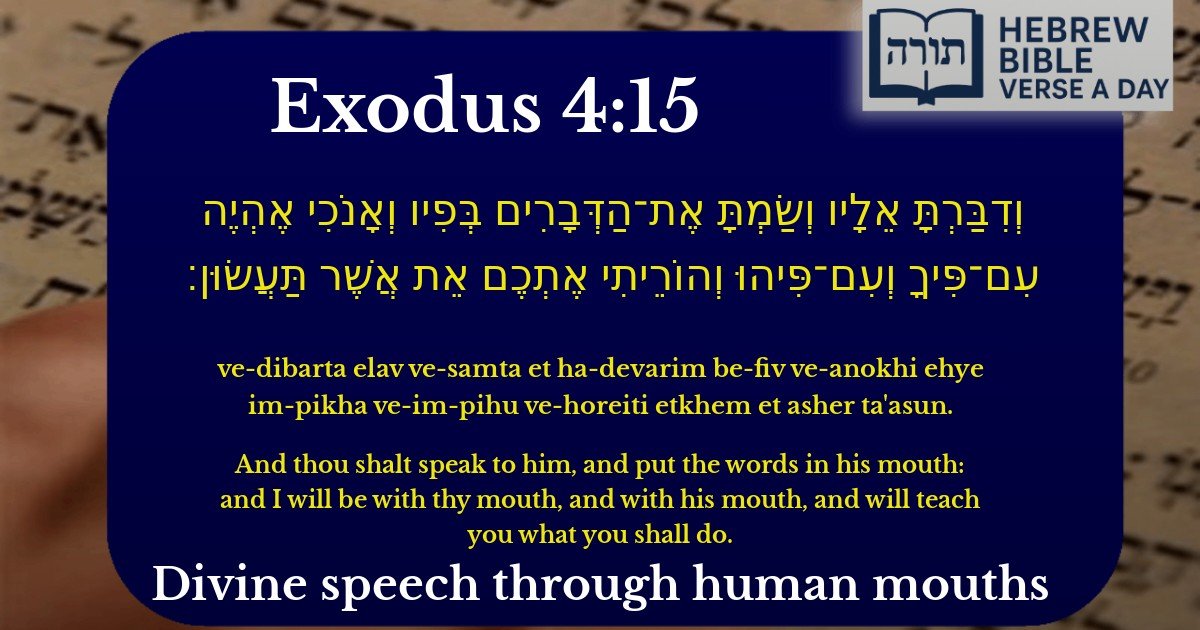
A: In Exodus 4:15, Hashem reassures Moshe (Moses) that He will help him communicate with Pharaoh through Aharon (Aaron). Moshe was hesitant about speaking due to his speech difficulties, so Hashem tells him that He will place the words in Moshe's mouth and guide both Moshe and Aharon in what to say and do. This shows Hashem's support for Moshe's mission to free the Jewish people from Egypt.
Q: Why is Exodus 4:15 important?
A: This verse is important because it demonstrates that Hashem provides strength and guidance to those He chooses for a mission, even when they feel inadequate. Moshe doubted his ability to speak to Pharaoh, but Hashem assured him that He would be with him and Aharon, ensuring their words would be effective. This teaches us to trust in Hashem's help when fulfilling our responsibilities.
Q: What can we learn from Exodus 4:15?
A: We learn that when Hashem assigns a task, He also provides the necessary abilities and support to accomplish it. Moshe's initial reluctance highlights human humility, but Hashem's promise teaches us that divine assistance overcomes personal limitations. This applies to anyone facing challenges in performing mitzvot or fulfilling their role in life—trust that Hashem will guide you.
Q: How does Exodus 4:15 apply today?
A: Today, this verse reminds us that when we are called to do something meaningful—whether teaching Torah, helping others, or standing up for justice—we should not let self-doubt stop us. Just as Hashem helped Moshe and Aharon, He supports those who sincerely strive to fulfill His will. We can pray for siyata dishmaya (divine assistance) in our efforts.
Q: Why did Hashem choose Aharon to speak for Moshe?
A: Hashem chose Aharon to be Moshe's spokesperson because Aharon was a gifted speaker and had a kind, patient nature (as seen later in his role as Kohen Gadol). Rashi explains that Aharon would receive Moshe's words and convey them clearly to Pharaoh. This partnership shows how Hashem pairs people's strengths to accomplish His goals.


Context in the Torah
This verse (Shemot 4:15) appears during Hashem's dialogue with Moshe at the burning bush, where Moshe expresses reluctance to lead Bnei Yisrael out of Egypt due to his perceived lack of eloquence. Hashem reassures Moshe that He will empower both Moshe and his brother Aharon to fulfill their roles.
Rashi's Explanation
Rashi explains that "I will be with your mouth" means Hashem will provide Moshe with the words to speak. Regarding "and with his mouth," Rashi notes that Aharon would serve as Moshe's spokesman, but the Divine assistance would extend to both of them. The phrase "and will teach you what you shall do" refers to the ongoing guidance Hashem would provide throughout their mission.
Rambam's Perspective
In Moreh Nevuchim (1:65), Rambam discusses how prophecy works through Divine influence on a person's intellectual and imaginative faculties. Here, Hashem assures Moshe that both his speech and Aharon's would be Divinely guided, emphasizing that true leadership comes with Heavenly assistance.
Talmudic Insights
Midrashic Interpretation
Shemot Rabbah (3:14) elaborates that this promise applied not just to the Exodus mission but to all future situations where Moshe and Aharon would need to speak on behalf of Hashem. The Midrash emphasizes that when fulfilling Hashem's will, one merits Divine assistance in carrying out the mission.
Chassidic Perspective
The Baal Shem Tov taught that this verse demonstrates how Hashem provides the necessary tools to those He chooses for sacred missions. The Kotzker Rebbe noted that "I will be with your mouth" implies that true speech comes when the speaker nullifies their ego to become a vessel for Divine words.