
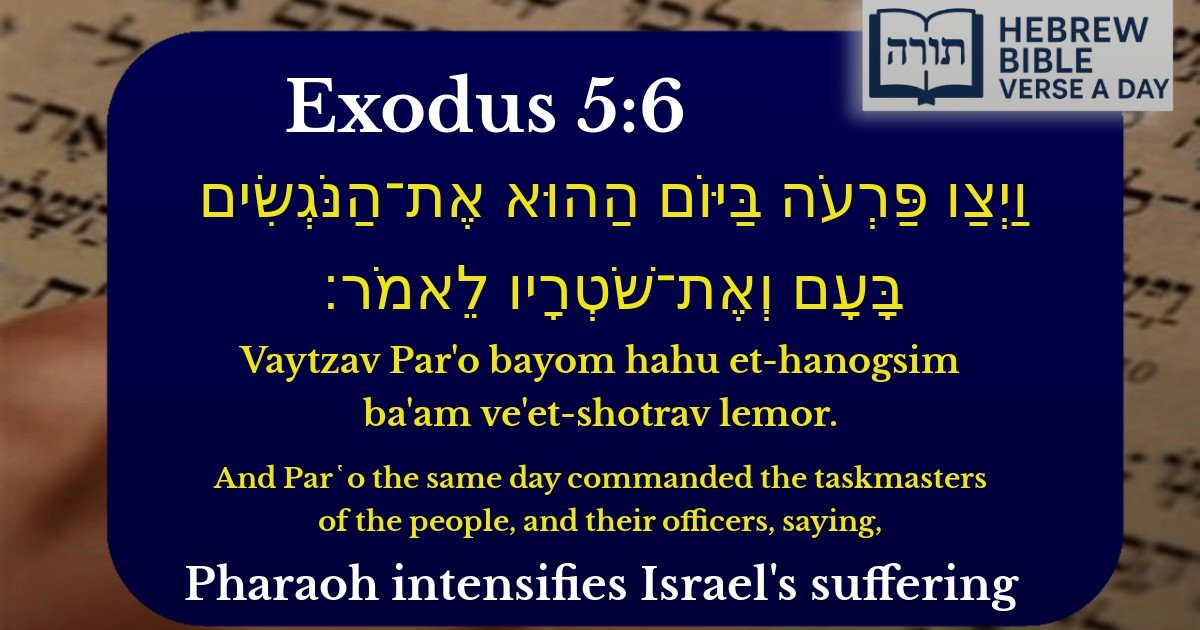

Exodus 5:6 - Pharaoh intensifies Israel's suffering

Exodus 5:6 - שמות 5:6

Hebrew Text

וַיְצַו פַּרְעֹה בַּיּוֹם הַהוּא אֶת־הַנֹּגְשִׂים בָּעָם וְאֶת־שֹׁטְרָיו לֵאמֹר׃

English Translation

And Par῾o the same day commanded the taskmasters of the people, and their officers, saying,

Transliteration

Vaytzav Par'o bayom hahu et-hanogsim ba'am ve'et-shotrav lemor.

Hebrew Leining Text

וַיְצַ֥ו פַּרְעֹ֖ה בַּיּ֣וֹם הַה֑וּא אֶת־הַנֹּגְשִׂ֣ים בָּעָ֔ם וְאֶת־שֹׁטְרָ֖יו לֵאמֹֽר׃

🎵 Listen to leining

Parasha Commentary

Context in Shemot (Exodus) 5:6

The verse appears at the beginning of Pharaoh's intensified oppression of Bnei Yisrael after Moshe and Aharon first demand their freedom. This marks a turning point where Pharaoh transitions from general enslavement to outright cruelty.

Rashi's Explanation

Rashi (Shemot 5:6) notes that Pharaoh's command was issued "on that very day" (בַּיּוֹם הַהוּא), emphasizing his immediate and impulsive reaction to Moshe's request. This teaches that wicked rulers intensify oppression when confronted with resistance.

Roles of the Nogsim and Shotrim

  • Nogsim (נֹגְשִׂים) - According to Ramban, these were Egyptian taskmasters who enforced labor quotas with brutality.
  • Shotrim (שֹׁטְרִים) - The Midrash (Shemot Rabbah 5:14) identifies them as Jewish officers appointed to oversee their brethren. They faced punishment for failing to meet impossible demands (Shemot 5:14).

Pharaoh's Psychological Strategy

The Malbim explains that Pharaoh targeted both groups to break solidarity: by pressuring the Jewish officers (Shotrim) to betray their people, he sought to demoralize Bnei Yisrael from within. This reflects a recurring tactic of oppression - dividing leadership from the masses.

Halachic Insight from Rambam

In Hilchot Sanhedrin (25:1), Rambam derives from this episode that Jewish leaders must never collaborate with oppressors against their people, even under duress. The Shotrim's eventual refusal to comply (Shemot 5:19) becomes a model of moral courage.

📚 Talmud Citations

This verse is not quoted in the Talmud.

Frequently Asked Questions

Q: What does Exodus 5:6 mean?
A: Exodus 5:6 describes Pharaoh commanding his taskmasters and officers to intensify the oppression of the Israelites. According to Rashi, this marks the beginning of Pharaoh's harsh decrees, showing his cruelty and setting the stage for the eventual Exodus.
Q: Why is this verse important?
A: This verse is important because it shows Pharaoh's stubbornness and refusal to let the Israelites go, despite their suffering. The Midrash teaches that this oppression was part of Hashem's plan to prepare the Israelites for redemption and to demonstrate His power.
Q: What can we learn from Exodus 5:6?
A: We learn that even in times of hardship, Hashem has a greater plan. The Rambam explains that suffering can refine a person and prepare them for a higher purpose, as seen with the Israelites before their redemption from Egypt.
Q: How does this verse apply today?
A: Today, this verse reminds us that challenges and oppression can be tests from Hashem to strengthen our faith. The Talmud (Berachot 5a) teaches that suffering can bring a person closer to Hashem, just as the Israelites' suffering ultimately led to their freedom.
Q: Who were the 'taskmasters' and 'officers' mentioned in this verse?
A: The 'taskmasters' (nogsim) were Egyptian overseers who enforced the labor, while the 'officers' (shotrim) were Israelite supervisors appointed to manage their own people under Egyptian rule. Rashi explains that the shotrim were punished when the Israelites failed to meet quotas, showing the cruelty of Pharaoh's decree.