

Join Our Newsletter To Be Informed When New Videos Are Posted
Hebrew Text
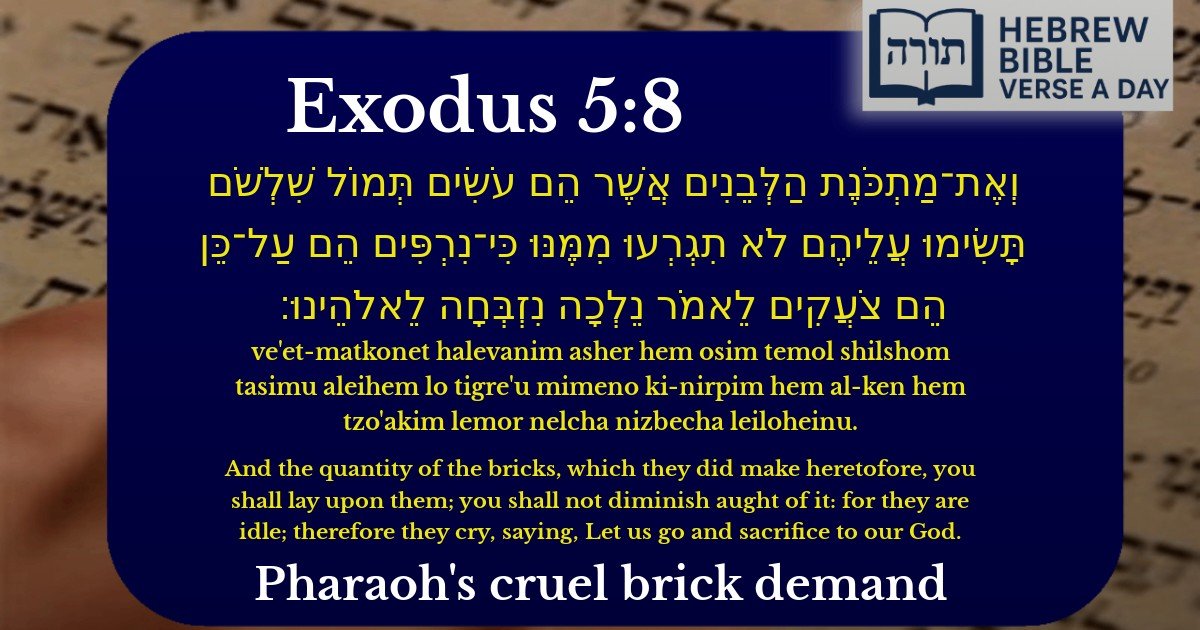
וְאֶת־מַתְכֹּנֶת הַלְּבֵנִים אֲשֶׁר הֵם עֹשִׂים תְּמוֹל שִׁלְשֹׁם תָּשִׂימוּ עֲלֵיהֶם לֹא תִגְרְעוּ מִמֶּנּוּ כִּי־נִרְפִּים הֵם עַל־כֵּן הֵם צֹעֲקִים לֵאמֹר נֵלְכָה נִזְבְּחָה לֵאלֹהֵינוּ׃
English Translation
And the quantity of the bricks, which they did make heretofore, you shall lay upon them; you shall not diminish aught of it: for they are idle; therefore they cry, saying, Let us go and sacrifice to our God.
Transliteration
Ve'et-matkonet halevanim asher hem osim temol shilshom tasimu aleihem lo tigre'u mimeno ki-nirpim hem al-ken hem tzo'akim lemor nelcha nizbecha leiloheinu.
Hebrew Leining Text
וְאֶת־מַתְכֹּ֨נֶת הַלְּבֵנִ֜ים אֲשֶׁ֣ר הֵם֩ עֹשִׂ֨ים תְּמ֤וֹל שִׁלְשֹׁם֙ תָּשִׂ֣ימוּ עֲלֵיהֶ֔ם לֹ֥א תִגְרְע֖וּ מִמֶּ֑נּוּ כִּֽי־נִרְפִּ֣ים הֵ֔ם עַל־כֵּ֗ן הֵ֤ם צֹֽעֲקִים֙ לֵאמֹ֔ר נֵלְכָ֖ה נִזְבְּחָ֥ה לֵאלֹהֵֽינוּ׃
🎵 Listen to leining
Parasha Commentary
📚 Talmud Citations
This verse is not quoted in the Talmud.
Context in Shemot (Exodus) 5:8
This verse appears in Parashat Shemot, where Pharaoh responds to Moshe and Aharon's request to allow Bnei Yisrael to worship Hashem in the wilderness. Pharaoh accuses the Israelites of idleness and increases their workload as punishment.
Pharaoh's Accusation of Idleness
Rashi explains that Pharaoh claimed Bnei Yisrael were "nirpim" (idle) because they had free time to gather and discuss their desire to serve Hashem. The Midrash Tanchuma (Shemot 9) adds that Pharaoh viewed their request to worship as an excuse to avoid labor, prompting him to intensify their oppression.
The Cruelty of Increased Brick Quotas
Ramban notes that Pharaoh's decree to maintain the same brick production "without diminishing" despite removing the straw supply was intentionally impossible. The Sforno emphasizes that this was a psychological tactic—making the workload unattainable to crush their spirits and prevent further requests for religious freedom.
The Cry to Serve Hashem
The phrase "they cry, saying, Let us go and sacrifice to our God" is interpreted by the Malbim as evidence of Bnei Yisrael's enduring faith. Even under oppression, their desire to connect with Hashem persisted. The Kli Yakar highlights the irony: Pharaoh’s accusation of idleness stemmed from their spiritual yearning, which he misinterpreted as laziness.
Lessons from the Verse