Frequently Asked Questions
Q: What does Exodus 5:10 mean?
A: Exodus 5:10 describes how Pharaoh's taskmasters and officers informed the Jewish people that they would no longer be provided with straw to make bricks, yet they were still required to produce the same quota. This was part of Pharaoh's plan to increase their suffering and break their spirit (Rashi on Exodus 5:9).
Q: Why did Pharaoh stop giving the Jewish people straw?
A: Pharaoh stopped providing straw as a way to intensify the oppression of the Jewish people. According to the Midrash (Shemot Rabbah 5:18), this was a tactic to crush their morale and make their labor even more difficult, as they now had to gather straw themselves while still meeting the same brick quotas.
Q: What can we learn from Exodus 5:10 about overcoming hardship?
A: This verse teaches us about resilience in the face of unjust oppression. Despite Pharaoh's cruelty, the Jewish people continued to endure, setting an example of perseverance. The Rambam (Hilchot De'ot 1:4) emphasizes that maintaining faith and moral strength during trials is a key Jewish value.
Q: How does Exodus 5:10 relate to Jewish history?
A: Exodus 5:10 marks a turning point in the Jewish enslavement in Egypt, showing how Pharaoh escalated their suffering. This event is part of the broader narrative of the Exodus, which is central to Jewish identity and is commemorated every year during Passover (Talmud, Pesachim 116b).
Q: What is the significance of the phrase 'Thus says Pharaoh' in this verse?
A: The phrase 'Thus says Pharaoh' highlights Pharaoh's arrogance and authoritarian rule. In Jewish tradition, it contrasts with the later declaration 'Thus says Hashem,' showing the difference between human tyranny and divine justice (Rashi on Exodus 5:10, based on Midrash Tanchuma).

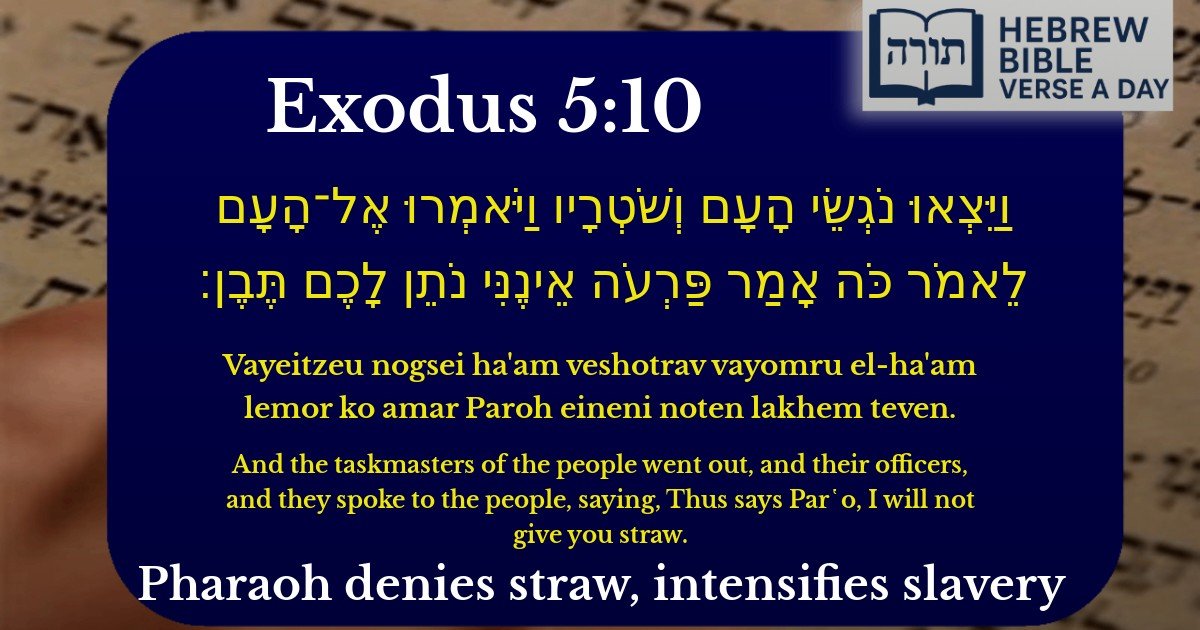

Context of the Verse
This verse (Shemot 5:10) describes Pharaoh's cruel decree to withhold straw from the Israelites while still demanding the same quota of bricks. This marked an escalation in the oppression of Bnei Yisrael in Mitzrayim.
Rashi's Explanation
Rashi explains that Pharaoh's decree was a calculated act of psychological torment. Previously, the Egyptians provided straw for brick-making, but now the Israelites had to gather their own straw while maintaining the same production quota. This was designed to break their spirit through impossible demands.
Ibn Ezra's Insight
Ibn Ezra notes the phrase "כה אמר פרעה" ("Thus says Pharaoh") emphasizes this came as an official royal decree, not merely from lower officials. The withholding of straw represented a strategic move to increase suffering while maintaining plausible deniability about direct physical violence.
Midrashic Interpretation
The Midrash (Shemot Rabbah 5:18) elaborates that this decree was particularly cruel because:
Rambam's Perspective
In Moreh Nevuchim (3:32), Rambam explains that Pharaoh's tactics represent a classic method of oppression - gradually increasing burdens to make the oppressed accustomed to suffering. The removal of straw while maintaining quotas was meant to crush the Israelite spirit before outright physical persecution began.
Chassidic Interpretation
The Sefat Emet teaches that this episode symbolizes how the yetzer hara (evil inclination) operates - first providing "straw" (easy temptations), then suddenly withdrawing support while demanding the same "bricks" (spiritual failures). The lesson is to recognize such tactics in our own spiritual struggles.