

Join Our Newsletter To Be Informed When New Videos Are Posted
Hebrew Text
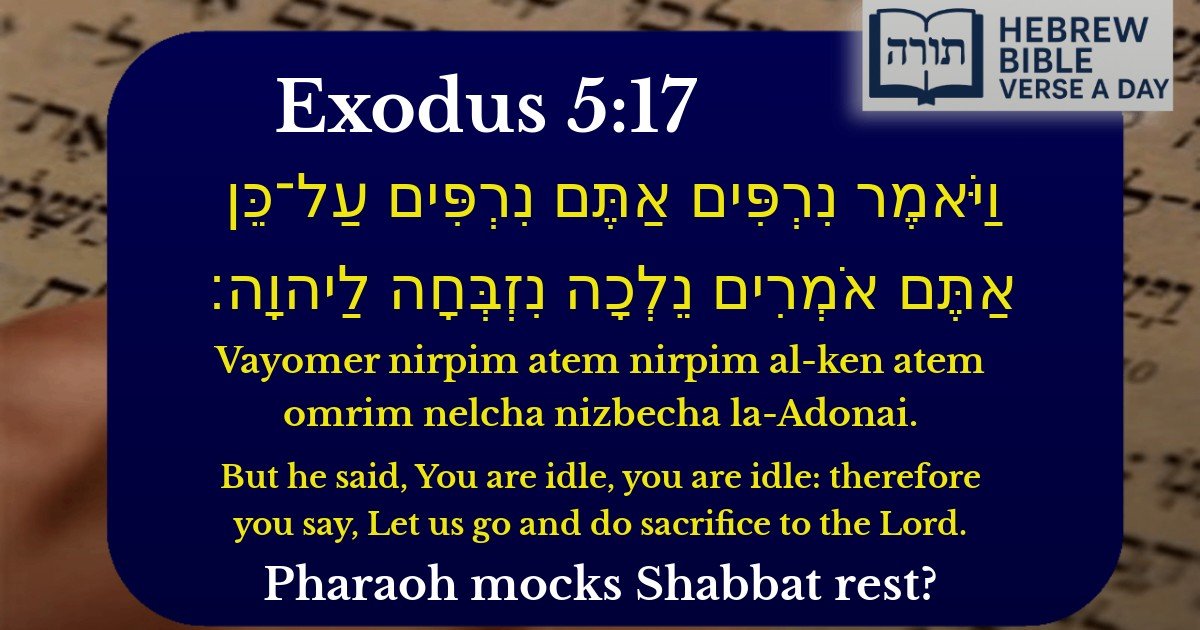
וַיֹּאמֶר נִרְפִּים אַתֶּם נִרְפִּים עַל־כֵּן אַתֶּם אֹמְרִים נֵלְכָה נִזְבְּחָה לַיהוָה׃
English Translation
But he said, You are idle, you are idle: therefore you say, Let us go and do sacrifice to the Lord.
Transliteration
Vayomer nirpim atem nirpim al-ken atem omrim nelcha nizbecha la-Adonai.
Hebrew Leining Text
וַיֹּ֛אמֶר נִרְפִּ֥ים אַתֶּ֖ם נִרְפִּ֑ים עַל־כֵּן֙ אַתֶּ֣ם אֹֽמְרִ֔ים נֵלְכָ֖ה נִזְבְּחָ֥ה לַֽיהֹוָֽה׃
🎵 Listen to leining
Parasha Commentary
📚 Talmud Citations
This verse is not quoted in the Talmud.
Context of the Verse
The verse (Exodus 5:17) appears in the narrative where Pharaoh responds to Moshe and Aharon's request to allow Bnei Yisrael to journey into the wilderness to offer sacrifices to Hashem. Pharaoh accuses the Israelites of being idle ("nirpim"), suggesting their request stems from laziness rather than genuine religious devotion.
Meaning of "Nirpim" (נִרְפִּים)
Rashi explains that "nirpim" derives from the root רפ"ה, meaning "weak" or "slack." Pharaoh claims the Israelites are lazy and seek to avoid labor by requesting a religious excursion. Ramban adds that Pharaoh mocks their request, implying they have too much free time to think about sacrifices.
Pharaoh's Accusation
The Midrash (Shemot Rabbah 5:18) elaborates that Pharaoh's words reflect his disdain for the Israelites' spiritual aspirations. By calling them "nirpim," he dismisses their desire to serve Hashem as mere idleness, revealing his refusal to acknowledge their faith.
Spiritual Implications
Lessons for Jewish Life
The Seforno teaches that Pharaoh's words remind us how external forces may belittle Torah observance, labeling it as impractical or a waste of time. True dedication to mitzvot requires resilience against such mockery.