

Join Our Newsletter To Be Informed When New Videos Are Posted
Hebrew Text
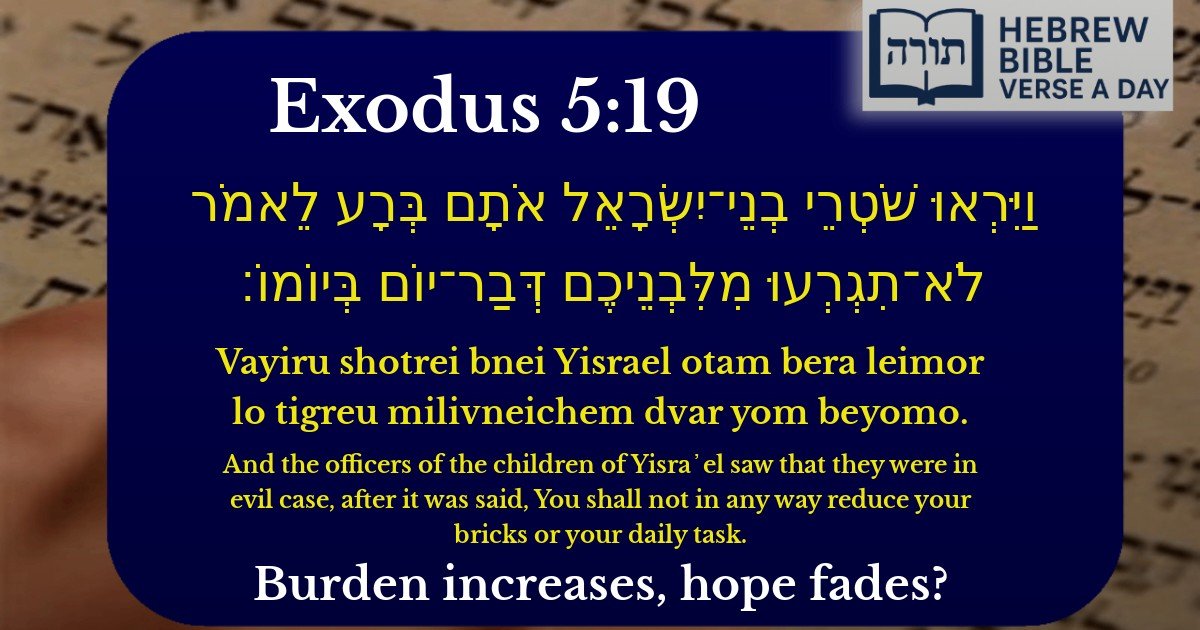
וַיִּרְאוּ שֹׁטְרֵי בְנֵי־יִשְׂרָאֵל אֹתָם בְּרָע לֵאמֹר לֹא־תִגְרְעוּ מִלִּבְנֵיכֶם דְּבַר־יוֹם בְּיוֹמוֹ׃
English Translation
And the officers of the children of Yisra᾽el saw that they were in evil case, after it was said, You shall not in any way reduce your bricks or your daily task.
Transliteration
Vayiru shotrei bnei Yisrael otam bera leimor lo tigreu milivneichem dvar yom beyomo.
Hebrew Leining Text
וַיִּרְא֞וּ שֹֽׁטְרֵ֧י בְנֵֽי־יִשְׂרָאֵ֛ל אֹתָ֖ם בְּרָ֣ע לֵאמֹ֑ר לֹא־תִגְרְע֥וּ מִלִּבְנֵיכֶ֖ם דְּבַר־י֥וֹם בְּיוֹמֽוֹ׃
🎵 Listen to leining
Parasha Commentary
📚 Talmud Citations
This verse is not quoted in the Talmud.
Context in Shemot (Exodus)
The verse (Shemot 5:19) describes the reaction of the Israelite officers after Pharaoh intensified their oppression by demanding the same quota of bricks despite no longer providing straw. This followed Moshe and Aharon's request to Pharaoh to allow Bnei Yisrael to worship Hashem in the wilderness.
Rashi's Explanation
Rashi explains that the officers saw themselves in a dire situation ("בְּרָע") because they were beaten when the Israelites could not meet the unchanged brick quota. The phrase "לֹא־תִגְרְעוּ מִלִּבְנֵיכֶם" ("you shall not reduce your bricks") refers to Pharaoh's cruel decree that the daily brick production must remain unchanged, even though the slaves now had to gather their own straw.
Malbim's Insight
The Malbim emphasizes the officers' distress as leaders caught between Pharaoh's impossible demands and the suffering of their people. The term "בְּרָע" reflects their realization that this oppression was a direct result of Moshe's intervention, which seemingly worsened their plight.
Midrashic Interpretation
Halachic Dimension
The Rambam (Hilchos Avadim 1:7) derives from this episode that oppressing workers with impossible demands violates the prohibition of "לֹא תִרְדֶּה בוֹ בְּפָרֶךְ" (do not rule over him ruthlessly). The officers' distress highlights the injustice of Pharaoh's decree.