

Join Our Newsletter To Be Informed When New Videos Are Posted
Hebrew Text
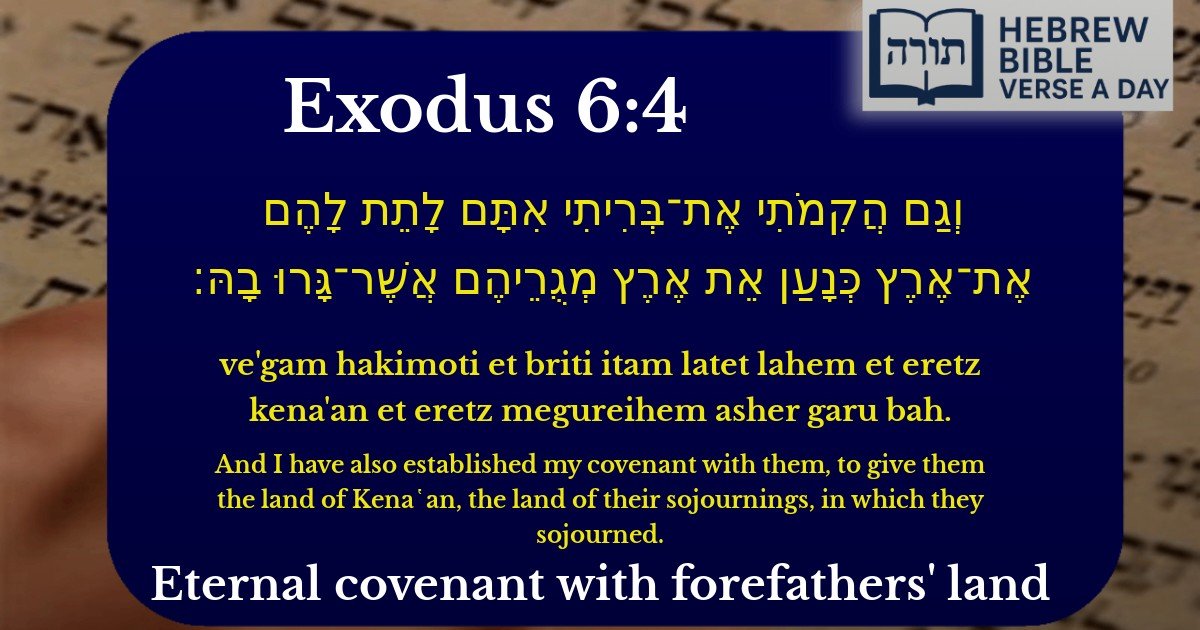
וְגַם הֲקִמֹתִי אֶת־בְּרִיתִי אִתָּם לָתֵת לָהֶם אֶת־אֶרֶץ כְּנָעַן אֵת אֶרֶץ מְגֻרֵיהֶם אֲשֶׁר־גָּרוּ בָהּ׃
English Translation
And I have also established my covenant with them, to give them the land of Kena῾an, the land of their sojournings, in which they sojourned.
Transliteration
Ve'gam hakimoti et briti itam latet lahem et eretz kena'an et eretz megureihem asher garu bah.
Hebrew Leining Text
וְגַ֨ם הֲקִמֹ֤תִי אֶת־בְּרִיתִי֙ אִתָּ֔ם לָתֵ֥ת לָהֶ֖ם אֶת־אֶ֣רֶץ כְּנָ֑עַן אֵ֛ת אֶ֥רֶץ מְגֻרֵיהֶ֖ם אֲשֶׁר־גָּ֥רוּ בָֽהּ׃
🎵 Listen to leining
Parasha Commentary
📚 Talmud Citations
This verse is not quoted in the Talmud.
The Covenant and the Land of Canaan
The verse states: "And I have also established my covenant with them, to give them the land of Kena῾an, the land of their sojournings, in which they sojourned." (Shemot 6:4). This reaffirms Hashem's eternal covenant with the Avot (Patriarchs) to grant their descendants the Land of Canaan as an everlasting inheritance.
Rashi's Explanation
Rashi comments on the phrase "the land of their sojournings" (אֶרֶץ מְגֻרֵיהֶם), noting that the Avot—Avraham, Yitzchak, and Yaakov—lived in Canaan as gerim (sojourners), never fully settling there during their lifetimes. Despite this, Hashem promised the land to their descendants as a permanent possession. Rashi emphasizes that the term megureihem (their sojournings) underscores the temporary nature of their stay, contrasting with the future permanence of Bnei Yisrael's dwelling there.
Rambam's Perspective
In Hilchot Melachim (Laws of Kings 11:1), the Rambam teaches that the covenant with the Avot ensures the Land of Israel's eternal status as the inheritance of the Jewish people. He explains that this promise is unconditional and not dependent on merit, as it was given as a brit olam (eternal covenant). The phrase "to give them the land of Kena῾an" thus reflects an unbreakable divine commitment.
Midrashic Insights
Halachic Implications
The Chatam Sofer (Responsa, Yoreh De'ah 234) derives from this verse that the Jewish people's claim to Eretz Yisrael is rooted in divine covenant, not conquest or political agreement. This principle informs the halachic view that the mitzvah of settling the Land remains binding in all generations.