

Join Our Newsletter To Be Informed When New Videos Are Posted
Hebrew Text
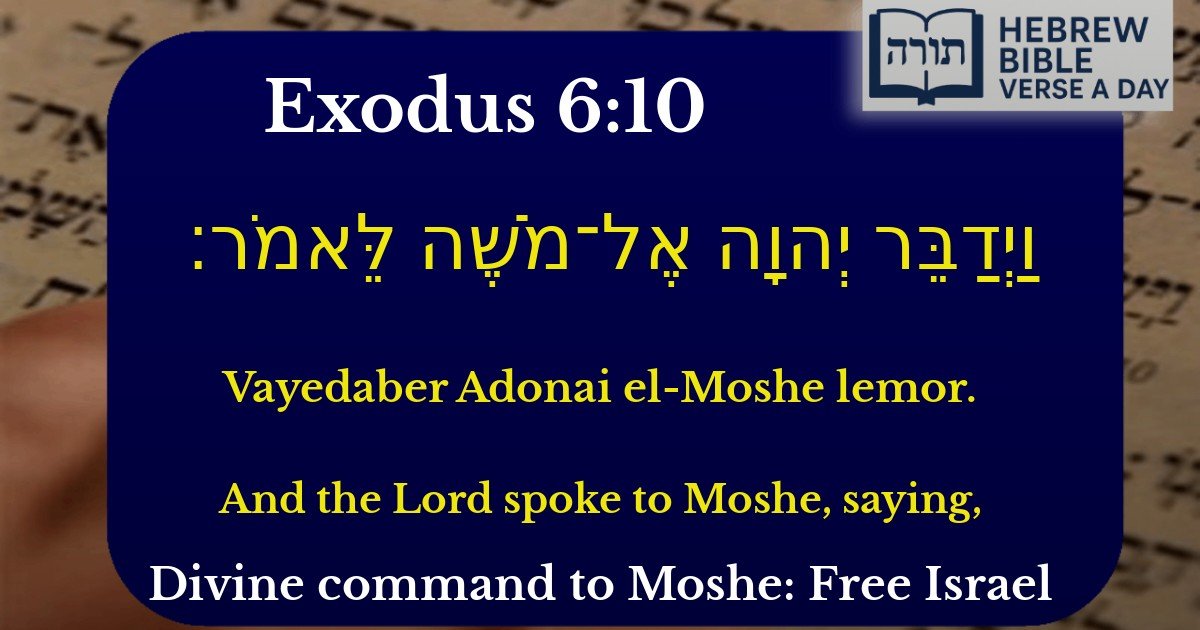
וַיְדַבֵּר יְהוָה אֶל־מֹשֶׁה לֵּאמֹר׃
English Translation
And the Lord spoke to Moshe, saying,
Transliteration
Vayedaber Adonai el-Moshe lemor.
Hebrew Leining Text
וַיְדַבֵּ֥ר יְהֹוָ֖ה אֶל־מֹשֶׁ֥ה לֵּאמֹֽר׃
🎵 Listen to leining
Parasha Commentary
📚 Talmud Citations
This verse is not quoted in the Talmud.
The Divine Communication to Moshe
The verse "וַיְדַבֵּר יְהוָה אֶל־מֹשֶׁה לֵּאמֹר" ("And the Lord spoke to Moshe, saying") appears frequently in the Torah, introducing direct communication from Hashem to Moshe Rabbeinu. This phrase emphasizes the unique prophetic relationship between Hashem and Moshe, as explained by Rashi (Shemot 6:2) and Rambam in Hilchot Yesodei HaTorah (7:6).
Key Insights from Traditional Sources
The Significance of "לֵּאמֹר" ("Saying")
The term "לֵּאמֹר" is interpreted by the Ohr HaChaim (Shemot 6:10) as indicating that Moshe was to relay the divine message to others—either to Bnei Yisrael or to Aharon. This reflects Moshe's role as the intermediary for transmitting Torah to the nation.
Halachic Implications
The Sefer HaChinuch (Mitzvah 95) derives from this verse that Moshe's prophecy established the principle of Torah MiSinai—the divine origin of all mitzvot. This foundational belief is codified by Rambam in his 13 Principles of Faith (Principle 8).