

Join Our Newsletter To Be Informed When New Videos Are Posted
Hebrew Text
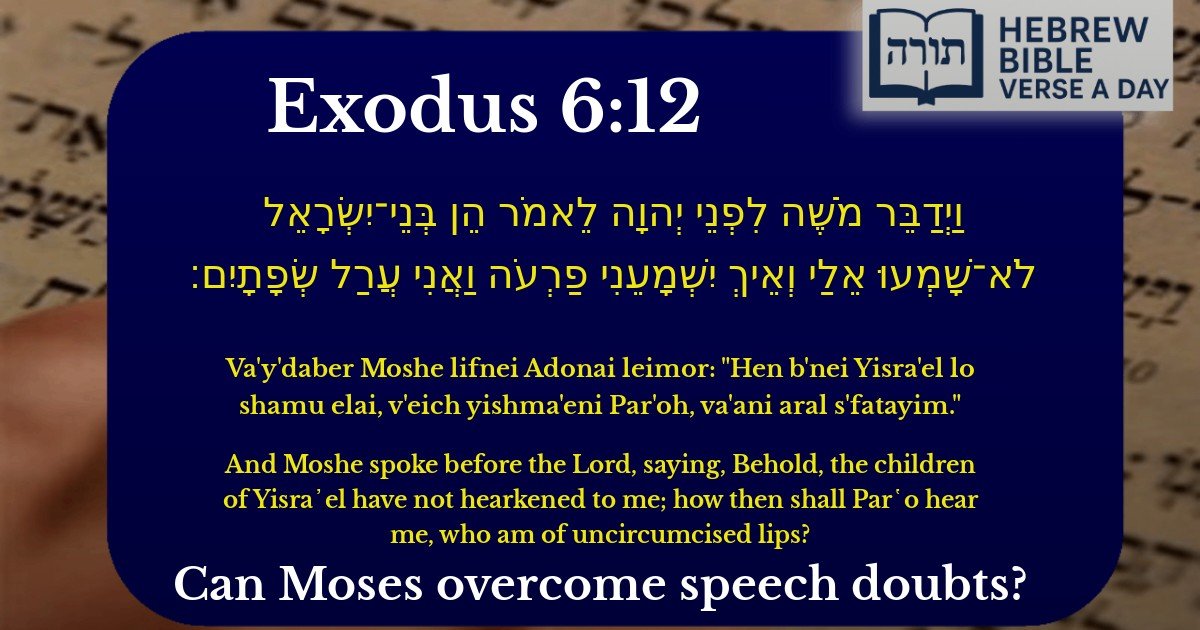
וַיְדַבֵּר מֹשֶׁה לִפְנֵי יְהוָה לֵאמֹר הֵן בְּנֵי־יִשְׂרָאֵל לֹא־שָׁמְעוּ אֵלַי וְאֵיךְ יִשְׁמָעֵנִי פַרְעֹה וַאֲנִי עֲרַל שְׂפָתָיִם׃
English Translation
And Moshe spoke before the Lord, saying, Behold, the children of Yisra᾽el have not hearkened to me; how then shall Par῾o hear me, who am of uncircumcised lips?
Transliteration
Va'y'daber Moshe lifnei Adonai leimor: "Hen b'nei Yisra'el lo shamu elai, v'eich yishma'eni Par'oh, va'ani aral s'fatayim."
Hebrew Leining Text
וַיְדַבֵּ֣ר מֹשֶׁ֔ה לִפְנֵ֥י יְהֹוָ֖ה לֵאמֹ֑ר הֵ֤ן בְּנֵֽי־יִשְׂרָאֵל֙ לֹֽא־שָׁמְע֣וּ אֵלַ֔י וְאֵיךְ֙ יִשְׁמָעֵ֣נִי פַרְעֹ֔ה וַאֲנִ֖י עֲרַ֥ל שְׂפָתָֽיִם׃ {פ}
🎵 Listen to leining
Parasha Commentary
📚 Talmud Citations
This verse is quoted in the Talmud.
📖 Yevamot 97a
The verse is referenced in a discussion about the concept of 'uncircumcised lips' and Moses' humility.
📖 Nedarim 20b
The verse is cited in a discussion about vows and the power of speech, relating to Moses' description of his own speech impediment.
Moses' Hesitation Before Pharaoh
In this verse (Shemot 6:12), Moshe expresses doubt about his ability to persuade Pharaoh, citing two concerns:
The Meaning of "Uncircumcised Lips"
Rashi explains that "aral sefatayim" refers to Moshe's speech impediment (mentioned earlier in Shemot 4:10). The term "uncircumcised" metaphorically describes something obstructed or blocked, just as foreskin blocks the circumcised organ. Similarly, Moshe felt his lips were "blocked" from speaking clearly.
Why Mention Israel's Lack of Response?
The Ramban suggests Moshe was making a logical argument: If his own people, who stood to benefit from his message, wouldn't listen, how much less likely would Pharaoh - who stood to lose from Moshe's demands - pay attention? This reflects Moshe's humility and realistic assessment of the situation.
The Midrashic Perspective
The Midrash (Shemot Rabbah 7:3) connects this verse to Moshe's earlier encounter with Pharaoh in chapter 5, where Pharaoh increased the Israelites' workload after Moshe's initial request. This made the Israelites resent Moshe (5:21), leading to his complaint here that they "have not hearkened to me."
Spiritual Significance
The Kli Yakar notes that Moshe's speech difficulty represents the constricted spiritual state of the Israelites in Egypt. Just as Moshe struggled to speak, the Israelites struggled to "hear" - to properly receive and internalize divine messages during their oppression. This parallel shows how redemption requires both physical liberation and spiritual readiness.