
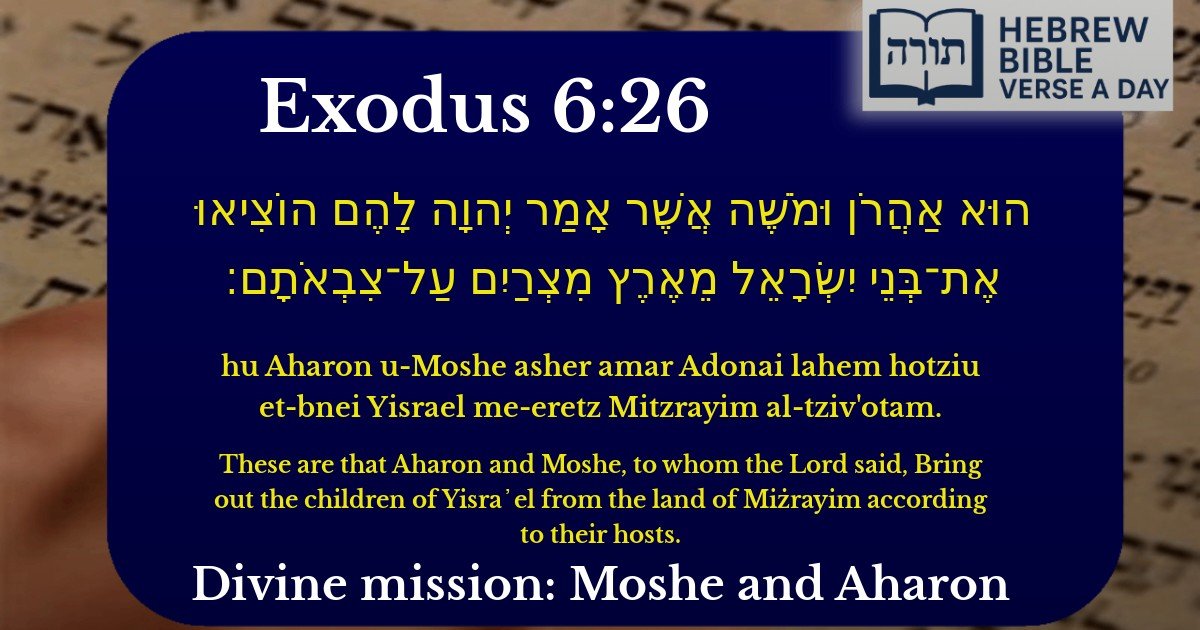

Exodus 6:26 - Divine mission: Moshe and Aharon

Exodus 6:26 - שמות 6:26

Hebrew Text

הוּא אַהֲרֹן וּמֹשֶׁה אֲשֶׁר אָמַר יְהוָה לָהֶם הוֹצִיאוּ אֶת־בְּנֵי יִשְׂרָאֵל מֵאֶרֶץ מִצְרַיִם עַל־צִבְאֹתָם׃

English Translation

These are that Aharon and Moshe, to whom the Lord said, Bring out the children of Yisra᾽el from the land of Miżrayim according to their hosts.

Transliteration

Hu Aharon u-Moshe asher amar Adonai lahem hotziu et-bnei Yisrael me-eretz Mitzrayim al-tziv'otam.

Hebrew Leining Text

ה֥וּא אַהֲרֹ֖ן וּמֹשֶׁ֑ה אֲשֶׁ֨ר אָמַ֤ר יְהֹוָה֙ לָהֶ֔ם הוֹצִ֜יאוּ אֶת־בְּנֵ֧י יִשְׂרָאֵ֛ל מֵאֶ֥רֶץ מִצְרַ֖יִם עַל־צִבְאֹתָֽם׃

🎵 Listen to leining

Parasha Commentary

The Roles of Aharon and Moshe

The verse states, "These are that Aharon and Moshe, to whom the Lord said, Bring out the children of Yisra᾽el from the land of Miżrayim according to their hosts." Rashi (Shemos 6:26) notes that Aharon is mentioned before Moshe here, whereas in other places (e.g., Shemos 6:27), Moshe is mentioned first. This teaches that they were equally great, and the Torah alternates their order to emphasize that neither was subordinate to the other in their divine mission.

The Phrase "According to Their Hosts"

The term "עַל־צִבְאֹתָם" ("according to their hosts") is interpreted in multiple ways by our Sages:

  • Rashi explains that Bnei Yisrael left Egypt in an organized manner, arranged by tribes and families, as later described in Bamidbar (1:52). This demonstrates the dignity and structure with which they departed.
  • Ramban (Shemos 6:26) suggests that the term refers to the military-like formations in which they would later encamp in the wilderness, foreshadowing their future organization.
  • Sforno adds that "according to their hosts" implies that each tribe retained its unique identity and role, even in exile, and would later contribute distinctively to the service of Hashem.

The Dual Leadership

The Midrash (Shemos Rabbah 3:16) elaborates on why both Aharon and Moshe were necessary for the redemption:

  • Moshe was the primary prophet and lawgiver, communicating directly with Pharaoh and conveying Hashem's word.
  • Aharon served as the unifying figure, beloved by the people (as seen in Shemos 4:14), ensuring their trust and cooperation in the process.

The Kli Yakar (Shemos 6:26) explains that their partnership symbolized the balance between strict justice (Moshe) and lovingkindness (Aharon), both of which were necessary for the redemption.

The Significance of the Command

The phrase "הוֹצִיאוּ אֶת־בְּנֵי יִשְׂרָאֵל" ("Bring out the children of Yisrael") is a joint command to both brothers. The Ohr HaChaim (Shemos 6:26) highlights that this teaches a principle of collective responsibility—even when one leader is primary, others must share in the sacred work of guiding the Jewish people.

📚 Talmud Citations

This verse is not quoted in the Talmud.

Frequently Asked Questions

Q: Why does the verse mention Aharon before Moshe when Moshe was the main leader?
A: Rashi explains that Aharon is mentioned first here to show his equal importance in this mission. Although Moshe was the primary leader, Aharon played a crucial role as his spokesman and partner in bringing the Israelites out of Egypt. This teaches us the value of teamwork in fulfilling divine missions.
Q: What does 'according to their hosts' mean in this verse?
A: The phrase 'according to their hosts' refers to the organized structure of the Israelite nation as they left Egypt. Ramban explains that this hints at their future formation as a nation with tribal divisions and military arrangements, showing that Hashem had a plan for their journey even before the Exodus.
Q: Why does the Torah repeat that Aharon and Moshe were commanded to take Israel out of Egypt?
A: The repetition emphasizes the divine authority behind their mission. As the Midrash teaches, this reaffirmation was necessary to strengthen their leadership position when facing Pharaoh's resistance. It reminds us that true leadership comes from fulfilling Hashem's commandments.
Q: How does this verse connect to the broader Exodus story?
A: This verse serves as an introduction to the actual Exodus narrative that follows. The Talmud (Sotah 36b) notes that such introductory verses establish the legitimacy of the leaders who would perform miracles and lead the people, showing that their authority came directly from Hashem.
Q: What lesson can we learn from Aharon and Moshe working together?
A: The partnership between Aharon and Moshe teaches the importance of unity in leadership. As the Sages explain, though they had different roles (Moshe as the primary leader, Aharon as the kohen), they worked together harmoniously to fulfill Hashem's will. This models how we should collaborate for holy purposes.