

Join Our Newsletter To Be Informed When New Videos Are Posted
Hebrew Text
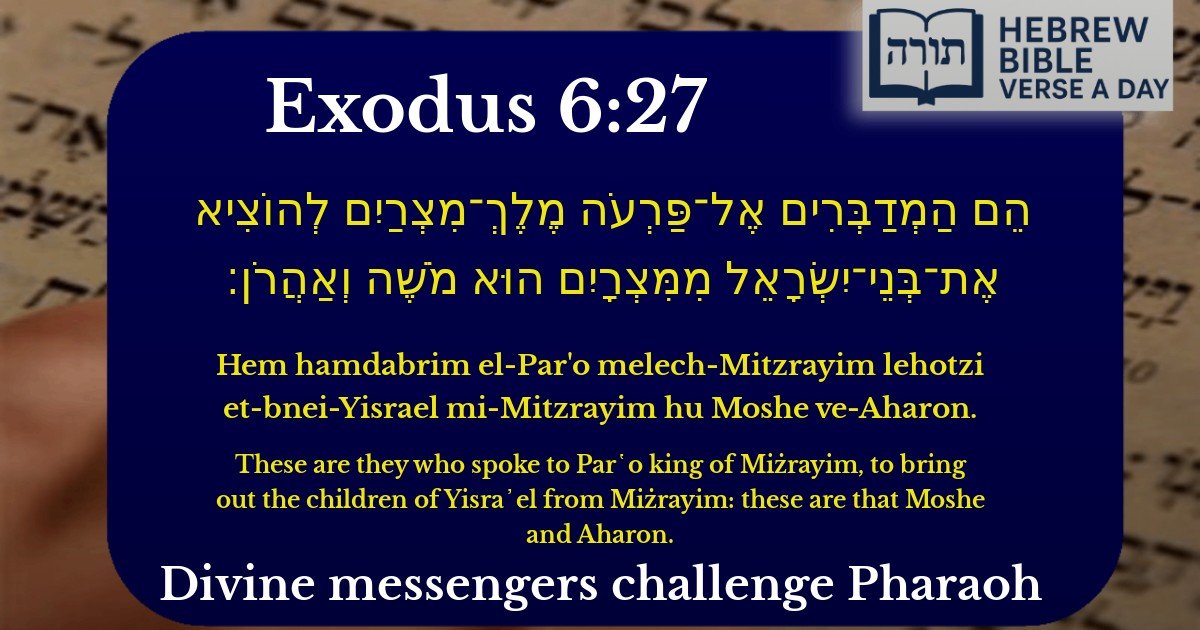
הֵם הַמְדַבְּרִים אֶל־פַּרְעֹה מֶלֶךְ־מִצְרַיִם לְהוֹצִיא אֶת־בְּנֵי־יִשְׂרָאֵל מִמִּצְרָיִם הוּא מֹשֶׁה וְאַהֲרֹן׃
English Translation
These are they who spoke to Par῾o king of Miżrayim, to bring out the children of Yisra᾽el from Miżrayim: these are that Moshe and Aharon.
Transliteration
Hem hamdabrim el-Par'o melech-Mitzrayim lehotzi et-bnei-Yisrael mi-Mitzrayim hu Moshe ve-Aharon.
Hebrew Leining Text
הֵ֗ם הַֽמְדַבְּרִים֙ אֶל־פַּרְעֹ֣ה מֶֽלֶךְ־מִצְרַ֔יִם לְהוֹצִ֥יא אֶת־בְּנֵֽי־יִשְׂרָאֵ֖ל מִמִּצְרָ֑יִם ה֥וּא מֹשֶׁ֖ה וְאַהֲרֹֽן׃
🎵 Listen to leining
Parasha Commentary
📚 Talmud Citations
This verse is not quoted in the Talmud.
The Role of Moshe and Aharon as Divine Emissaries
The verse emphasizes that Moshe and Aharon were specifically chosen as Hashem's agents to speak to Pharaoh. Rashi (Shemot 6:13) notes that the phrase "הֵם הַמְדַבְּרִים" ("these are they who spoke") underscores their unique mission, distinguishing them from all other prophets. The Rambam (Hilchos Yesodei HaTorah 7:6) explains that Moshe's prophecy was fundamentally different in nature, as he communicated directly with Pharaoh as Hashem's precise messenger.
The Significance of Their Dual Leadership
The pairing of Moshe and Aharon reflects a divine strategy for redemption. The Midrash (Shemot Rabbah 3:16) teaches that Moshe, who initially resisted the mission due to his humility (Shemot 4:10), was partnered with Aharon, whose strength was in speech. The Talmud (Sanhedrin 99b) highlights that Aharon's role was essential in bridging Moshe's prophetic clarity with the need for effective communication to both Pharaoh and Bnei Yisrael.
The Mention of Pharaoh's Title
The verse specifies "פַּרְעֹה מֶלֶךְ־מִצְרַיִם" ("Pharaoh king of Egypt") to emphasize the power dynamic. The Kli Yakar (Shemot 6:13) explains that this phrasing reminds us that Pharaoh, despite his earthly kingship, was ultimately subordinate to Hashem's will. The Netziv (Ha'amek Davar) adds that mentioning his title reinforces that Moshe and Aharon confronted the full might of Egypt's monarchy, demonstrating divine supremacy.
The Repetition of "הוּא מֹשֶׁה וְאַהֲרֹן"
The concluding phrase "הוּא מֹשֶׁה וְאַהֲרֹן" ("these are that Moshe and Aharon") serves a literary and theological purpose. Ibn Ezra suggests this repetition affirms their unchanging roles as redeemers, despite Pharaoh's resistance. The Ohr HaChaim (Shemot 6:13) teaches that "הוּא" ("these are") implies consistency—the same Moshe and Aharon who began the mission would complete it, reflecting Hashem's unwavering plan.