

Join Our Newsletter To Be Informed When New Videos Are Posted
Hebrew Text
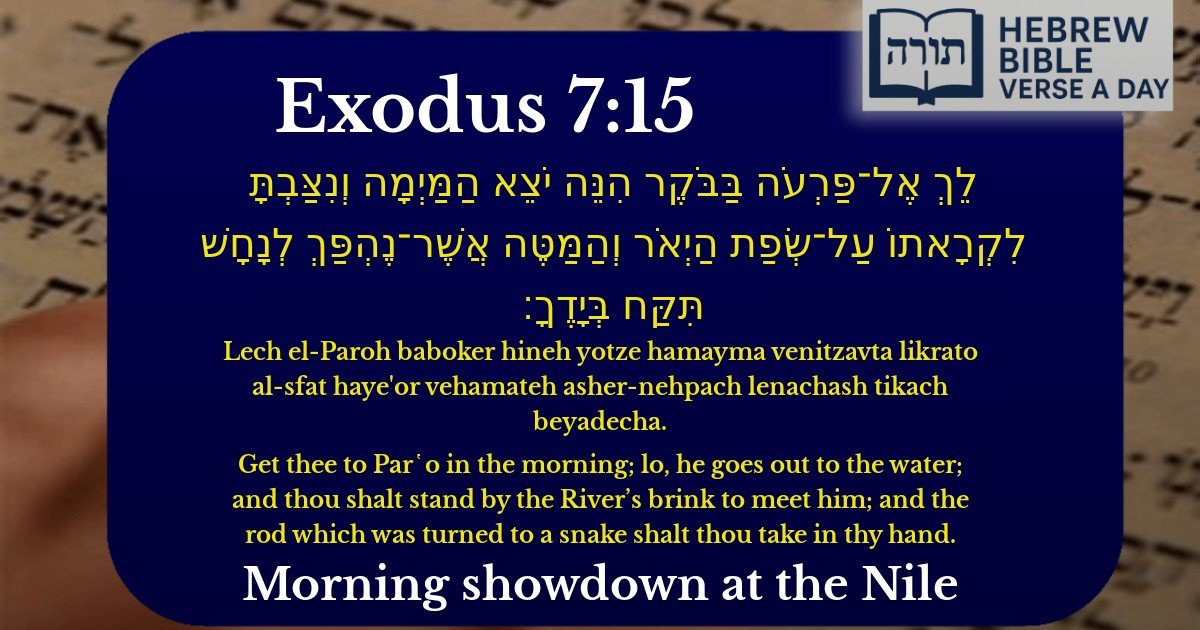
לֵךְ אֶל־פַּרְעֹה בַּבֹּקֶר הִנֵּה יֹצֵא הַמַּיְמָה וְנִצַּבְתָּ לִקְרָאתוֹ עַל־שְׂפַת הַיְאֹר וְהַמַּטֶּה אֲשֶׁר־נֶהְפַּךְ לְנָחָשׁ תִּקַּח בְּיָדֶךָ׃
English Translation
Get thee to Par῾o in the morning; lo, he goes out to the water; and thou shalt stand by the River’s brink to meet him; and the rod which was turned to a snake shalt thou take in thy hand.
Transliteration
Lech el-Paroh baboker hineh yotze hamayma venitzavta likrato al-sfat haye'or vehamateh asher-nehpach lenachash tikach beyadecha.
Hebrew Leining Text
לֵ֣ךְ אֶל־פַּרְעֹ֞ה בַּבֹּ֗קֶר הִנֵּה֙ יֹצֵ֣א הַמַּ֔יְמָה וְנִצַּבְתָּ֥ לִקְרָאת֖וֹ עַל־שְׂפַ֣ת הַיְאֹ֑ר וְהַמַּטֶּ֛ה אֲשֶׁר־נֶהְפַּ֥ךְ לְנָחָ֖שׁ תִּקַּ֥ח בְּיָדֶֽךָ׃
🎵 Listen to leining
Parasha Commentary
📚 Talmud Citations
This verse is not quoted in the Talmud.
Context of the Verse
This verse (Shemot 7:15) is part of the narrative where Hashem instructs Moshe to confront Pharaoh at the Nile River, marking the beginning of the plagues against Egypt. The command comes after Pharaoh hardened his heart following the initial signs performed by Moshe and Aharon.
Rashi's Commentary
Rashi explains that Pharaoh went to the Nile in the morning because he pretended to be a deity, claiming he did not need to relieve himself like ordinary humans. By going to the river early, he deceived his people into believing he had no bodily needs. Hashem directed Moshe to meet him there to expose his falsehood and demonstrate divine supremacy.
The Significance of the Rod
The rod (mateh) that turned into a snake (as described earlier in Shemot 7:10-12) symbolizes divine authority. Ramban (Nachmanides) notes that taking the rod to Pharaoh served as a reminder of the earlier miracle, reinforcing that Moshe acted as Hashem's emissary. The rod, which had already demonstrated its power, was a tangible sign of impending judgment.
Meeting at the Nile
Spiritual Lessons
The Talmud (Berachot 4a) derives from this episode that one should confront wrongdoing at its source. Just as Moshe met Pharaoh where his falsehood was most evident, we must address spiritual challenges directly. Additionally, the Midrash (Shemot Rabbah 9:8) teaches that Hashem often brings judgment in a manner that mirrors the sin—here, Pharaoh’s deceit about his divinity was countered at the very place he perpetuated the lie.