

Join Our Newsletter To Be Informed When New Videos Are Posted
Hebrew Text
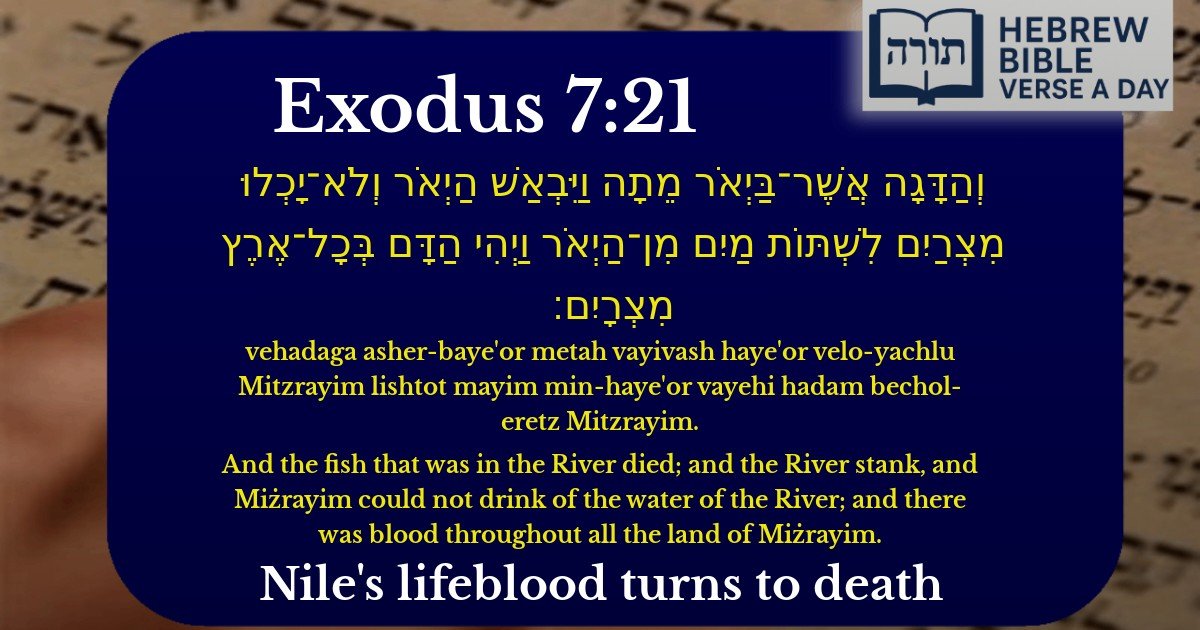
וְהַדָּגָה אֲשֶׁר־בַּיְאֹר מֵתָה וַיִּבְאַשׁ הַיְאֹר וְלֹא־יָכְלוּ מִצְרַיִם לִשְׁתּוֹת מַיִם מִן־הַיְאֹר וַיְהִי הַדָּם בְּכָל־אֶרֶץ מִצְרָיִם׃
English Translation
And the fish that was in the River died; and the River stank, and Miżrayim could not drink of the water of the River; and there was blood throughout all the land of Miżrayim.
Transliteration
Vehadaga asher-baye'or metah vayivash haye'or velo-yachlu Mitzrayim lishtot mayim min-haye'or vayehi hadam bechol-eretz Mitzrayim.
Hebrew Leining Text
וְהַדָּגָ֨ה אֲשֶׁר־בַּיְאֹ֥ר מֵ֙תָה֙ וַיִּבְאַ֣שׁ הַיְאֹ֔ר וְלֹא־יָכְל֣וּ מִצְרַ֔יִם לִשְׁתּ֥וֹת מַ֖יִם מִן־הַיְאֹ֑ר וַיְהִ֥י הַדָּ֖ם בְּכׇל־אֶ֥רֶץ מִצְרָֽיִם׃
🎵 Listen to leining
Parasha Commentary
📚 Talmud Citations
This verse is not quoted in the Talmud.
Overview of the Plague of Blood
The verse describes the first of the Ten Plagues inflicted upon Egypt, where the Nile River turned to blood, causing the fish to die and the water to become undrinkable. This plague targeted the Nile, which the Egyptians worshipped as a god, demonstrating Hashem's supremacy over their false deities (Shemot Rabbah 9:9).
Rashi's Commentary
Rashi (Shemot 7:18) explains that the fish died because they could not survive in blood, and the river emitted a foul odor (וַיִּבְאַשׁ) as a result. He further notes that the Egyptians were unable to drink from the Nile or any other water source in Egypt, as even stored water turned to blood (based on Shemot 7:19). This emphasizes the totality of the plague—no Egyptian could escape its effects.
Symbolism of the Nile
The Nile was central to Egyptian life and mythology, representing fertility and divine sustenance. By striking the Nile first, Hashem undermined Pharaoh's claim of divinity (Rambam, Hilchot Avodah Zarah 1:1). The Midrash (Shemot Rabbah 9:10) adds that the plague lasted seven days, corresponding to the seven days of mourning for the Nile, mocking the Egyptians' reliance on a false god.
Moral and Theological Implications
Halachic Insights
The Rambam (Hilchot Teshuvah 6:5) cites the plagues as proof of Hashem's direct intervention in history to reward and punish. The transformation of water to blood also serves as a reminder of the miraculous nature of creation, where Hashem can suspend natural laws at will (Maharal, Gevurot Hashem 25).