
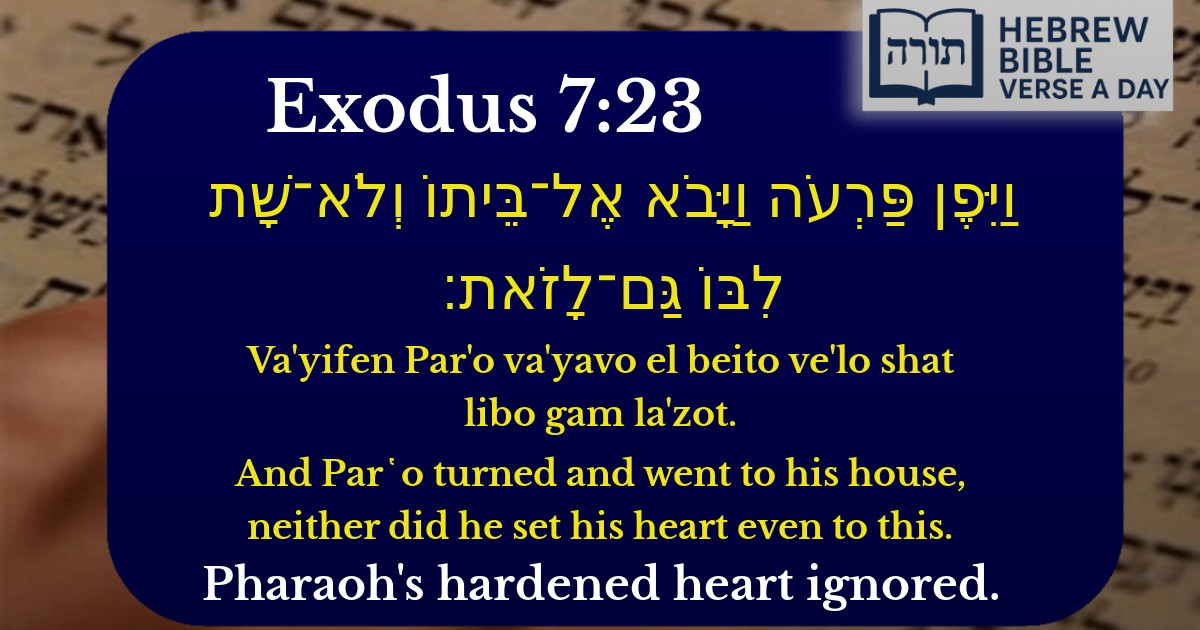

Exodus 7:23 - Pharaoh's hardened heart ignored.

Exodus 7:23 - שמות 7:23

Hebrew Text

וַיִּפֶן פַּרְעֹה וַיָּבֹא אֶל־בֵּיתוֹ וְלֹא־שָׁת לִבּוֹ גַּם־לָזֹאת׃

English Translation

And Par῾o turned and went to his house, neither did he set his heart even to this.

Transliteration

Va'yifen Par'o va'yavo el beito ve'lo shat libo gam la'zot.

Hebrew Leining Text

וַיִּ֣פֶן פַּרְעֹ֔ה וַיָּבֹ֖א אֶל־בֵּית֑וֹ וְלֹא־שָׁ֥ת לִבּ֖וֹ גַּם־לָזֹֽאת׃

🎵 Listen to leining

Parasha Commentary

Context in Shemot (Exodus) 7:23

This verse describes Pharaoh's reaction after the plague of blood (דם) ended. Despite witnessing the miraculous transformation of the Nile and all water sources into blood—a direct assault on Egypt's primary deity (the Nile was worshipped as a god)—Pharaoh hardened his heart and returned to his palace without internalizing the lesson.

Rashi's Commentary

Rashi (רש"י) explains that Pharaoh "turned" (ויפן) implies he deliberately turned away from the signs Hashem had shown him. The phrase "ולא שת לבו גם לזאת" ("he did not set his heart even to this") indicates that Pharaoh remained obstinate despite the overwhelming evidence of divine intervention. Rashi emphasizes that this behavior was a pattern—Pharaoh repeatedly ignored the plagues' messages (Shemot Rabbah 9:12).

Ibn Ezra's Insight

Ibn Ezra (אבן עזרא) notes that Pharaoh's return to his house symbolizes his retreat into arrogance and denial. Even after his magicians admitted, "This is the finger of G-d" (Shemot 8:15), Pharaoh refused to humble himself. His refusal to "set his heart" (שת לבו) reflects a conscious choice to reject truth.

Midrashic Interpretation

  • Shemot Rabbah 9:12: The Midrash compares Pharaoh to a foolish king who, after his palace is set ablaze, focuses on trivial matters instead of the crisis. Similarly, Pharaoh ignored the miracle and returned to business as usual.
  • Mechilta de-Rabbi Yishmael: The phrase "גם לזאת" ("even to this") implies that Pharaoh dismissed not only this plague but all future warnings, setting the stage for further hardening of his heart (Shemot 7:13-14).

Philosophical Lesson (Rambam)

Rambam (רמב"ם, Hilchot Teshuvah 6:3) uses Pharaoh’s behavior as a cautionary example of how repeated sin can lead to a loss of free will. By consistently ignoring divine signs, Pharaoh’s heart became so hardened that repentance became nearly impossible—a warning about the dangers of habitual defiance.

📚 Talmud Citations

This verse is not quoted in the Talmud.

Frequently Asked Questions

Q: What does it mean that Pharaoh 'did not set his heart' in Exodus 7:23?
A: The phrase 'did not set his heart' means that Pharaoh hardened his heart and refused to pay attention to the miracle (the plague of blood) that had just occurred. According to Rashi, this shows Pharaoh's stubbornness and unwillingness to recognize Hashem's power, even after witnessing a clear divine sign.
Q: Why did Pharaoh go back to his house after the plague of blood?
A: Pharaoh returned to his house because he ignored the warning and the miracle, showing his arrogance. The Midrash explains that Pharaoh went back to his normal routine as if nothing had happened, demonstrating his refusal to change his ways despite the clear message from Hashem through Moshe and Aharon.
Q: What lesson can we learn from Pharaoh's reaction in Exodus 7:23?
A: We learn the danger of stubbornness and ignoring divine signs. The Rambam teaches that Pharaoh's hardened heart serves as a warning against closing oneself off to truth and repentance. A person should always be open to recognizing Hashem's hand in events and be willing to change for the better.
Q: How does Pharaoh's behavior in this verse relate to free will?
A: Pharaoh initially hardened his own heart (as seen here), showing that he chose to ignore the miracles. Only later did Hashem harden Pharaoh's heart as a punishment for his persistent refusal to repent. The Talmud (Makkot 10b) discusses how free will works—Hashem allows a person to choose their path, but continued wrongdoing can lead to diminished opportunities for repentance.