

Join Our Newsletter To Be Informed When New Videos Are Posted
Hebrew Text
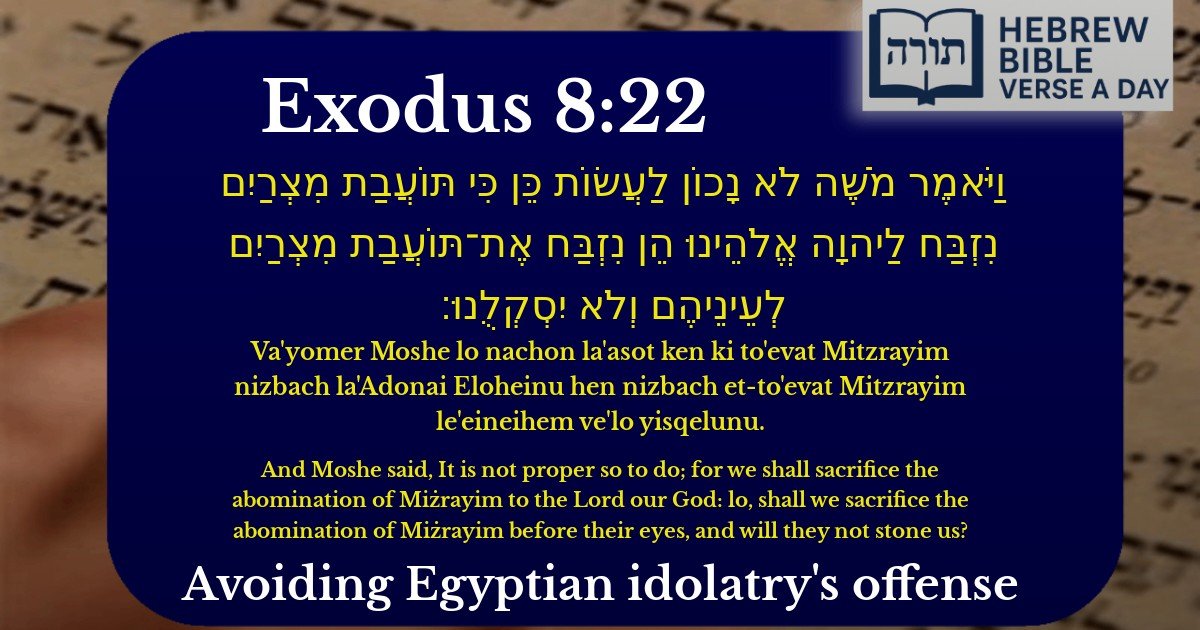
וַיֹּאמֶר מֹשֶׁה לֹא נָכוֹן לַעֲשׂוֹת כֵּן כִּי תּוֹעֲבַת מִצְרַיִם נִזְבַּח לַיהוָה אֱלֹהֵינוּ הֵן נִזְבַּח אֶת־תּוֹעֲבַת מִצְרַיִם לְעֵינֵיהֶם וְלֹא יִסְקְלֻנוּ׃
English Translation
And Moshe said, It is not proper so to do; for we shall sacrifice the abomination of Miżrayim to the Lord our God: lo, shall we sacrifice the abomination of Miżrayim before their eyes, and will they not stone us?
Transliteration
Va'yomer Moshe lo nachon la'asot ken ki to'evat Mitzrayim nizbach la'Adonai Eloheinu hen nizbach et-to'evat Mitzrayim le'eineihem ve'lo yisqelunu.
Hebrew Leining Text
וַיֹּ֣אמֶר מֹשֶׁ֗ה לֹ֤א נָכוֹן֙ לַעֲשׂ֣וֹת כֵּ֔ן כִּ֚י תּוֹעֲבַ֣ת מִצְרַ֔יִם נִזְבַּ֖ח לַיהֹוָ֣ה אֱלֹהֵ֑ינוּ הֵ֣ן נִזְבַּ֞ח אֶת־תּוֹעֲבַ֥ת מִצְרַ֛יִם לְעֵינֵיהֶ֖ם וְלֹ֥א יִסְקְלֻֽנוּ׃
🎵 Listen to leining
Parasha Commentary
📚 Talmud Citations
This verse is quoted in the Talmud.
📖 Berakhot 7a
The verse is referenced in a discussion about the proper way to approach sacrifices and the sensitivities involved in religious practices that might offend others.
📖 Sanhedrin 60b
Cited in the context of discussing the laws of idolatry and the prohibition against causing offense to others through religious practices.
Context of the Verse
This verse (Shemot 8:22) appears during the negotiations between Moshe and Pharaoh regarding the Israelites' request to leave Egypt to serve Hashem. Moshe explains that they cannot sacrifice within Egypt because the animals they would offer are considered sacred or abominable to the Egyptians, and doing so would provoke violent retaliation.
Explanation of "תּוֹעֲבַת מִצְרַיִם" (Abomination of Egypt)
Rashi explains that the "abomination of Egypt" refers to sheep, which the Egyptians worshipped as deities (citing Shemot Rabbah 11:2). Ramban adds that the Egyptians held certain animals sacred, particularly the ram, associated with their god Khnum. Sacrificing these animals would be an affront to Egyptian religious sensibilities.
Moshe's Concern About Stoning
The Talmud (Sanhedrin 26a) discusses the severity of stoning as a punishment in Egyptian society for religious offenses. Moshe anticipated that sacrificing their sacred animals would lead the Egyptians to stone the Israelites, as it would be seen as blasphemy against their gods.
Halachic and Strategic Considerations
Spiritual Message
The Seforno notes that this verse teaches the importance of avoiding chillul Hashem (desecration of G-d's name). Even though the Israelites were justified in serving Hashem, doing so in a way that would incite violence would undermine their mission.