

Join Our Newsletter To Be Informed When New Videos Are Posted
Hebrew Text
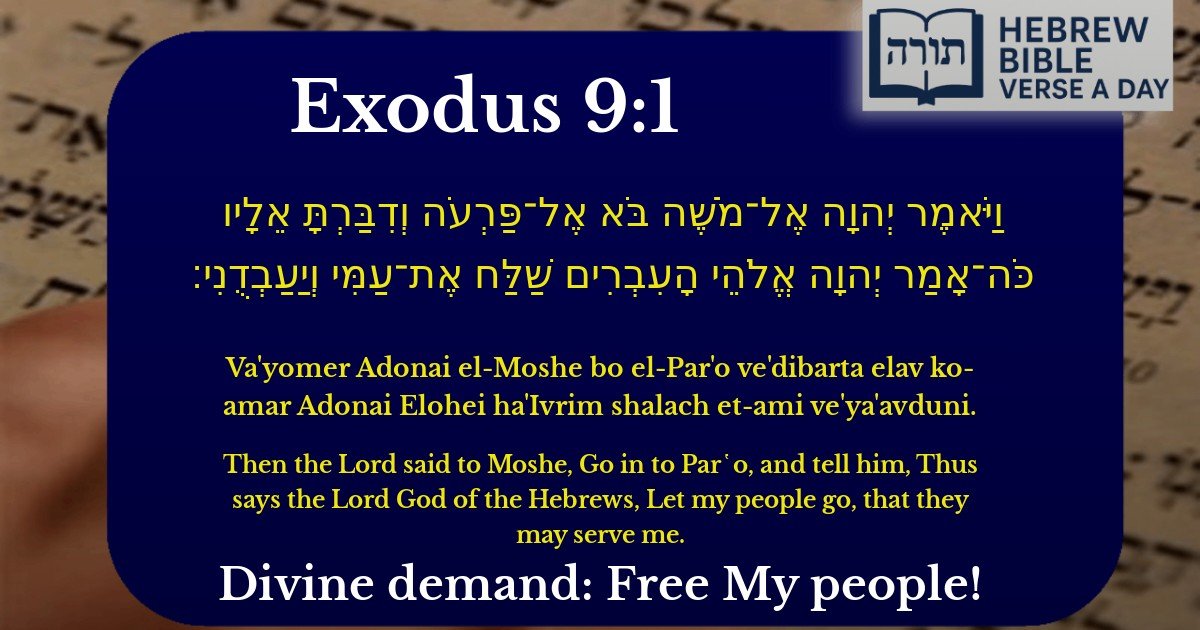
וַיֹּאמֶר יְהוָה אֶל־מֹשֶׁה בֹּא אֶל־פַּרְעֹה וְדִבַּרְתָּ אֵלָיו כֹּה־אָמַר יְהוָה אֱלֹהֵי הָעִבְרִים שַׁלַּח אֶת־עַמִּי וְיַעַבְדֻנִי׃
English Translation
Then the Lord said to Moshe, Go in to Par῾o, and tell him, Thus says the Lord God of the Hebrews, Let my people go, that they may serve me.
Transliteration
Va'yomer Adonai el-Moshe bo el-Par'o ve'dibarta elav ko-amar Adonai Elohei ha'Ivrim shalach et-ami ve'ya'avduni.
Hebrew Leining Text
וַיֹּ֤אמֶר יְהֹוָה֙ אֶל־מֹשֶׁ֔ה בֹּ֖א אֶל־פַּרְעֹ֑ה וְדִבַּרְתָּ֣ אֵלָ֗יו כֹּֽה־אָמַ֤ר יְהֹוָה֙ אֱלֹהֵ֣י הָֽעִבְרִ֔ים שַׁלַּ֥ח אֶת־עַמִּ֖י וְיַֽעַבְדֻֽנִי׃
🎵 Listen to leining
Parasha Commentary
📚 Talmud Citations
This verse is quoted in the Talmud.
📖 Sotah 11a
The verse is referenced in the context of discussing the bravery of Moses and Aaron in confronting Pharaoh.
📖 Sanhedrin 111a
The verse is mentioned in a discussion about the plagues and the hardening of Pharaoh's heart.
Context in the Exodus Narrative
This verse (Shemot 9:1) appears during the sequence of the ten plagues, specifically before the fifth plague, dever (pestilence). Hashem instructs Moshe to confront Pharaoh once again, demanding the release of Bnei Yisrael so they may serve Him. This refrain—"Let My people go, that they may serve Me"—is central to the Exodus narrative, emphasizing that freedom is not an end in itself but a means to fulfill divine service.
Rashi's Commentary
Rashi (Rabbi Shlomo Yitzchaki) notes the phrase "בֹּא אֶל־פַּרְעֹה" ("Go in to Pharaoh") and explains that Moshe was commanded to approach Pharaoh with boldness, despite the king's arrogance and resistance. Rashi also highlights the title "אֱלֹהֵי הָעִבְרִים" ("God of the Hebrews"), underscoring that Hashem identifies specifically with the oppressed Hebrews, reinforcing His covenant with Avraham, Yitzchak, and Yaakov.
Rambam's Perspective on Divine Mission
Rambam (Maimonides) in Moreh Nevuchim (Guide for the Perplexed) discusses the nature of prophecy and Moshe's unique role. Here, Moshe serves as the intermediary delivering Hashem's exact words ("כֹּה־אָמַר ה'"—"Thus says the Lord"), emphasizing the precision and authority of divine communication. The demand for Pharaoh to release Bnei Yisrael is not negotiable, reflecting the absolute sovereignty of Hashem over human rulers.
Midrashic Insights
Theological Implications
The verse encapsulates the duality of physical and spiritual liberation. The Ibn Ezra emphasizes that true freedom is not merely escape from bondage but devotion to divine service. This principle underpins the Jewish understanding of redemption, later actualized in the Mishkan and Beit HaMikdash as centers of avodah (service).