

Join Our Newsletter To Be Informed When New Videos Are Posted
Hebrew Text
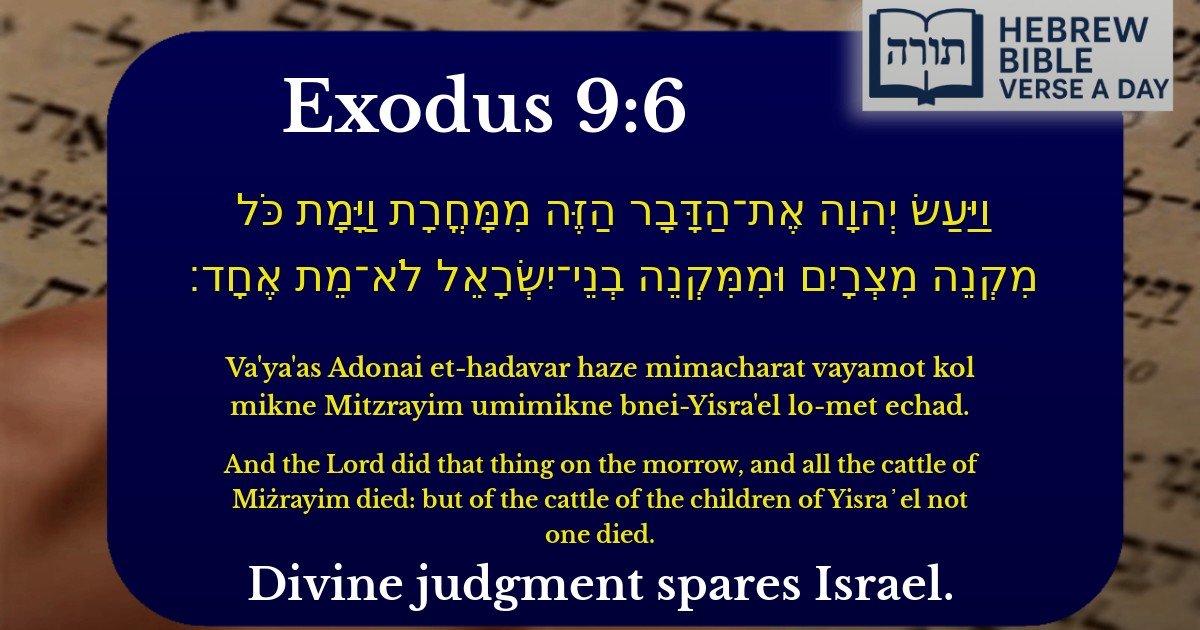
וַיַּעַשׂ יְהוָה אֶת־הַדָּבָר הַזֶּה מִמָּחֳרָת וַיָּמָת כֹּל מִקְנֵה מִצְרָיִם וּמִמִּקְנֵה בְנֵי־יִשְׂרָאֵל לֹא־מֵת אֶחָד׃
English Translation
And the Lord did that thing on the morrow, and all the cattle of Miżrayim died: but of the cattle of the children of Yisra᾽el not one died.
Transliteration
Va'ya'as Adonai et-hadavar haze mimacharat vayamot kol mikne Mitzrayim umimikne bnei-Yisra'el lo-met echad.
Hebrew Leining Text
וַיַּ֨עַשׂ יְהֹוָ֜ה אֶת־הַדָּבָ֤ר הַזֶּה֙ מִֽמׇּחֳרָ֔ת וַיָּ֕מׇת כֹּ֖ל מִקְנֵ֣ה מִצְרָ֑יִם וּמִמִּקְנֵ֥ה בְנֵֽי־יִשְׂרָאֵ֖ל לֹא־מֵ֥ת אֶחָֽד׃
🎵 Listen to leining
Parasha Commentary
📚 Talmud Citations
This verse is quoted in the Talmud.
📖 Sotah 11a
The verse is referenced in the context of discussing the plagues in Egypt and the distinction between the Egyptians and the Israelites.
Context of the Plague
The verse describes the fifth plague against Egypt, the death of livestock (Devar, or "pestilence"), as recounted in Shemot (Exodus) 9:6. This plague specifically targeted the cattle of the Egyptians while sparing those of Bnei Yisrael, demonstrating Hashem's distinction between the oppressors and the oppressed.
Rashi's Explanation
Rashi (Shemot 9:6) notes that the phrase "וַיַּעַשׂ יְהוָה אֶת־הַדָּבָר הַזֶּה" ("And the Lord did that thing") emphasizes that Hashem carried out the plague precisely as forewarned through Moshe. This reinforces the principle of divine justice—Hashem warns before punishing.
Rashi further explains that the plague affected only Egyptian livestock, even if they were in the possession of Israelites, while Israelite-owned cattle remained unharmed, even if they were among Egyptian herds. This distinction highlights divine providence (Hashgacha Pratit).
Rambam's Perspective
Rambam (Moreh Nevuchim 3:46) discusses the purpose of the plagues as both punitive and educational. The death of Egyptian livestock served to break Egypt's economic strength (as cattle were vital for agriculture and transportation) while proving that Hashem governs nature and protects His people.
Midrashic Insights
Halachic Implications
The Mechilta (Bo 12) derives from this verse that the plagues were executed with precision—only the guilty were stricken, while the innocent were spared. This principle later informs Jewish legal thought regarding divine justice and the concept of middah k'neged middah (measure for measure).
Symbolism of the Plague
Malbim (Shemot 9:6) explains that the death of Egyptian livestock symbolized the collapse of Egypt's material power and false deities. In contrast, the preservation of Israel's cattle signified their chosen status and the futility of opposing Hashem's will.