

Join Our Newsletter To Be Informed When New Videos Are Posted
Hebrew Text
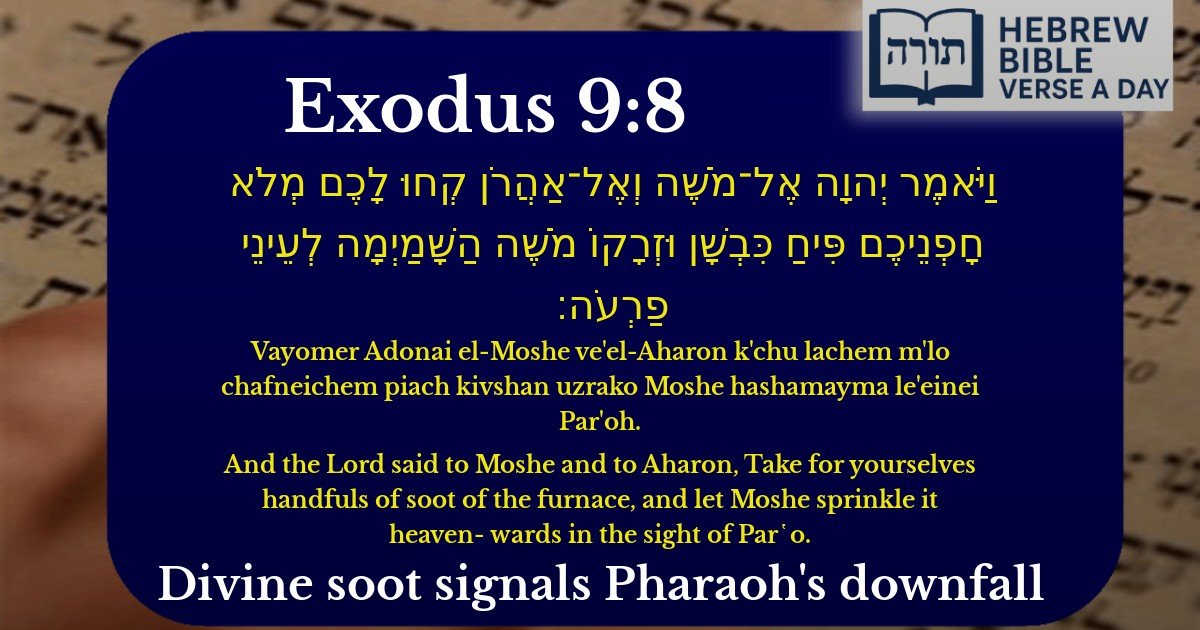
וַיֹּאמֶר יְהוָה אֶל־מֹשֶׁה וְאֶל־אַהֲרֹן קְחוּ לָכֶם מְלֹא חָפְנֵיכֶם פִּיחַ כִּבְשָׁן וּזְרָקוֹ מֹשֶׁה הַשָּׁמַיְמָה לְעֵינֵי פַרְעֹה׃
English Translation
And the Lord said to Moshe and to Aharon, Take for yourselves handfuls of soot of the furnace, and let Moshe sprinkle it heaven- wards in the sight of Par῾o.
Transliteration
Vayomer Adonai el-Moshe ve'el-Aharon k'chu lachem m'lo chafneichem piach kivshan uzrako Moshe hashamayma le'einei Par'oh.
Hebrew Leining Text
וַיֹּ֣אמֶר יְהֹוָה֮ אֶל־מֹשֶׁ֣ה וְאֶֽל־אַהֲרֹן֒ קְח֤וּ לָכֶם֙ מְלֹ֣א חׇפְנֵיכֶ֔ם פִּ֖יחַ כִּבְשָׁ֑ן וּזְרָק֥וֹ מֹשֶׁ֛ה הַשָּׁמַ֖יְמָה לְעֵינֵ֥י פַרְעֹֽה׃
🎵 Listen to leining
Parasha Commentary
📚 Talmud Citations
This verse is quoted in the Talmud.
📖 Sotah 16b
The verse is referenced in a discussion about the miracles performed in Egypt, particularly the plague of boils, where the act of taking soot from the furnace is mentioned as part of the divine command.
📖 Sanhedrin 67b
The verse is cited in a broader discussion about the nature of miracles and the specific actions commanded by God to Moses and Aaron during the plagues in Egypt.
The Significance of the Soot from the Furnace
According to Rashi (Shemot 9:8), the soot (piach kivshan) taken from the furnace symbolizes the suffering of the Jewish people in Egypt. The furnaces were used for brickmaking, representing the harsh labor imposed by Pharaoh. By using this soot, Hashem demonstrated that the very instrument of oppression would become the means of Divine retribution against Egypt.
Moshe and Aharon's Joint Involvement
The Ramban (Shemot 9:8) notes that both Moshe and Aharon were commanded to take the soot, though only Moshe sprinkled it toward heaven. This teaches that Aharon, as the Kohen Gadol, was associated with acts of purity and atonement, while Moshe, as the primary leader, executed the plague. Their partnership underscores the unity required in fulfilling Hashem's will.
The Symbolism of Sprinkling Toward Heaven
The Midrash (Shemot Rabbah 11:5) explains that sprinkling the soot heavenward symbolized that the plague was a decree from Above. By directing it toward the sky, Moshe demonstrated that the affliction was not a natural occurrence but a Divine punishment. The Talmud (Sanhedrin 67b) further connects this act to the concept of "middah k'neged middah" (measure for measure), as Pharaoh's arrogance ("Who is Hashem that I should heed Him?") was met with a visible display of Divine power.
The Role of Pharaoh's Witness
The phrase "l'einei Par'oh" (in the sight of Pharaoh) emphasizes that the miracle was performed openly before Pharaoh to challenge his denial of Hashem's authority. The Kli Yakar (Shemot 9:8) suggests that this public display was meant to break Pharaoh's stubbornness and compel him to acknowledge Hashem's sovereignty.
Lessons from the Plague