

Join Our Newsletter To Be Informed When New Videos Are Posted
Hebrew Text
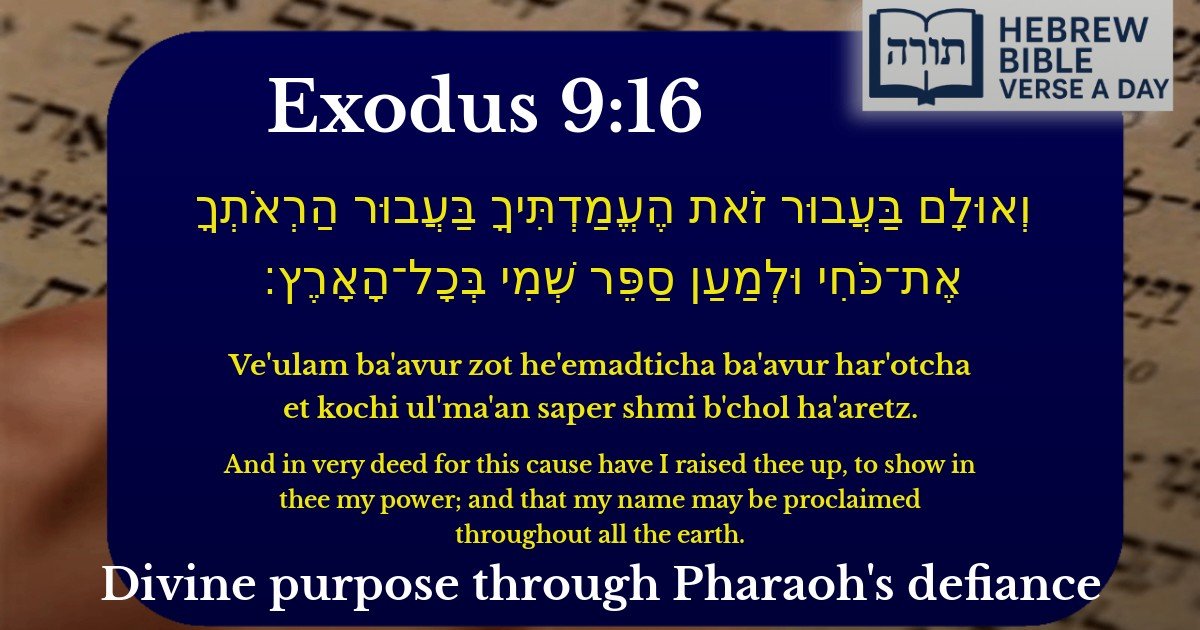
וְאוּלָם בַּעֲבוּר זֹאת הֶעֱמַדְתִּיךָ בַּעֲבוּר הַרְאֹתְךָ אֶת־כֹּחִי וּלְמַעַן סַפֵּר שְׁמִי בְּכָל־הָאָרֶץ׃
English Translation
And in very deed for this cause have I raised thee up, to show in thee my power; and that my name may be proclaimed throughout all the earth.
Transliteration
Ve'ulam ba'avur zot he'emadticha ba'avur har'otcha et kochi ul'ma'an saper shmi b'chol ha'aretz.
Hebrew Leining Text
וְאוּלָ֗ם בַּעֲב֥וּר זֹאת֙ הֶעֱמַדְתִּ֔יךָ בַּעֲב֖וּר הַרְאֹתְךָ֣ אֶת־כֹּחִ֑י וּלְמַ֛עַן סַפֵּ֥ר שְׁמִ֖י בְּכׇל־הָאָֽרֶץ׃
🎵 Listen to leining
Parasha Commentary
📚 Talmud Citations
This verse is quoted in the Talmud.
📖 Sanhedrin 111a
The verse is discussed in the context of Pharaoh's role in demonstrating God's power and the proclamation of His name.
📖 Megillah 10b
The verse is referenced in a discussion about the ways God's name is made known through historical events and figures.
Context of the Verse
This verse (Shemot 9:16) is part of Hashem's message to Pharaoh through Moshe during the plagues in Egypt. It explains the divine purpose behind Pharaoh's continued resistance despite witnessing Hashem's power through the plagues.
Rashi's Explanation
Rashi interprets this verse to mean that Hashem sustained Pharaoh's life and maintained his position of power specifically to demonstrate His might through the plagues. The phrase "הֶעֱמַדְתִּיךָ" (I have raised you up) is understood as preserving Pharaoh's rule so that the full measure of divine justice and power could be displayed.
Rambam's Perspective
In Moreh Nevuchim (3:32), Rambam discusses how Pharaoh's free will was not removed, but his heart was hardened after he persistently chose evil. This hardening served the greater purpose of making Hashem's power and justice known throughout the world, fulfilling the divine plan.
Midrashic Insights
Ibn Ezra's Commentary
Ibn Ezra notes that the demonstration of divine power through Pharaoh served two purposes: 1) To show that no power can oppose Hashem's will, and 2) To ensure that knowledge of Hashem would spread to all nations, not just Israel.
Chassidic Interpretation
The Kedushat Levi explains that Pharaoh's resistance created the opportunity for greater revelations of divine attributes (middot) - particularly Hashem's strength and sovereignty. The greater the opposition, the more profound the demonstration of divine power.
Halachic Implication
The Sefer HaChinuch (Mitzvah 25) derives from this verse the importance of publicizing miracles as they demonstrate Hashem's providence and strengthen faith. This forms the basis for the obligation to recount the Exodus story.