

Join Our Newsletter To Be Informed When New Videos Are Posted
Hebrew Text
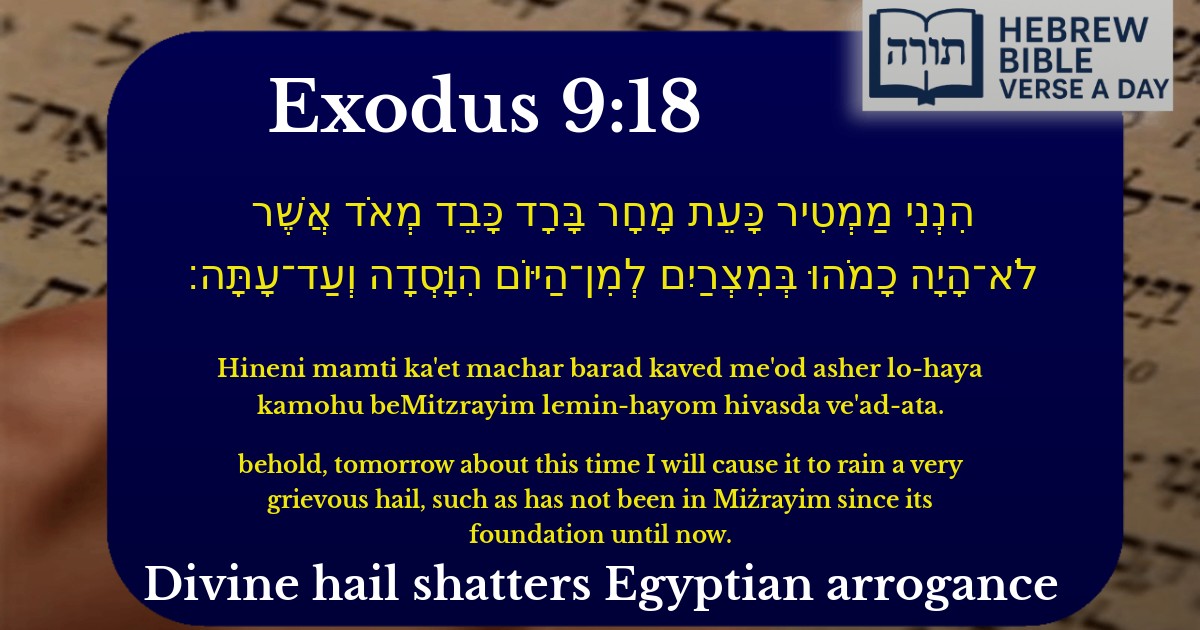
הִנְנִי מַמְטִיר כָּעֵת מָחָר בָּרָד כָּבֵד מְאֹד אֲשֶׁר לֹא־הָיָה כָמֹהוּ בְּמִצְרַיִם לְמִן־הַיּוֹם הִוָּסְדָה וְעַד־עָתָּה׃
English Translation
behold, tomorrow about this time I will cause it to rain a very grievous hail, such as has not been in Miżrayim since its foundation until now.
Transliteration
Hineni mamti ka'et machar barad kaved me'od asher lo-haya kamohu beMitzrayim lemin-hayom hivasda ve'ad-ata.
Hebrew Leining Text
הִנְנִ֤י מַמְטִיר֙ כָּעֵ֣ת מָחָ֔ר בָּרָ֖ד כָּבֵ֣ד מְאֹ֑ד אֲשֶׁ֨ר לֹא־הָיָ֤ה כָמֹ֙הוּ֙ בְּמִצְרַ֔יִם לְמִן־הַיּ֥וֹם הִוָּסְדָ֖הֿ וְעַד־עָֽתָּה׃
🎵 Listen to leining
Parasha Commentary
📚 Talmud Citations
This verse is quoted in the Talmud.
📖 Berakhot 54b
The verse is referenced in the context of discussing the miracles performed in Egypt, particularly the plague of hail, as an example of God's mighty acts.
📖 Ta'anit 3b
The verse is cited in a discussion about the severity of the plagues in Egypt, emphasizing the unprecedented nature of the hail as described in the verse.
Context in the Plagues of Egypt
This verse (Shemot 9:18) is part of Hashem's warning to Pharaoh about the impending seventh plague—the plague of hail (barad). The severity of this plague is emphasized by its unprecedented nature in Egyptian history, marking it as a divine intervention rather than a natural phenomenon.
Rashi's Commentary
Rashi explains that the phrase "לְמִן־הַיּוֹם הִוָּסְדָה" ("since its foundation") refers to the very day Egypt was established as a nation. This highlights that such a catastrophic hailstorm had never occurred in Egypt's entire history, underscoring the miraculous nature of the plague. Rashi also notes that the hail was uniquely destructive, containing fire within the ice—a paradox demonstrating Hashem's absolute control over nature (based on Shemot 9:24).
Rambam on Divine Justice
Rambam (Maimonides) in Hilchot Teshuvah discusses how the plagues served both as punishment for Egypt's oppression of Bnei Yisrael and as a means to demonstrate Hashem's power. The hail, being a blend of fire and ice, symbolized that even opposing forces unite to fulfill divine will when justice is demanded.
Midrashic Insights
Theological Significance
The plague of hail reinforced the principle of hashgacha pratit (divine providence), as it spared the land of Goshen where Bnei Yisrael dwelled (Shemot 9:26). This distinction proved that the plague was not a random disaster but a targeted act of judgment, aligning with the broader theme of the Exodus narrative: the supremacy of Hashem over false Egyptian deities (in this case, the sky and weather gods like Nut and Shu).