
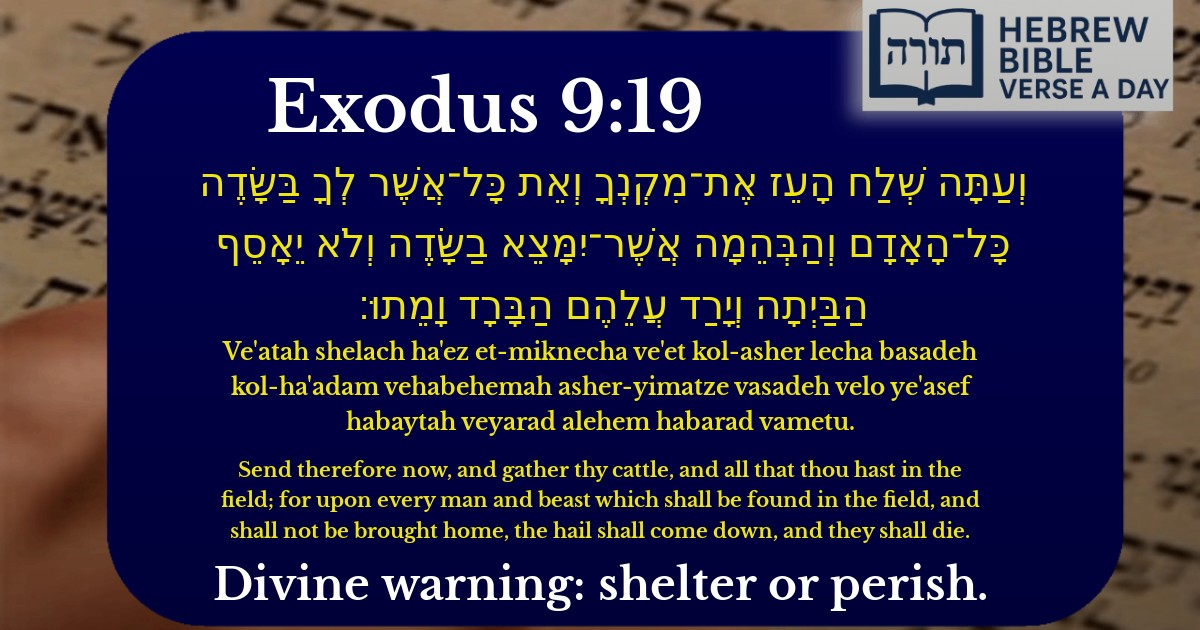

Exodus 9:19 - Divine warning: shelter or perish.

Exodus 9:19 - שמות 9:19

Hebrew Text

וְעַתָּה שְׁלַח הָעֵז אֶת־מִקְנְךָ וְאֵת כָּל־אֲשֶׁר לְךָ בַּשָּׂדֶה כָּל־הָאָדָם וְהַבְּהֵמָה אֲשֶׁר־יִמָּצֵא בַשָּׂדֶה וְלֹא יֵאָסֵף הַבַּיְתָה וְיָרַד עֲלֵהֶם הַבָּרָד וָמֵתוּ׃

English Translation

Send therefore now, and gather thy cattle, and all that thou hast in the field; for upon every man and beast which shall be found in the field, and shall not be brought home, the hail shall come down, and they shall die.

Transliteration

Ve'atah shelach ha'ez et-miknecha ve'et kol-asher lecha basadeh kol-ha'adam vehabehemah asher-yimatze vasadeh velo ye'asef habaytah veyarad alehem habarad vametu.

Hebrew Leining Text

וְעַתָּ֗ה שְׁלַ֤ח הָעֵז֙ אֶֽת־מִקְנְךָ֔ וְאֵ֛ת כׇּל־אֲשֶׁ֥ר לְךָ֖ בַּשָּׂדֶ֑ה כׇּל־הָאָדָ֨ם וְהַבְּהֵמָ֜ה אֲשֶֽׁר־יִמָּצֵ֣א בַשָּׂדֶ֗ה וְלֹ֤א יֵֽאָסֵף֙ הַבַּ֔יְתָה וְיָרַ֧ד עֲלֵהֶ֛ם הַבָּרָ֖ד וָמֵֽתוּ׃

🎵 Listen to leining

Parasha Commentary

Context of the Verse

This verse (Shemot/Exodus 9:19) appears during the narrative of the seventh plague, Barad (hail), which was brought upon Egypt. Pharaoh is warned by Moshe Rabbeinu to bring all people and livestock indoors to protect them from the impending destruction. This warning demonstrates Hashem's mercy even in the midst of executing judgment.

Rashi's Commentary

Rashi explains that this warning was given to demonstrate that the plague was not a natural disaster but a divinely ordained punishment. By giving Pharaoh the opportunity to save his livestock, it proved that the hail was under Hashem's precise control. Rashi also notes that this warning was unique to the plague of hail, as it allowed for a distinction between those who "feared the word of Hashem" (those who heeded the warning) and those who did not.

Rambam's Perspective

In Moreh Nevuchim (Guide for the Perplexed 3:36), Rambam discusses how the plagues served to demonstrate Hashem's power over nature. The warning here underscores that the hail was not random but targeted, reinforcing the idea of divine providence (hashgacha pratit). The ability to avoid harm by taking shelter showed that the Egyptians had free will to choose obedience or defiance.

Midrashic Insights

  • Midrash Tanchuma (Va'eira 14): The warning was a test for the Egyptians—those who believed in Hashem's word would act to save their property, while the stubborn would suffer loss. This mirrors the principle of "middah k'neged middah" (measure for measure), as Pharaoh had previously ignored warnings.
  • Midrash Shemot Rabbah (12:3): The phrase "all that you have in the field" includes not only livestock but also servants and produce. This emphasizes the comprehensiveness of the plague and the need for complete obedience to avoid destruction.

Halachic Implications

The Gemara (Bava Kamma 60a) derives from this verse the principle of "pikuach nefesh" (saving a life), as it prioritizes protecting living beings from harm. The Torah’s concern for animals here also informs Jewish laws about preventing suffering to animals (tza'ar ba'alei chayim).

Spiritual Lessons

This verse teaches:

  • The importance of heeding divine warnings and acting with emunah (faith).
  • Hashem's mercy in providing opportunities for repentance even during judgment.
  • The concept of free will—those who ignored the warning faced consequences by their own choice.

📚 Talmud Citations

This verse is not quoted in the Talmud.

Frequently Asked Questions

Q: What is the meaning of Exodus 9:19?
A: Exodus 9:19 is part of the narrative of the Ten Plagues in Egypt. Here, Pharaoh is warned about the upcoming plague of hail. The verse instructs him to bring his livestock and servants indoors to protect them from the deadly hailstorm. According to Rashi, this warning was given to demonstrate that the plague was not a natural disaster but a divine act, as those who heeded the warning would be spared.
Q: Why did Pharaoh receive a warning before the plague of hail?
A: Pharaoh received a warning before the plague of hail to give him and the Egyptians an opportunity to repent and save their property. The Rambam explains that warnings before punishments are a sign of divine mercy, allowing people to change their ways. Additionally, as the Midrash notes, this warning highlighted that the plague was controlled by G-d, not random chance, since those who listened would be spared.
Q: What lesson can we learn from Exodus 9:19 today?
A: From Exodus 9:19, we learn the importance of heeding warnings and taking action to protect ourselves from harm. The Talmud teaches that when we receive guidance—whether from Torah, prophets, or wise leaders—we should act on it rather than ignore it. This verse also reminds us of G-d's mercy in giving people a chance to repent before judgment.
Q: How does Exodus 9:19 show G-d's justice?
A: Exodus 9:19 shows G-d's justice by distinguishing between those who listened to the warning and those who did not. Rashi explains that the Egyptians who feared G-d’s word brought their servants and livestock indoors and were spared, while those who ignored the warning suffered loss. This demonstrates that G-d punishes only those who persist in wrongdoing after being given a chance to repent.