

Join Our Newsletter To Be Informed When New Videos Are Posted
Hebrew Text
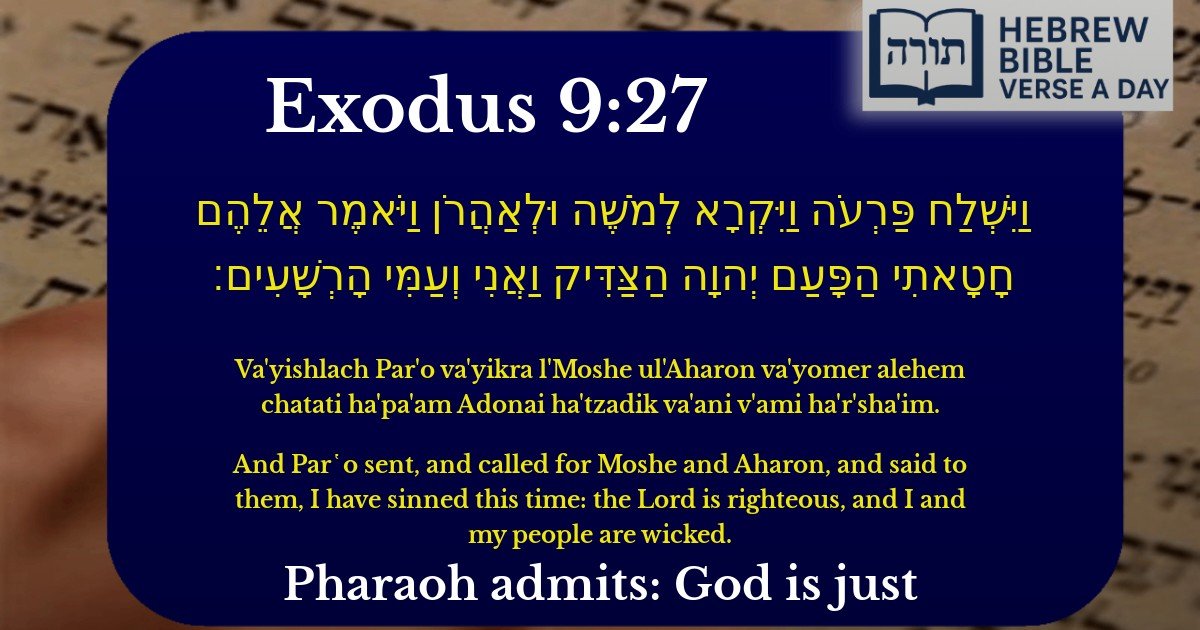
וַיִּשְׁלַח פַּרְעֹה וַיִּקְרָא לְמֹשֶׁה וּלְאַהֲרֹן וַיֹּאמֶר אֲלֵהֶם חָטָאתִי הַפָּעַם יְהוָה הַצַּדִּיק וַאֲנִי וְעַמִּי הָרְשָׁעִים׃
English Translation
And Par῾o sent, and called for Moshe and Aharon, and said to them, I have sinned this time: the Lord is righteous, and I and my people are wicked.
Transliteration
Va'yishlach Par'o va'yikra l'Moshe ul'Aharon va'yomer alehem chatati ha'pa'am Adonai ha'tzadik va'ani v'ami ha'r'sha'im.
Hebrew Leining Text
וַיִּשְׁלַ֣ח פַּרְעֹ֗ה וַיִּקְרָא֙ לְמֹשֶׁ֣ה וּֽלְאַהֲרֹ֔ן וַיֹּ֥אמֶר אֲלֵהֶ֖ם חָטָ֣אתִי הַפָּ֑עַם יְהֹוָה֙ הַצַּדִּ֔יק וַאֲנִ֥י וְעַמִּ֖י הָרְשָׁעִֽים׃
🎵 Listen to leining
Parasha Commentary
📚 Talmud Citations
This verse is not quoted in the Talmud.
Pharaoh's Admission of Sin
The verse (Shemot 9:27) describes Pharaoh's temporary acknowledgment of wrongdoing during the plague of hail. Rashi explains that Pharaoh's confession—"I have sinned this time"—indicates his recognition of Hashem's justice specifically in this instance, but not a full repentance. The phrase "this time" suggests his admission was limited to the current plague, not his previous obstinacy.
The Righteousness of Hashem
Pharaoh declares, "Hashem is righteous, and I and my people are wicked." The Midrash (Shemot Rabbah 12:1) highlights the irony of Pharaoh, a tyrant, acknowledging divine justice. Rambam (Hilchot Teshuvah 2:1) notes that such confessions, even if insincere, demonstrate the undeniable truth of Hashem's righteousness when confronted with undeniable miracles.
Pharaoh's Incomplete Repentance
The Talmud (Sanhedrin 105a) compares Pharaoh's repentance to that of the wicked King Achav. Both admitted wrongdoing under duress but lacked sincere commitment to change. The Malbim emphasizes that Pharaoh's words were tactical—aimed at ending the plague—rather than a genuine transformation of character.
Lessons in Teshuvah